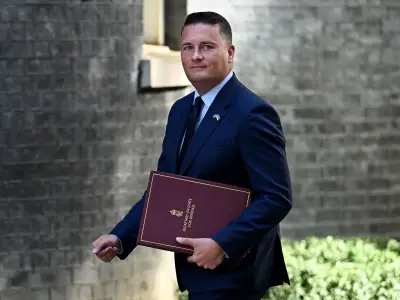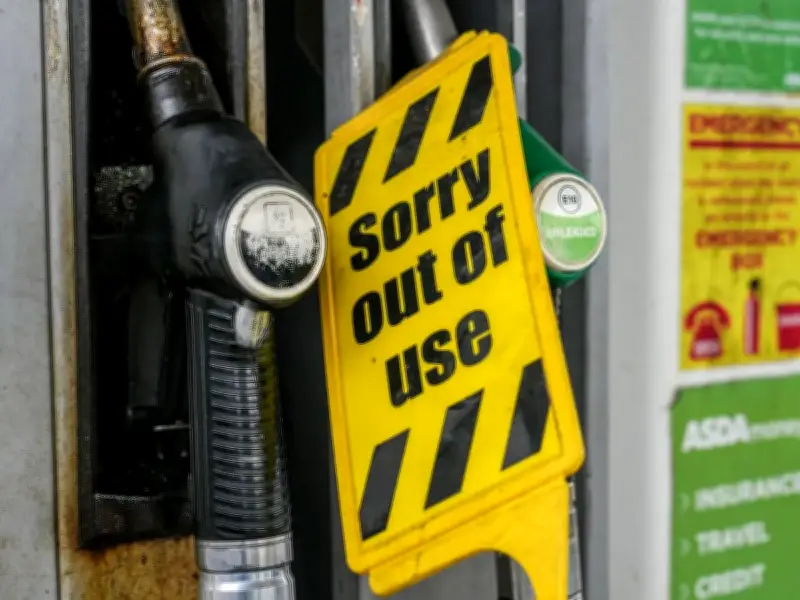
Transport minister Keir Mather has insisted the UK could cope with President Trump's threatened ban on US diesel exports without it leading to shortages, seeking to reassure Britain's nearly 10 million diesel drivers and the hauliers that rely on the fuel.
Diesel drivers were already the hardest hit by a surge in pump prices since the start of the Iran war at the end of February this year, following a leap in oil prices due to the conflict and a hit to refineries that convert oil into diesel.
Record pump prices near £2 a litre
The nationwide average for diesel is within a whisker of the £2 a litre barrier, according to the RAC, a record high, with many forecourts selling the fuel for far more than that. It now costs almost £110 to fill up an average diesel car, about £32 more than before the US-Iran war began.
“I want to reassure people this morning that the United Kingdom has got a diverse range of supply when it comes to diesel,” Mr Mather told Sky News. “We have resilience built into our system for that reason. We are working very closely with our US counterparts to stress the importance of that relationship, and the importance of sustaining flows of diesel around the world.”
He added that the government was in talks with other European countries, as well as through the International Energy Agency.
Heavy reliance on imports
Despite his attempt to calm fears, the UK remains exposed given its reliance on imports. Unlike unleaded, the country now buys 55% of its road diesel from abroad, compared with just 14% in 2003. Nearly a third of Britain's diesel imports came from the US last year, up from 18% the year before.
Britain has only about 40 days' worth of diesel in reserve, one of the lowest levels in Europe, according to data from the International Energy Forum. The UK has held emergency talks with other European countries about the potential release of diesel reserves given President Trump's threat to ban the export of US-produced diesel.
Refinery closures add to concerns
The potential move is widely seen as an attempt by the Trump administration to lower pump prices in the States ahead of next month's mid-term elections. US Treasury secretary Scott Bessent said European countries should “immediately” begin to use their reserves.
The looming diesel crisis threatens to get worse after the UK's biggest refinery shut production for up to 10 weeks. Fawley refinery in Hampshire will be closed until November for maintenance, adding to concerns about fuel supplies. The site, operated by ExxonMobil, makes almost one fifth of the fuel used on UK roads and also supplies jet fuel to Heathrow.
In 2025 alone, the closures of the Grangemouth refinery in Scotland and Lindsey refinery in Lincolnshire wiped out almost a quarter of total UK refining capacity. The average price of a litre of diesel stood at 199.79p on Thursday, according to figures compiled by the RAC. The previous record high was 199.09p in June 2022, after Russia's invasion of Ukraine.
The UK, as a member of the International Energy Agency, is required to keep oil stocks equal to at least 90 days of net oil imports in reserve, which can be used to respond to severe supply disruptions in the global market.
Mr Trump has said he was “thinking” about introducing a ban on exports of US diesel, which would force Britain to compete with other countries for an alternative.
In a post on X on Thursday, Mr Bessent said: “Our European partners should accelerate delivery on their existing commitments and make additional supplies immediately available to address ongoing disruptions. American farmers, truckers, and businesses should not be left carrying the burden of a global diesel shortage. America is doing its part. We look to our allies to match their commitments with action.”
EU member states will meet with the European Commission on Friday to discuss the issue. Mr Mather was asked by Nick Ferrari on LBC whether he agreed with Mr Trump about Europe using their diesel reserves. He said: “We're working closely with our European partners on diesel supply. It means we're continuing those discussions about how we retain our resilience and robustness of our supply chains.
“President Trump is welcome to make those comments, we've got to focus here at home about ensuring that we have diversity of supply into our economy. Our European partners are absolutely central to that, particularly the flows of diesel coming through the Netherlands.”