The UK Health Security Agency (UKHSA) has issued a warning to people in England ahead of a partial solar eclipse on Wednesday, August 12. The agency advises that anyone planning to view the event must use genuine eclipse glasses that meet international safety standards.
In a post on social media platform X, the UKHSA said: "On 12 August, a partial solar eclipse will be visible across the UK. If you want to use eclipse glasses, make sure they are genuine with specially designed filters that meet the international safety standard." The agency urged people to check that their glasses have a safety certification printed on them, such as 'ISO 12312-2' or 'ISE 12312-2:2015'.
Don't Take Risks with Old Glasses
The UKHSA also warned against using old eclipse glasses, stating: "Old eclipse glasses may not be safe" and "especially if the lenses are creased or scratched, as their filtering properties may have been compromised."
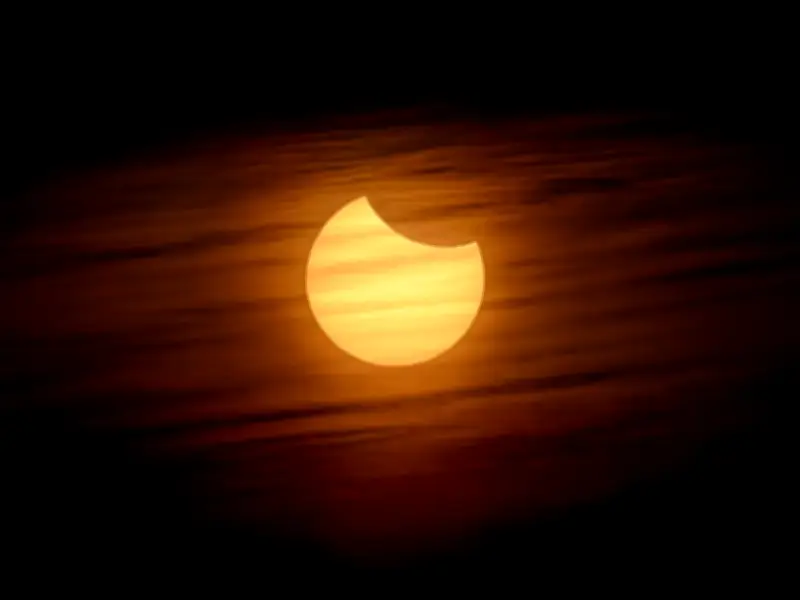
This eclipse is set to be the largest visible from the UK since 1999, with the moon covering between 90% and 96% of the Sun, depending on location. The sky will become noticeably dim as the moon blocks up to 96% of the sun. There will not be another partial eclipse this deep until 2050.
Best Views and Timing
The eclipse will be visible across the UK, with the best views expected in the south west. The event will occur in the evening as the Sun is setting, so a clear view of the west-northwest horizon is necessary.
- 6.13pm — Eclipse begins: The Moon takes a "bite" out of the Sun's edge.
- 7.10pm — Maximum eclipse: The Sun is reduced to a downward-facing crescent, with a noticeable drop in temperature and light.
- 8.03pm — Eclipse ends: The Moon leaves the Sun's path just before sunset.
Safety Advice
Looking directly at the sun without proper protection can cause permanent eye damage. Following the 1999 total solar eclipse, the Royal College of Ophthalmologists reported that about 70 people experienced vision issues, with roughly 40% having stared at it for under a minute.
Ordinary sunglasses do not provide adequate protection. A statement on Gov.uk says: "Ordinary sunglasses - no matter how dark - do not provide adequate protection for viewing a solar eclipse. They reduce glare, making it feel more comfortable to look at the Sun for longer, while still allowing harmful solar radiation to reach the retina. Never use regular sunglasses to look at the Sun during an eclipse."
When using eclipse glasses or handheld solar viewers, ensure they are authentic and meet the ISO 12312-2:2015(E) standard. Genuine glasses are available from trusted retailers like Royal Museums Greenwich. Gov.uk warns: "Be cautious of products sold online that may not meet this requirement. If you're unsure whether a product is certified, don't use it. Don't use eclipse glasses if the lenses are scratched, torn or damaged."
Alternatively, you can watch the eclipse indirectly using a pinhole viewer, a colander, or by projecting the Sun's image onto a sheet of paper. The Royal Astronomical Society has published detailed advice on these methods.