The UK's biggest solar eclipse this century will be visible today, with more than 90 per cent of the sun covered by the moon at the height of the eclipse, which will start at around 7pm.
Unlike parts of Spain, skygazers in the UK will not see a total eclipse this time. Astronomers warn it is dangerous to look directly at the sun even when over 90 per cent of it is hidden.
Postcode checker for exact peak times
The celestial spectacle will peak at different times across the UK. A postcode search tool allows you to see the exact time the moon will start to move in front of the sun from your location. It will take just 15 minutes for the peak moment to sweep from the very north of Scotland down to Land's End in Cornwall, meaning the moon shadow will sweep over Britain at nearly 2,500 miles per hour.
Wednesday's solar eclipse will be the best in the country for the next 54 years. Interest has been so great that high street stores and online retailers have sold out of eclipse glasses.
Weather and visibility forecast
The latest Met Office forecast shows most of England and Wales will have clear skies on Wednesday evening, with temperatures likely to exceed 30C in large parts of the country. However, cloud cover is forecast for most of Scotland and Northern Ireland, plus parts of the North East of England and Cumbria. Depending on cloud thickness, the eclipse may still be visible in these areas.
The best locations to view the eclipse are in the far south western areas of Devon and Cornwall, where up to 96 per cent of the sun will be obscured. The rest of Wales, Northern Ireland, parts of the West Midlands and the South West, and the westernmost parts of Scotland can expect 92 to 94 per cent coverage.
Safety advice and historical impact
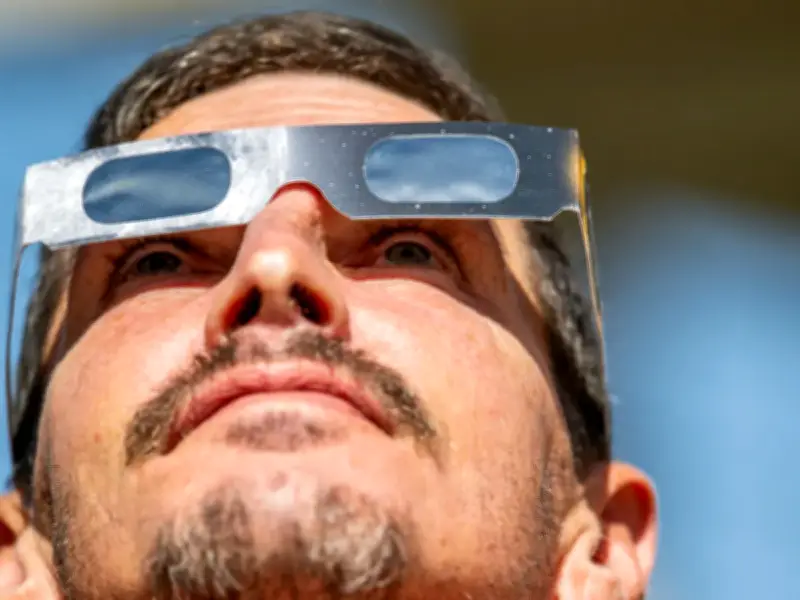
Only special solar eclipse glasses certified to ISO 12312-2 should be used; sunglasses are not sufficient, experts said. Solar eclipse glasses or specialist telescopes are the only safe way to view directly, or the eclipse can be projected using a pinhole or household items like a colander.
Following the 1999 total solar eclipse, the Royal College of Ophthalmologists reported around 70 cases of vision problems after watching it. Around 40 per cent had looked at it for less than a minute.