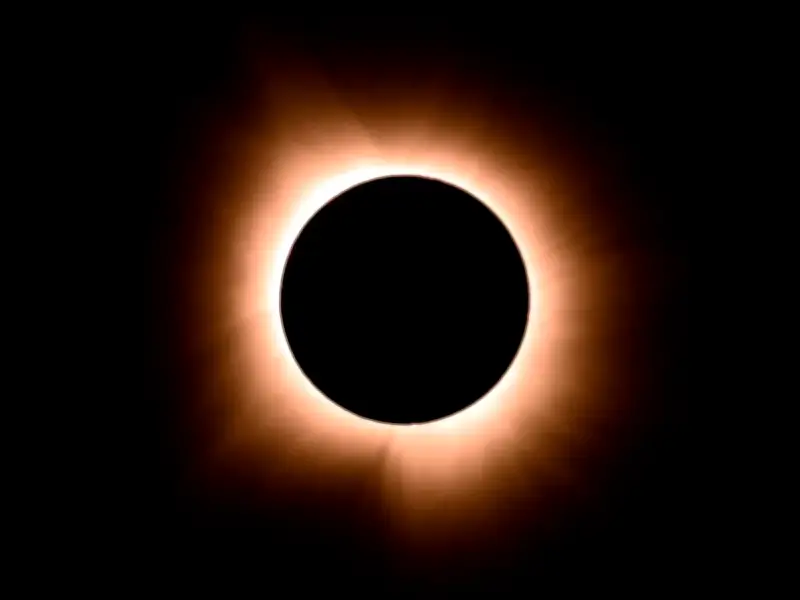
Wales will experience a partial solar eclipse for the first time in nearly three decades, with the phenomenon set to be the most visible eclipse across the UK and Ireland since 1999.
On Wednesday, August 12, the moon is set to obscure between 90% and 96% of the sun depending on your location, causing the sky to become noticeably darker. Another partial eclipse with this level of coverage won't occur until 2050, so you won't want to miss it.
Timing and Coverage in Wales
In Wales, the partial solar eclipse can be observed from 6.13pm to 8.06pm on Wednesday. The moon will start to obscure the sun and it concludes just before sunset as the moon shifts away.
The precise time and degree of coverage will differ depending on your location. Cardiff is expected to see approximately 93% coverage, beginning at 6.16pm.
Whether you're on your way to collect solar eclipse glasses or setting up for the big event, send your best pictures of the day to newsdesk@walesonline.co.uk or message us through Facebook.
Safety Warnings and Viewing Tips
The Royal Greenwich Observatory warned the public that regular sunglasses are not a safe enough method to view the cosmic phenomenon. Imo Bell, a planetarium astronomer at the observatory, previously told the Press Association: “It’s not a total eclipse, but over 90% is really exciting. We’re not going to get one this good for a really long time.
“So, it’s important not to miss it, and to be prepared. You can’t just go out and expect to have a look because it’s really dangerous for your eyes.
“So, you can use solar eclipse glasses, which are very, very different from sunglasses – they block out so much light that you can’t see anything through them except the sun, because that’s how much light they need to block for the damaging light of the sun to be safe to view.
“Ideally a solar telescope is an amazing way to witness it, and if you don’t have one of them then you can look into whether your local astronomy society is doing any events.
“And if all else fails, you can project the image of the eclipse using a household item like a colander which has lots of holes in – point the colander towards the Sun with your back facing it, and in the shadow of the colander you’ll be able to see the eclipse in the holes, which is really cool.”
Best Viewing Locations in Wales
As the 2026 eclipse occurs late in the evening, the ideal vantage point would be somewhere offering an unobstructed view of the west-northwest horizon. Space.com has highlighted three outstanding locations in Wales for witnessing the solar eclipse.
These sites feature amongst the UK's top 10 viewing spots, recognised not only for their geographical position but also for their remarkably low levels of light pollution:
- Rhossili Bay: Rhossili Bay on the very end of Swansea's Gower Peninsula will see roughly 93.8% coverage at 7.13pm. It is part of the Dark Sky Community which is said to "retain dark skies despite its popularity during the day."
- The Llŷn Peninsula: The Llŷn Peninsula in Gwynedd will see coverage of 93.3% at 7.11pm. Its remote nature and expansive views will make for perfect eclipse viewing.
- Strumble Head: Strumble Head in Pencaer, Pembrokeshire, will offer the finest vantage point in Wales, with 94% coverage at 7.13pm. This West Wales location boasts one of the clearest west-facing horizons, making it perfect for observing the eclipse.