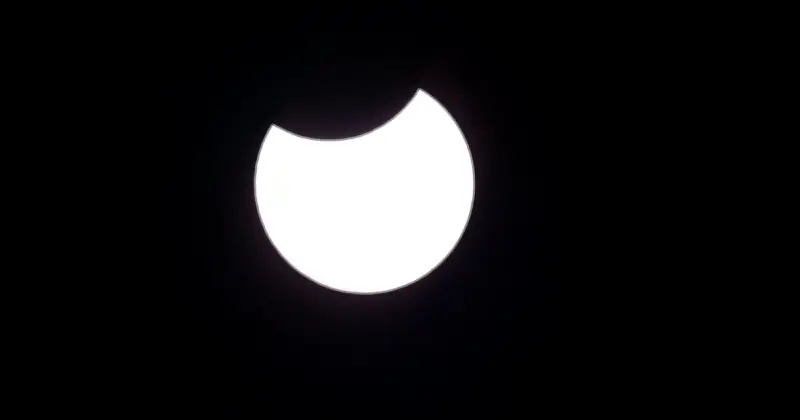
On Wednesday, August 12, 2026, people across Europe will witness a rare solar eclipse, the first of its kind visible from the region in nearly 30 years. The Moon will move directly between the Earth and the Sun, blocking light and causing temporary darkening of the sky.
In the UK, observers will see a partial solar eclipse, not a total one. However, the Moon is expected to cover a significant portion of the Sun, creating a striking spectacle for those who observe it safely.
Timing of the Eclipse
The partial solar eclipse will occur near sunset, with both the Sun and Moon sitting increasingly low on the horizon. In London, Bristol, and Cardiff, the eclipse begins at around 6.17pm, reaches its maximum at 7.12pm, and finishes at 8.06pm, according to Royal Museums Greenwich.
Viewers in the south-west of the UK and Ireland will generally get the best views. In London, about 90% of the Sun will be covered, while Cornwall could see 95% coverage. Pembrokeshire may experience around 94%, and the south-western tip of Ireland could see almost 97.5% obscuration, making it one of the best locations.
Safety Precautions
It is crucial not to look directly at the Sun during a solar eclipse, as this can cause serious and permanent eye damage. The safest way to view the event is by using certified eclipse glasses that meet the international safety standard (ISO 12312-2) or specially designed solar filters on telescopes, binoculars, or cameras.
Regular sunglasses, no matter how dark, do not provide enough protection. Alternatively, you can use a pinhole projector to watch indirectly. Ensure proper eye protection throughout the event, as the Sun's harmful rays remain dangerous even when mostly covered.
Future Eclipses
The UK will have to wait until 2090 for the next total solar eclipse. Another major event occurs on September 3, 2081, when up to 99% of the Sun could be covered, with Cornwall and the south coast offering the best views.
Before then, several notable partial eclipses are expected in 2030, 2053, 2066, 2075, 2082, and 2088, though they will cover a smaller portion of the Sun.