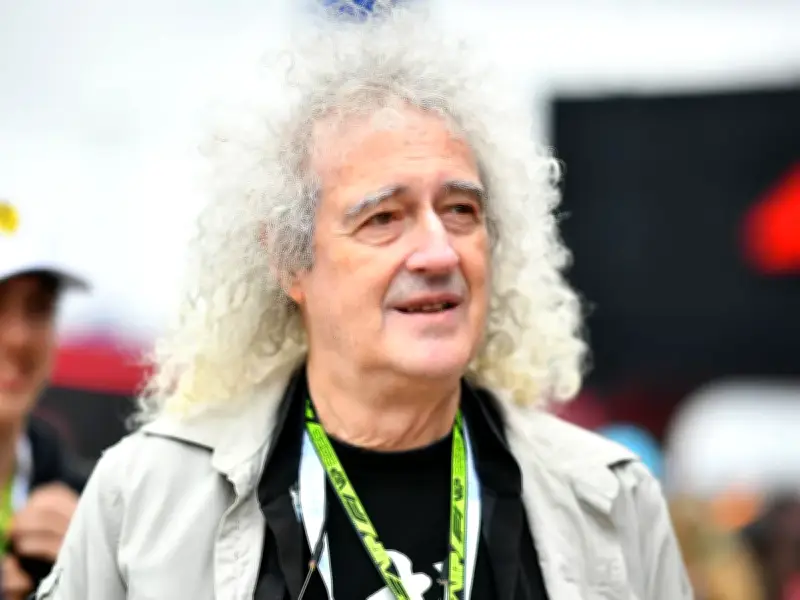
Sir Brian May has shared what he believes is the best way to watch the upcoming partial solar eclipse, warning against looking directly at the sun. The Queen guitarist, who holds a PhD in astrophysics, appeared on BBC Newsnight to discuss the event.
The eclipse is set to be the most spectacular since 1999, with the light of the setting sun virtually blocked out across much of western Europe, including the UK, France, Belgium, Switzerland and northern Italy. This occurs because the moon will pass directly between the Earth and the sun, casting a shadow on the Earth.
Sir Brian's safety advice
People are being urged not to look directly at the sun during the eclipse unless they have specialist eyewear. The Royal College of Ophthalmologists (RCOphth) warns that sunglasses, even very dark ones, do not provide adequate protection, and binoculars, telescopes or cameras can also cause damage to the retina unless they have a suitable solar filter.
Discussing what he thought was the best way to watch it, Sir Brian said: "You know, you have to be really careful. I've got to say this: do not look at the sun with the naked eye, and definitely never ever go through - never go near a telescope or binoculars pointed at the sun, because you can blind yourself in an instant. Be very, very careful. So, unless you have proper equipment designed for viewing total eclipses - solar eclipses - don't do it.
"The best thing, my advice is always put a little pinhole in a piece of cardboard, and get a white sheet of paper, and you can project an image of the sun onto that white piece of paper and watch the eclipse happening projected. It's the safest way to do it. Absolutely the best. That's what I recommend. And it's fun.
"We'll only see the partial phases in England, which is why I came over here. We get to see the final kind of denouement of the show, which is when the corona becomes visible because the sun is completely covered by the moon. It is a magical thing to see. I'd recommend anyone to do it once in their life."
Why does it damage eyesight?
The retina - a thin layer of tissue at the back of the eye that acts like a camera sensor - sits on pigment, and that pigment absorbs light. So if you look at a very strong light source, including the sun, the energy from the sun is absorbed by the pigment under the retina. This can damage your retina beyond repair. Worse still, you will not feel any pain while it happens, so you have no idea if it is being damaged or not.
Peter Smith, from Taunton, has urged people to use suitable eye protection after he damaged his eyesight in the 1999 eclipse. He viewed the solar eclipse 27 years ago wearing a borrowed welder's mask. But this damaged both of his retinas, which he found out after suffering from flashing in his eyes and headaches the next morning. He is now asking people to use appropriate eye protection to enjoy the eclipse safely.
Smith told the BBC: "Make sure its got the right protection and filters to stop any damage because any damage you get, it'll never heal. It's not like cutting your hand.
"Even now there is a residual impact. When I'm tired sometimes a flashing dot might come back, and it's not nice when it does. If you're going to go and watch it, make sure that everything you've got is correct."
What do the experts say?
The safest way to enjoy the eclipse is to observe it indirectly, such as by watching a live broadcast, says RCOphth president Mohamed Elalfy, a consultant ophthalmologist. He cautions: "Looking directly at the sun during a solar eclipse can cause damage to the retina, potentially damaging the cells responsible for sharp central vision. Crucially, the retina has no pain receptors, so people will not feel the damage as it happens.
"Symptoms may only become apparent several hours later and can include blurred vision, a central blind or dark spot, distorted vision, reduced colour perception and increased sensitivity to light. While some people recover over weeks or months, others can be left with permanent visual impairment."
The College also stresses that, even when only a small part of the sun remains visible during an eclipse, sufficient radiation can reach the retina to cause injury. Anyone who notices a change in their vision after looking at the sun should seek prompt advice from an eye-care professional.