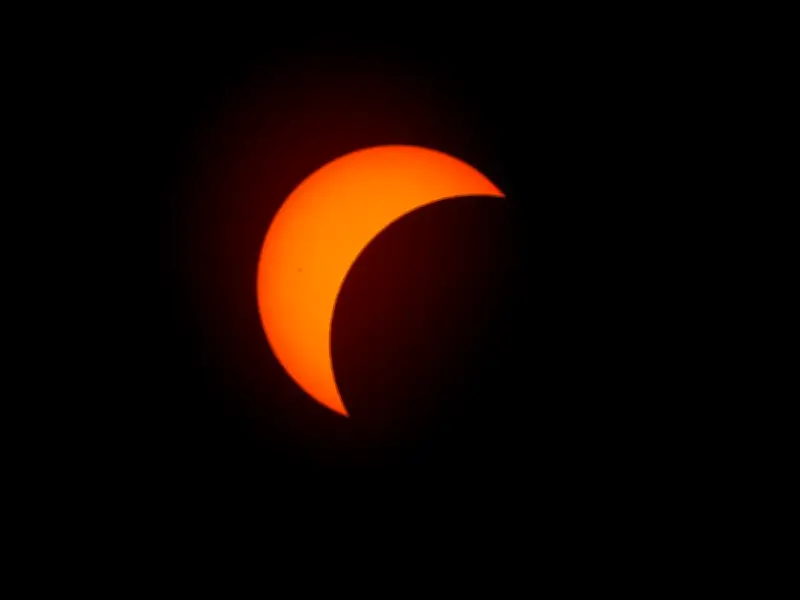
A partial solar eclipse is set to take place tomorrow evening (August 12), and it is the biggest Scotland has seen in over a decade. Skygazers across the country are expected to be excited about the astronomical phenomenon, with many curious about when the next one will occur.
Biggest Eclipse in Over a Decade
The last time Scotland witnessed a solar eclipse was on March 20, 2015. At that time, those living on the Isle of Lewis experienced the best view, with 98 per cent of the sun covered by the moon. Inverness and Fort William had 95 per cent coverage, while Aberdeen and Edinburgh observed 93 per cent. The upcoming eclipse will be on a slightly smaller scale, but it remains impressive.
However, Scots wondering when they will be able to observe a total solar eclipse, where 100 per cent of the sun is covered, face a long wait. According to the Royal Astronomical Society, the next total solar eclipse won't be visible from the UK until 2090. Therefore, the August 12 solar eclipse is the closest Scots will get to a complete eclipse for quite some time.
Future Partial Eclipses
Until then, the next solar eclipse that will create the deepest blackout is predicted to take place on September 3, 2081. Scientists expect 99 per cent of the sun to be obscured over the UK, with the best places to observe being Cornwall and the south coast of England.
This will not be the last partial solar eclipse Scots will see for a while, as scientists have shared that other significant events will take place over the coming decades. One is only four years away. These include:
- 2030 - 50 per cent coverage
- 2053 - 40 per cent coverage
- 2066 - 60 per cent coverage
- 2075 - 70 per cent coverage
- 2082 - 70 per cent coverage
- 2088 - 40 per cent coverage
Upcoming Lunar Eclipse
Tomorrow's partial solar eclipse isn't the only phenomenon to take over the skies this month. Said to come in pairs, Scots will only need to wait a couple of weeks to gaze upon a partial lunar eclipse. A lunar eclipse occurs when Earth moves between the sun and the moon, causing the moon to fall in Earth's shadow. According to NASA, this will cause the moon to dim and sometimes transform into a striking red colour. This happens at the eclipse's maximum as the moon will be illuminated by the sunlight that has passed through the Earth's atmosphere and is refracted towards the moon, which is why many lunar eclipses are known as 'blood moons'.
Occurring two weeks after a solar eclipse, Scots will be able to watch the moon's surface change colour on August 28. However, this will only be possible if you have a clear view toward the western horizon. The partial lunar eclipse will begin at 3:33am in the UK, with the maximum of the eclipse taking place at 5:12am. As this is a partial eclipse, approximately 90 per cent of the moon will be covered in the Earth's shadow. Unlike a solar eclipse, observers do not need any specialist equipment to watch a lunar eclipse, though having a clear night and telescope are likely to provide the best view.