A partial solar eclipse will be visible in the UK on Wednesday, with experts urging caution about the risks involved. The Moon will pass between the Sun and Earth, obscuring its light and creating a brief shadow on our planet for just under two hours during the evening.
What to Expect
According to Royal Museums Greenwich, this year will see the most significant coverage visible from the UK since 1999, with approximately 90% of the Sun obscured by the Moon for observers in London. For those in England's capital, the Moon will start to cover the Sun's edge - known as first contact - at 6.17pm, before peaking at roughly 7.12pm and concluding at 8.06pm, though timings will vary depending on location.
Why Eye Protection Is Essential
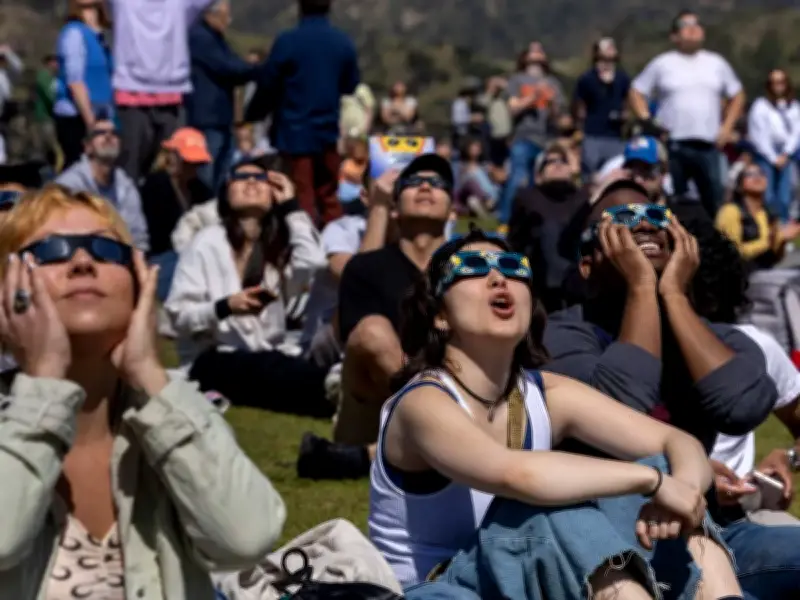
Throughout this period, anyone fortunate enough to witness the event must take appropriate safety measures, as viewing an eclipse without protection can cause harm. Intense rays from the Sun can damage cells in the retina at the rear of the eye, and because the retina lacks pain receptors, the injury occurs without being felt. This can lead to vision loss or blurred patches that may prove permanent.
To prevent this, it's advised to wear ISO 12312-2 certified eclipse glasses, which permit only minimal light to filter through. Standard sunglasses aren't sufficient as they fail to block adequate light and can still result in lasting eye damage. Genuine eclipse glasses will display the safety certification "ISO 12312-2" or "ISO 12312-2:2015" printed on them somewhere.
Three Safe Viewing Methods
Pinhole projectors offer a safe method for viewing the event indirectly through projection. Royal Museums Greenwich has published guidance on creating one using a cardboard box, white paper, foil, and a pin. Colanders and tea strainers provide another budget-friendly and readily available option for safely observing the eclipse, working on a similar principle; by holding them aloft and examining the shadow they produce, numerous projected images of the eclipse become visible.
Imo Bell, a planetarium astronomer at the Royal Greenwich Observatory, told the Press Association: "It's not a total eclipse, but over 90% is really exciting. We're not going to get one this good for a really long time. So it's important not to miss it, and to be prepared. You can't just go out and expect to have a look because it's really dangerous for your eyes."
"So you can use solar eclipse glasses, which are very, very different from sunglasses - they block out so much light that you can't see anything through them except the Sun, because that's how much light they need to block for the damaging light of the Sun to be safe to view. Ideally a solar telescope is an amazing way to witness it, and if you don't have one of them then you can look into whether your local astronomy society is doing any events. And if all else fails, you can project the image of the eclipse using a household item like a colander which has lots of holes in - point the colander towards the Sun with your back facing it, and in the shadow of the colander you'll be able to see the eclipse in the holes, which is really cool."