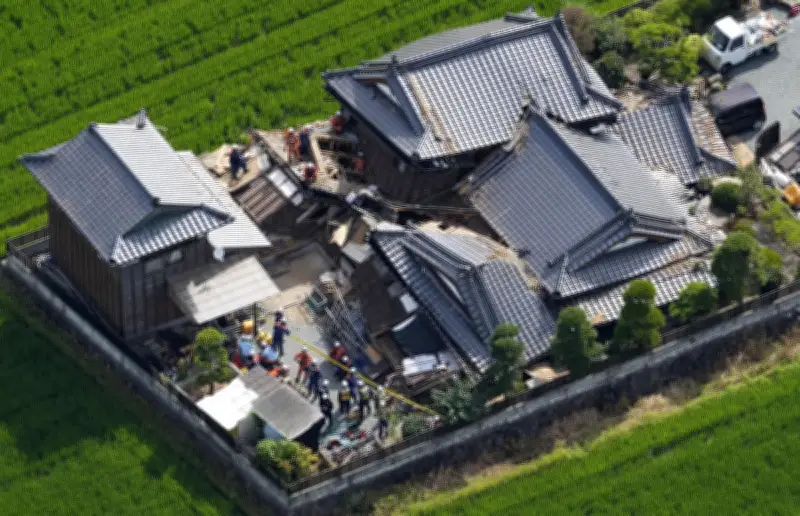
In the rural town of Hikawa, volunteer firefighter Tomohide Nagata heard a voice from a collapsed house and saw a hand. "One of our senior members crawled in and pulled him out. He was bleeding from the head, but I'm so glad he survived," Nagata told the Kumamoto Nichinichi Shimbun. The town near the epicentre of Tuesday's 6.8-magnitude earthquake was among the hardest hit, with many older houses collapsing. Terrified of ongoing aftershocks, residents spent Tuesday night in their cars outside Hikawa's town hall, where staff distributed food and drinks.
Race Against Time
At least 13 people were killed and hundreds injured when the earthquake struck Kyushu island. Prime Minister Sanae Takaichi said on Wednesday: "There are people who are still waiting to be rescued, and it's a race against time. We will go all out to find and rescue as many people as we can." Iwaoka Shigemi, 79, and his wife Michiyo, 77, escaped their house and slept in their car in Hikawa. With temperatures expected to reach 35°C on Wednesday, they worried about heatstroke. Suemi Nagata, 79, could not escape by car because her garage was destroyed but made it to the town hall with her husband and older sister. "The lateral shaking was worse than the Kumamoto earthquake 10 years ago, and it was terrifying. Just to have survived with my life is something to be grateful for," she said.
Aeon Mall Explosion
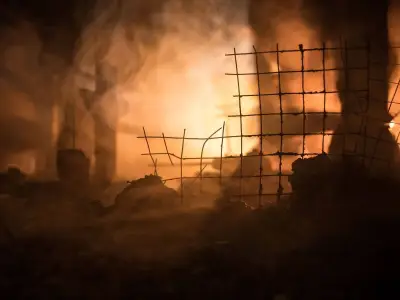
In April, Kumamoto prefecture marked the 10th anniversary of the 2016 earthquake that killed over 275 people. That quake was preceded by a 6.2-magnitude foreshock followed two days later by a 7-magnitude mainshock. At Kumamoto Aeon mall, severely damaged by a gas explosion triggered by the earthquake, employees who re-entered after evacuating customers were caught in the blast. A 16-year-old girl who had exited moments earlier told the Asahi Shimbun she "felt completely safe once she was outside," only to struggle to breathe from dust and smoke. A 74-year-old shopper told the Nikkei newspaper he learned an acquaintance who worked there was hurt. Up to 30 employees were initially reported trapped; four remain missing.
Uki City and Yatsushiro
In Uki City, where shaking reached the maximum level 7 on the Japanese shindo scale, residents recounted narrow escapes. A woman in her 40s reached an evacuation shelter with three generations after shielding her children from falling furniture. "I was pinned under a chest of drawers at home. I protected my children and then hurried to evacuate," she told the Kumamoto Nichinichi Shimbun at Toyono elementary school, used as a shelter after the local disaster facility's ceiling collapsed. In the Asakawa district, neighbours found a flattened house. Volunteer firefighters tried to rescue an elderly man trapped inside. "The man is a childhood friend of mine," said the visibly shaken 70-year-old district head. "We tried to pull him out, but the aftershocks came one after another, so we had no choice but to give up." Many Uki residents slept in cars, and local workers handed out water and food. In Yatsushiro, a 63-year-old self-employed man escaped death because his workplace collapsed on his day off. "It was a day off and I wasn't at work, so I escaped with my life. Though I have no idea what I'll do starting tomorrow," he said, having spent the night in a tent in his garden.