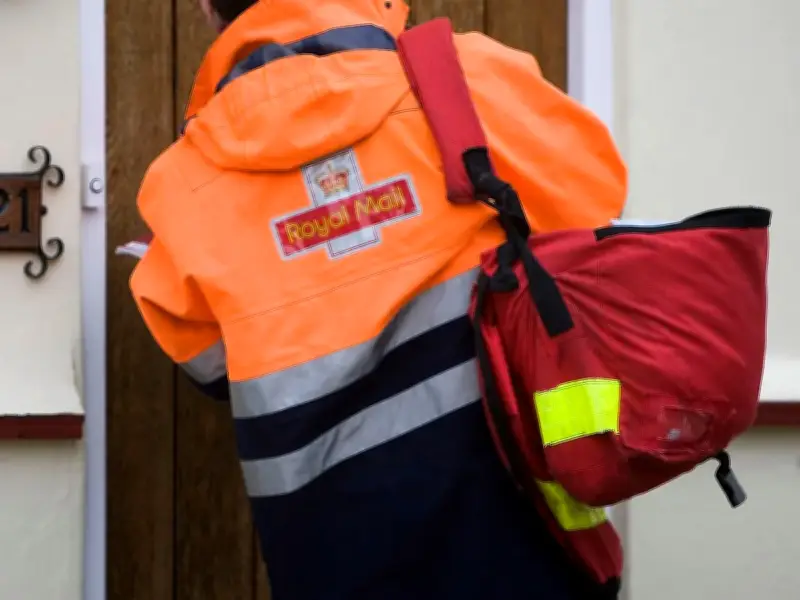
Postal workers have warned that households face a “nightmare” in the run-up to Christmas because of delivery changes introduced by Royal Mail. They say parcels are still being prioritised over letters, leading to more late deliveries, an issue for which Royal Mail has been widely criticised.
Union calls for emergency summit
The Communication Workers Union (CWU) has called for an emergency summit with the company and involving the government, claiming Royal Mail was facing a “ticking timebomb” and warning the company was “on the brink of collapse”. Relations between the union and Royal Mail have broken down since the introduction of a new delivery model, called DM26, earlier this year.
The model allows for second class post to be delivered every other day during the week, with the aim of guaranteeing first class mail and parcels are delivered every day, by putting workers into groups of three and changing the walking pattern of rounds. But posties who have spoken to the BBC anonymously say parcels are still being prioritised, letters left behind, and time wasted in sorting and dividing mail into first and second class.
Posties describe 'worst ever' Christmas fears
One postie from the West Midlands said: “I didn't take any first class mail out on my last shift because I was on a road that's been behind for weeks. But I'm sure a manager would have ticked a box to say all first class mail went out.” Several warned this Christmas could be a “nightmare”. A postie from the East Midlands said: “We all think this Christmas will be the worst ever, for us and our customers.”
Royal Mail has already left customers frustrated because of its poor track record on late deliveries, for which it has been heavily fined by regulator Ofcom. Over 100 MPs are set to tell Ofcom that the quality of service for letter delivery must be improved. The BBC also claimed the delivery issues were being made worse by about 400 postmen and women leaving Royal Mail every week.
Job cuts and company response
Royal Mail last week announced plans to slash as many as 2,500 jobs by the end of next year. The privatised postal giant said the proposed staff cull was focused on its head office and support functions. There would be no reductions in operational frontline roles in delivery and processing, including posties and drivers, it insisted.
The CWU has called for the rollout of the DM26 delivery model to be paused, citing severe operational issues and unmanageable workloads. General Secretary Dave Ward said: “We are calling for a summit between stakeholder and the government to address the ticking timebomb that is Royal Mail.” He added: “The BBC have shone a light on the harsh pressure postal workers are facing, and the price paid by consumers for the historic mismanagement of Royal Mail. Royal Mail has been in structural decline for well over a decade, and the continuous failure to deliver quality of service is killing the brand, demoralising the workforce, and letting down the communities that postal workers are proud to serve.”
Appearing before MPs in March, Royal Mail's billionaire owner apologised for the postal giant's late deliveries but denied it was getting worse. Czech tycoon Daniel Kretinsky told MPs: “Of course I am deeply sorry for any letters that arrive late.” However, he insisted: “It is not perfect, but it is not catastrophic.”
A Royal Mail spokesperson said: “The rollout of our new delivery model is now 90% complete across our c.1,200 delivery offices and we are continuing to see positive results – delivering on average to 95% of addresses every day across the UK, up from 88% before deployment. The rollout continues across our network and we expect quality of service to improve as deployment progresses. These reforms are an important part of our plan to deliver a more reliable, efficient and financially sustainable Universal Service for customers across the UK.” The company added that it was hiring 22,000 temporary workers over Christmas to help transport, sort and deliver the additional mail it expects over the festive period.