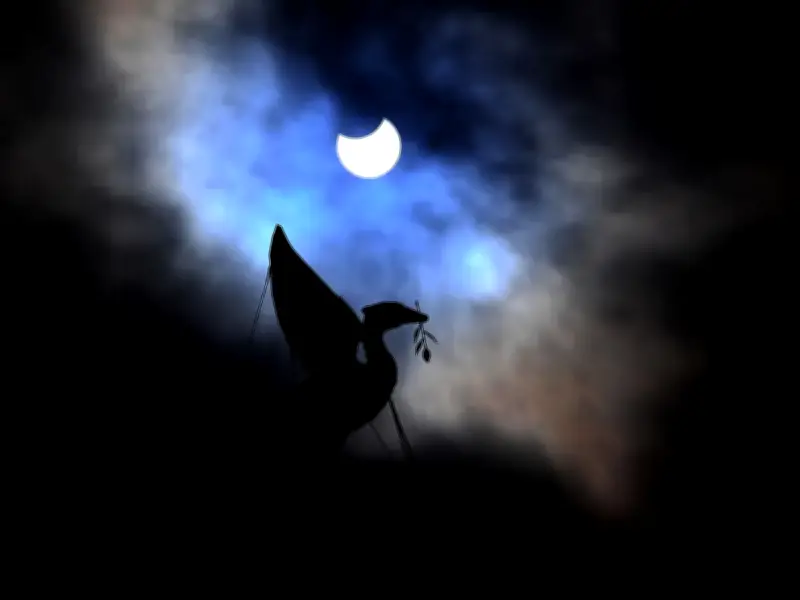
The UK will experience its most dramatic partial solar eclipse in almost three decades today, August 12, with more than 90% of the Sun obscured by the Moon. This is the most coverage seen from the UK and Ireland since the 1999 eclipse.
The UK last witnessed a solar eclipse in March 2025, but only around 30-40% of the Sun was covered. Now, the sky will dim as the Moon blocks out sunlight. Parts of Spain, northern Portugal and Iceland will see a total solar eclipse, the first visible over mainland Europe in 27 years. The next total solar eclipse visible from the UK won't occur until September 23, 2090.
Liverpool timings and viewing safety
In Liverpool, the Moon first covers the Sun's disc at 6.13pm, with maximum eclipse at 7.10pm, ending at 8.03pm. During a partial eclipse, the Sun appears as a crescent.
Viewing the eclipse directly can damage eyes. Mohamed Elalfy, consultant ophthalmologist and president of the Royal College of Ophthalmologists, said: "The safest way to enjoy the eclipse is to observe it indirectly, such as by watching a live broadcast." He warned that looking directly at the Sun can damage the retina, and because the retina has no pain receptors, people won't feel damage as it happens. Symptoms, appearing hours later, can include blurred vision, central blind spots, distorted vision, reduced colour perception, and light sensitivity. Some recover over weeks or months, but others may face permanent visual impairment.
Protecting your phone camera
Pointing a camera or smartphone directly at the Sun can damage it. Antonio Garcia Fernandez, of Volunteer Astronomy Observers of Spain, said the lens must be protected by a special-purpose solar filter. The group recommends the Solar Snap filter, the only smartphone-compatible filter certified to the international ISO 12312-2 standard. Alternatively, eclipse glasses can be held over the lens. Garcia Fernandez said: "This makeshift method is a great low-cost DIY alternative and was widely and successfully practiced by millions of observers during the recent 2023 and 2024 solar eclipses in the Americas."
NASA also warned about smartphone use, stating on X: "The answer is yes, the phone sensor could be damaged just like any other image sensor if it’s pointed directly at the Sun." They advised using proper filters and holding eclipse glasses in front of the phone's lenses when photographing the Sun at any point other than totality.
The next time the Moon obscures as much of the Sun will be in 2081, and the next total solar eclipse in the UK will be in 2090.