NASA has issued a warning to anyone planning to record the solar eclipse on their phone, citing risks to both camera equipment and eyesight. The warning comes as the UK prepares for its fullest eclipse in 54 years on Wednesday evening.
Two key risks of recording the eclipse
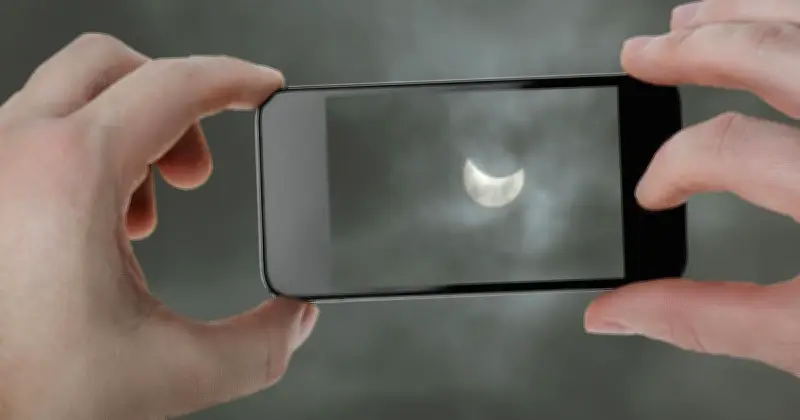
According to experts at NASA, recording a solar eclipse is not recommended for two key reasons: it can damage your phone's camera and it can also cause you to look at the sun too much, damaging your eyes too. The space agency notes that while some argue it's safe to use a phone camera because the exposure is small, the variety of camera models means outcomes can be unsafe.
NASA's guidance states: "There is quite a lot of discussion online about whether you can damage your smartphone camera by pointing it directly at the sun. The basic argument in favour of it being safe for the camera is that the lenses are generally very small (2 millimeters or so) and do not admit enough light. Also, cameras come equipped with UV filters that cut down on some of the visible light landing on the sensor chip. Finally, they automatically set their exposures for very short times."
Safety measures and alternatives
To record the eclipse safely, NASA recommends covering the camera lens with a solar filter during the moments before and after totality when sunlight is still blinding. This also applies to telescopes and binoculars. The agency adds: "The best thing to do is to cover the camera lens with a solar filter during the moments before (and after) totality when the sunlight is still blinding. This will eliminate sun blooming and give you a clear image of the solar disk."
If no filter is available, a household colander can be used to project the eclipse image safely. Imo Bell, a planetarium astronomer at the Royal Greenwich Observatory, explained: "If all else fails, you can project the image of the eclipse using a household item like a colander which has lots of holes in – point the colander towards the sun with your back facing it, and in the shadow of the colander you’ll be able to see the eclipse in the holes, which is really cool."
Eclipse details and glasses shortage
More than 90% of the sun will be obscured by the moon between 6.17pm and 8.06pm on Wednesday, the most it has been blocked above UK skies since the total eclipse in 1999. Convenience stores, national parks and the Royal Greenwich Observatory have all exhausted their glasses supplies ahead of the eclipse, which will be the country’s fullest for the next 54 years.
The Royal Greenwich Observatory told the Press Association it had sold approximately 15,000 pairs of eclipse glasses – a sellout – in the last month.