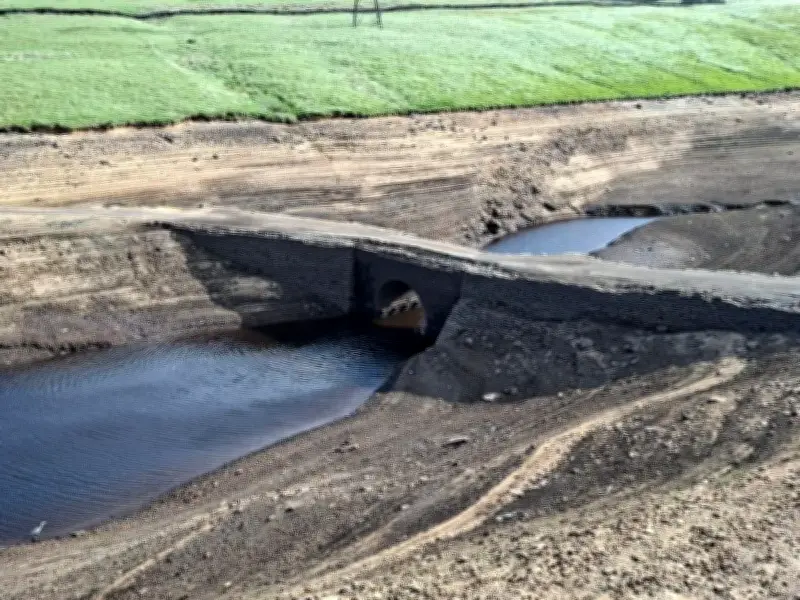
United Utilities has confirmed it has no plans to introduce water restrictions in Greater Manchester, despite drought conditions affecting large parts of England. The update comes as millions of people across the country face hosepipe bans due to prolonged dry weather.
Drought status across England
According to data from the Environment Agency, drought conditions have been declared in East Anglia, Hertfordshire and North London, Thames, Devon, Cornwall and Isles of Scilly, West Midlands, Wessex, Kent and South London, Solent and South Downs, East Midlands, Lincolnshire and Northamptonshire. All of Wales is also in drought.
Greater Manchester, along with the North East, Yorkshire, Cumbria and Lancashire, Merseyside and Cheshire, remains in prolonged dry weather, the category before a drought.

United Utilities response
A spokesperson for United Utilities told the Manchester Evening News: "There are no plans to introduce water restrictions in the North West."
The spokesperson added: "Recent hot weather has led to record levels of demand. At the peak of the heatwave last month, we supplied more than 2 billion litres of water a day across the region, around 200 million litres more than normal.
"We are continuing to carefully manage supplies across our extensive integrated network, moving water to areas where it is most needed, while reducing leakage to record-low levels."
Reservoir levels and advice
Data shared online by United Utilities shows that reservoir levels across the north west are currently at 60.2% of actual stock, which is 11.1% lower than the average. New data is released each week on a Wednesday.
The water company advised customers: "We always encourage customers to use water wisely. A few simple changes can make a real difference in helping to ensure there is enough water for everyone to enjoy throughout the summer."
Forecast and impact
Some rainfall is forecast for the UK this week, but the Met Office remains cautious about its impact on reversing drought conditions. "Many of the wettest periods this week are expected to come in the form of showers rather than prolonged, steady rain," the Met Office said. "Showers can be highly variable, with some places receiving significant amounts of rain while neighbouring locations see very little. Heavy downpours can also run off very dry ground rather than soaking deeply into the soil."
The Met Office noted that Wisley in Surrey has recorded 61 consecutive dry days, while Heathrow and Odiham have each gone 55 days without meaningful rain. Several other locations across southern England have recorded dry spells lasting more than six weeks. The Met Office concluded that a few days of showers are "unlikely to completely reverse the effects of such prolonged dryness".