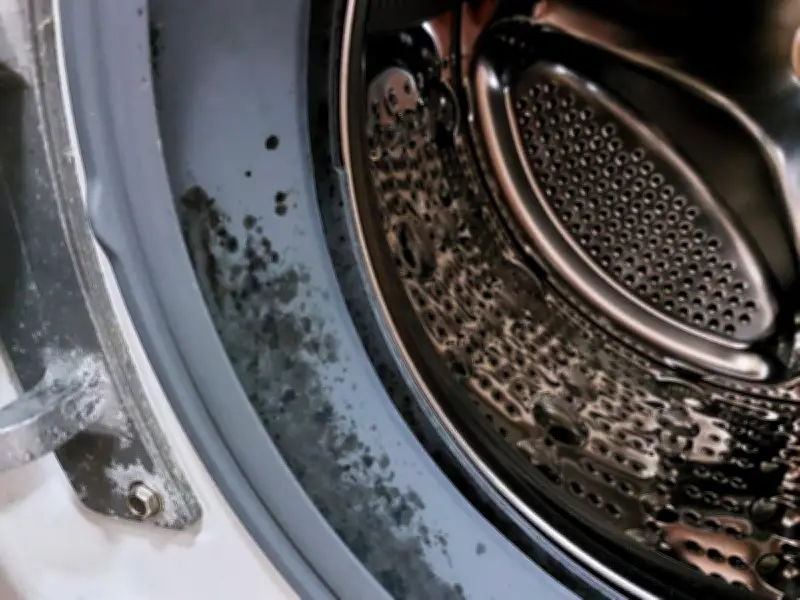
Black mould in washing machine seals can be eliminated in just 10 minutes using a simple household item, according to appliance specialists at Devon Appliances. The experts recommend using white vinegar, which they describe as both "effective and natural."
Why mould grows in washing machines
Washing machines, in constant contact with soiled laundry, are breeding grounds for bacteria. Fungal infections like black mould thrive in damp environments, making regular cleaning essential to prevent the machine from becoming a haven for dangerous mould.
If you notice a musty, earthy odour from your washing machine, it likely originates from the rubber seal around the door. The awkward design and positioning of the seal can make it tricky to clean properly, but the experts have revealed a straightforward method to remove mould and "stop it from coming back for good."
Signs of mould on the seal
Before tackling the issue, it's vital to identify the telltale signs of mould on the rubber seal. The most obvious indicator is black or dark-coloured marks. Additional signs include musty or damp odours from the drum, clothes failing to smell fresh after washing, or visible residue within the seal folds. If any of these appear, swift action is required.
How to eliminate mould from washing machine seals
Properly removing mould demands more than simply wiping the surface. Follow these steps for a comprehensive clean:
- Mix your cleaning solution: appliance specialists advise opting for white vinegar, highlighting that it is both "effective and natural."
- Open the washing machine door and carefully pull back the rubber seal to reveal any concealed mould and dirt.
- Apply the vinegar directly onto the problem areas and use a cloth or soft brush to scrub thoroughly within the folds.
- Pay particular attention to tucked-away creases where mould tends to accumulate.
For "stubborn" mould, leave the vinegar on the seal for 10 to 15 minutes. This helps "break down bacteria and staining." However, avoid leaving vinegar on for considerably longer, as it risks damaging the rubber.
Once done, use a fresh, damp cloth to wipe away any remaining residue, repeating the process if necessary for severe build-up. It may take more than one attempt to completely eliminate the mould.
Final step: run an empty cycle
With the seal thoroughly cleaned, run an empty wash cycle at either 60 or 90°C. Pour some vinegar into the washing machine drawer and allow the full cycle to finish. This ensures the drum and all internal components are left spotless.