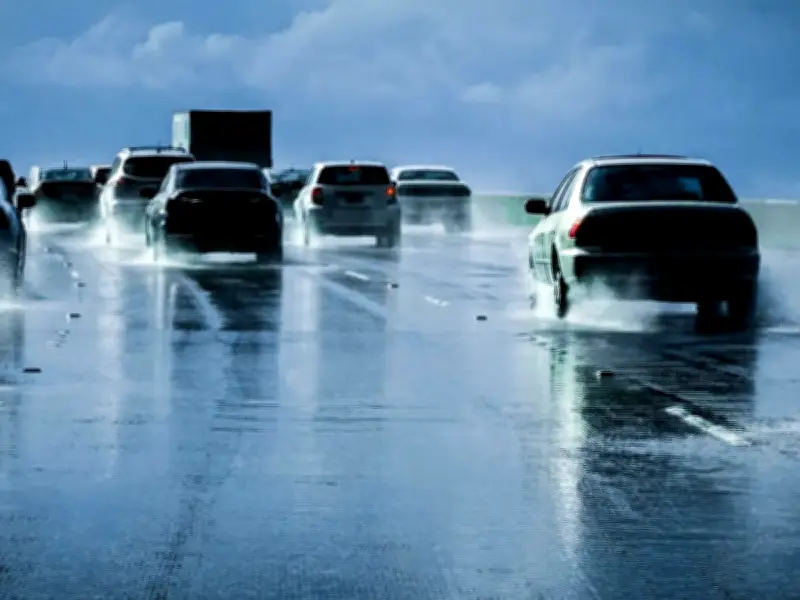
Motorists in the North East are being put on alert as a band of persistent, heavy rain is forecast to move northwards into the region, bringing a localised risk of thunder and hail. The weather today (August 27) starts cloudy with coastal mist and daytime temperatures will reach a high of around 19°C, feeling humid with an easterly breeze. Heavy rain showers will develop however as the afternoon progresses, with a 65% chance of persistent rain and thundery bursts expected by mid-to-late evening.
Driving conditions significantly compromised
Driving circumstances will be significantly compromised, with windscreen visibility reduced, glare intensified and road markings obscured. Braking distances will also approximately double against normal conditions, due to diminished tyre traction and the risk of aquaplaning (where a film of water builds up underneath the tyres).
Many motorists might turn to online platforms such as Reddit for tips on navigating wet weather or thunderstorms safely, but consulting genuine professionals is considerably more reliable.

With this in mind, Dan Briggs, CEO of frontline worker car discount firm Motorfinity, has revealed his essential recommendations for staying safe while driving during heavy rainfall, alongside a lesser-known regulation that all drivers ought to know.
Summer thunderstorms 'one of the most dangerous times'
Dan reveals: "Summer thunderstorms are one of the most dangerous times to be on the road, especially during those first ten minutes."
"When it hasn't rained for weeks, oil, grease, and rubber bake into the tarmac and then the moment a summer thunderstorm hits, all that grime lifts to the surface, turning the road into an absolute ice rink.
"Drivers used to their own summer driving pace may not adjust their speed and end up hydroplaning or sliding right off the road."
The motoring specialist emphasised that numerous drivers 'may not know' that under the Road Traffic Act 1988, it is actually illegal to drive through puddles that cause pedestrians to be splashed. This comes under driving "without reasonable consideration for other persons," with those found guilty facing a £100 fine and three penalty points on their licence.
"So, while rainy conditions can reduce your visibility, it's important to stay aware of upcoming puddles and pedestrians and slow down while approaching them," the expert stated.
Check your windscreen wipers, lights and tyres
Before setting off on a journey in wet weather, Dan strongly recommends carrying out a quick examination of your windscreen wipers, lights and tyres.
"Before heading out on your journey, especially if you're driving to work at night, like many frontline workers are, give your car a quick three-minute check," he advised. "Inspect your front and back windscreen wipers for cracking or splitting and any debris they may have caught.
"If you hear persistent squeaking or the blade leaves streaks and smears when being used, then it might be time for some new ones- remember they only last about six months to a year."
The specialist also advises activating your lights amid torrential rainfall, while confirming they're functioning properly before embarking on your trip. "Make sure there's no dirt or leftover mud from previous journeys on the lights, as it's illegal to have something impacting vehicle lights on UK roads," he said.
"Lastly, check that your tyres meet the minimum tread depth of 1.6mm across the central three-quarters of the tyre. This can be checked by placing a 20p coin into the tread groove; should the outer rim stay concealed, your tyres ought to possess sufficient depth."
Look out for closures and crashes
Dan suggests always examining your planned route for potential road closures and collisions that might disrupt your travels before setting off. "During intense periods of rain, local drainage systems can quickly become overwhelmed and cause flash flooding," he said.
"I'd particularly recommend this step if you leave for work early, like shift workers, as you're less likely to have caught up on the news and traffic updates before heading out."

Turn off music and get rid of distractions
While numerous motorists are drawn to cranking up their stereos while driving, Dan warns this actually ranks among 'the most distracting things you can do' during torrential downpours. He said: "Rule 148 of the Highway Code states that drivers must avoid distractions, which includes being distracted by music, playlists or the radio. Failure to do so can result in a £100 fine and three penalty points.
"If you do want to listen to music, make sure it's at a lower level than normal and don't touch your phone to change the song or playlist when driving, as that's also illegal."