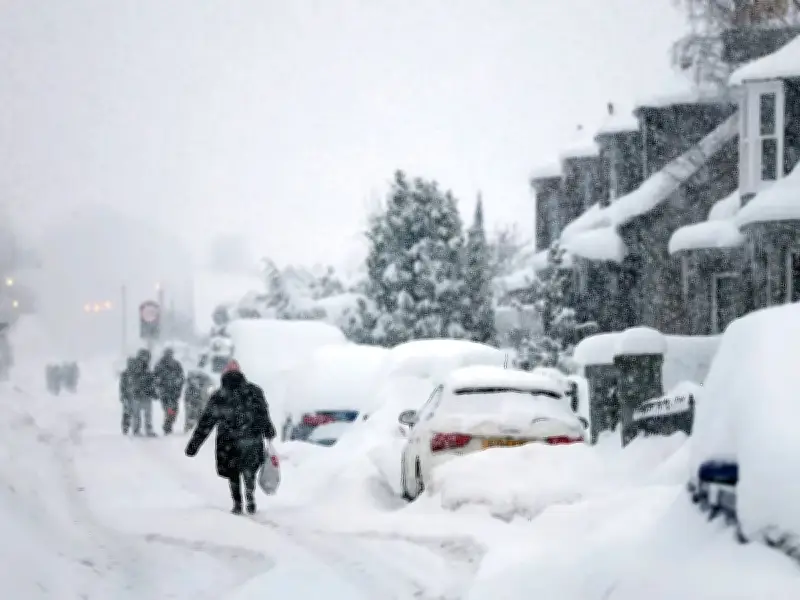
The Met Office has said this year's El Niño could be the "largest in living memory" and an "unprecedented event," potentially triggering cold snaps, heavy snow and storms across the UK. The weather phenomenon could also destabilise the polar vortex, sending Britain into a deep freeze.
What is El Niño and the polar vortex?
El Niño is the sudden warming of sea surface temperatures in the Pacific Ocean. Forecasters have warned it could disrupt the stratospheric polar vortex – a huge, high-altitude ring of swirling cold winds above the Arctic. A weakened polar vortex can send severe, freezing Arctic air into North America and Europe.
Met Office outlook for autumn and winter
According to the Met Office, a polar vortex-driven cold snap or snow remains unlikely this autumn, with freezing temperatures more likely to hit later during the winter. A spokesperson said: "Through the latter part of the winter, following a peak in El Niño, the stratospheric Polar Vortex can become weaker, leading to an increased chance of Sudden Stratospheric Warming (SSW) events unfurling, increasing the potential for cold weather."
The forecaster said it was "too far away to give any forecast information" about how this might affect the UK, adding that it remains "just one possible outcome dependent on many competing factors."
Record-breaking El Niño
Professor Adam Scaife, head of long-range predictions, said: "We have been signalling for months that the developing El Niño will be an unprecedented event." He added: "The fact that it has already exceeded previous records – with several weeks to go before it peaks later this year – shows the enormity of this El Niño."
This year's "super El Niño" has already shattered global records to become the most powerful event in history. The naturally occurring climate pattern develops when Pacific sea surface temperatures become much warmer than average, impacting weather worldwide, with effects often peaking around December.
Potential impacts
The Met Office warned that El Niño can lead to significant human impacts affecting infrastructure, agriculture, health and energy sectors. In the coming months, it is likely to cause "wetter and stormier conditions" that could trigger flooding and develop into "cold snaps" over the winter period.