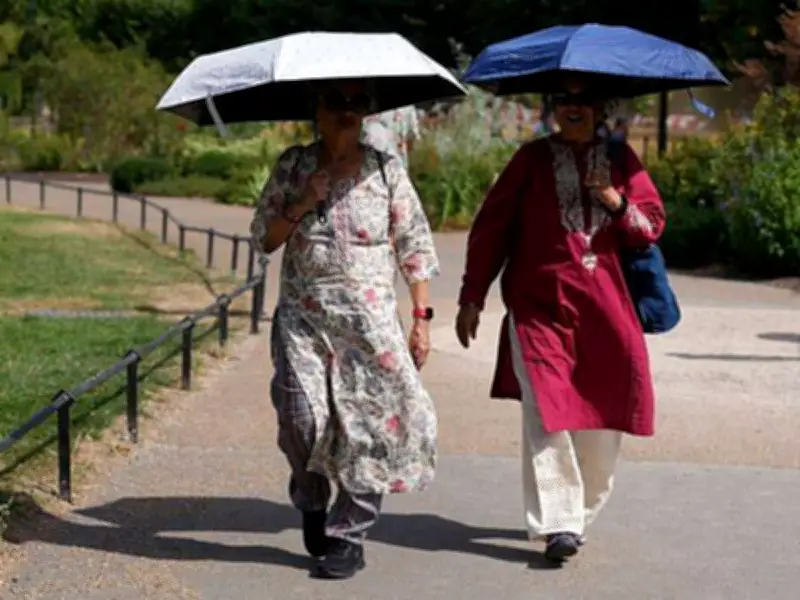
The Met Office has forecast a fifth UK heatwave, with temperatures set to reach 33C in the South East on Sunday and up to 36C in East Anglia and south-east England by Thursday.
Heat Health Alerts and Sunday Forecast
Yellow heat health alerts came into force at 9am on Saturday as temperatures climbed throughout the day, reaching up to 28C across the South and South East, and 27C across much of central England.
Sunday will bring spells of rain to Scotland, Northern Ireland and northern England, with isolated showers possible in the South East. However, the rest of the country will remain largely dry and sunny, with most areas experiencing temperatures well into the high 20s.
Health Warnings on Medications
Health officials have issued warnings about the risks of taking certain medicines in hot weather, including ibuprofen, as they can make it harder for the body to stay hydrated, regulate temperature, or cope with sun exposure.
Dr Alison Cave, chief safety officer at the Medicines and Healthcare products Regulatory Agency, said: "Proton pump inhibitors (PPIs), commonly used to treat acid reflux and heartburn, have also been linked to a very low risk of a lupus-like skin reaction triggered by sun exposure, and common painkillers such as ibuprofen and naproxen may also increase sun sensitivity."
Severe Fire Risk
The Met Office warned that southern and south-eastern regions could see the mercury climb into the 30s, with the South East potentially reaching 33C. According to the Fire Severity Index, any wildfires that break out on Sunday across almost all of east and south-east England are likely to be exceptionally severe, the highest possible rating.
The index takes into account rainfall, temperature and humidity, and is used by agencies to assess how severe a fire could become should one ignite. It does not, however, indicate the likelihood of wildfires breaking out.
Alerts and Impact
The UK Health Security Agency (UKHSA) has issued yellow heat health alerts covering the East Midlands, West Midlands, South East, South West, East of England, Yorkshire and the Humber, and London. These alerts remain in place until 9pm on Tuesday.
The alerts caution that the scorching weather is likely to impact the wellbeing of the general public and place additional strain on healthcare services.
Previous Heatwaves and Drought
Two record-breaking heatwaves in May and June resulted in more than 2,800 excess deaths, while two further heatwaves in July have contributed to drought and wildfires.
The National Trust is urging people to sign a petition calling on the Government to make tackling climate change a national mission. This follows a series of wildfires across the UK in recent weeks, including significant blazes at Dunwich Heath in Suffolk, Headon Warren on the Isle of Wight, Llanwonno in the Rhondda Valleys, South Wales, and the Cairngorms National Park in Scotland.
Reservoir levels across England have fallen to 69%, dropping from 72% the previous week and sitting nearly 12 percentage points below the long-term average for this time of year, the Environment Agency announced on Friday. Levels stood at 85% at the end of June, matching the typical average for that period, but have been steadily declining.
Five reservoirs are now classified as having "exceptionally low" levels: Blagdon in Somerset (54% full); Clywedog in Powys, which supplies water to central and north-west England (62%); the Dove group of reservoirs in Derbyshire (74%); Hanningfield in Essex (60%); and Wimbleball in Somerset (50%).
Last month was the driest July for England and Wales since records began in 1836, according to provisional data published by the Met Office. Nineteen counties across England recorded virtually no rainfall - 1mm or less - throughout the entire month.