Latvia has vowed to strengthen its border security after migrants illegally crossed into the country from Belarus using a tunnel for the first time. Riga’s Interior Minister Jānis Dombrava said Latvian border guards detected 15 people who had come through the tunnel on Monday.
First tunnel crossing
The incident comes as neighbouring Lithuania has seen a surge in migrants using tunnels to enter from Belarus. More than a dozen have reportedly been found by Lithuanian authorities since the start of the year, with four in the past two weeks alone. Belarus has long been accused of orchestrating a migrant crisis on the borders of its European Union neighbours.
Mr Dombrava said Monday’s crossing was the “first case” in which a tunnel had been used by migrants to illegally enter Latvia. “No signs of violations had previously been detected in this exact location, and no detentions of persons illegally crossing the state border had occurred there,” he wrote on X.
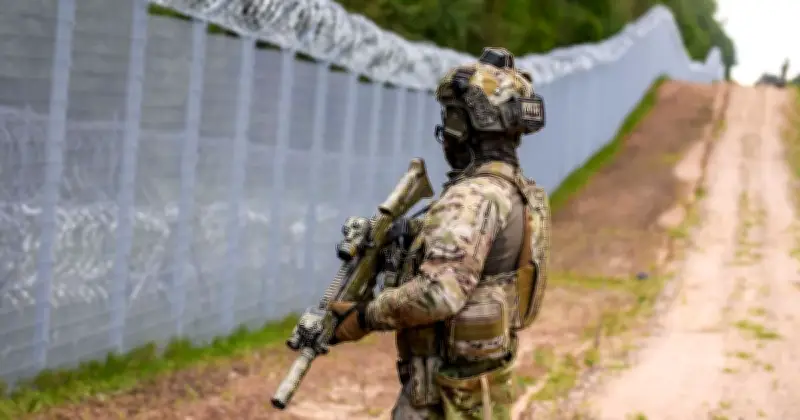
He added the tunnel was found 10 metres from the border fence and authorities returned all 15 migrants to their “country of departure”. Previously migrants have attempted to enter Latvia by scaling the fence.
Operation Werewolf
The Latvian government on Tuesday announced it is strengthening its border with Belarus in response to what Mr Dombrava described as the “hybrid threat” being posed by Minsk. Operation Werewolf will see the Latvian military increasing its support to border guards. This includes additional personnel and new technologies such as drones, helicopters and aircraft.
Latvia is also set to work closer with its Baltic neighbours and Poland in a bid to curb illegal crossings. At a press briefing on Tuesday, Latvian PM Andris Kulbergs said: “It is now the fifth year since hostilities began and Russia has been using Latvia’s border as an element of hybrid warfare, attacking our infrastructure via Belarus.”
Broader context
Belarusian leader Alexander Lukashenko is a close ally of Vladimir Putin, with Russia also suspected of helping to fuel the migrant crisis in eastern Europe. Ursula von der Leyen, President of the European Commission, previously accused Minsk and Moscow of an “unacceptable weaponisation of migration”. Belarus and Russia have denied helping to facilitate migrants crossing into neighbouring nations.