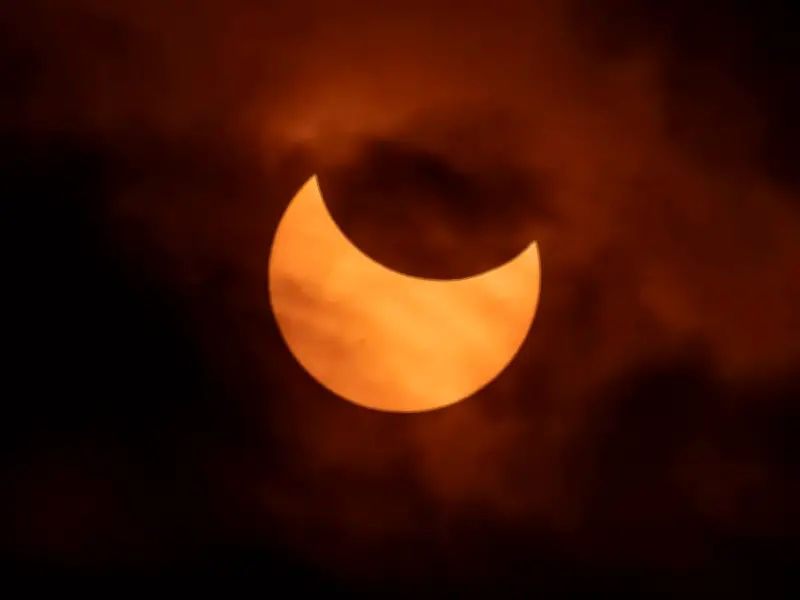
With just hours to go until the highly anticipated solar eclipse, the European Space Agency (ESA) will livestream the event from the Javalambre Observatory in Spain, offering a front-row seat to viewers worldwide. The broadcast starts at 19:30 CEST (18:30 BST) on YouTube and will feature expert commentary, interviews, and live telescope feeds.
Eclipse Visibility and Safety
The total solar eclipse will be visible from Greenland, Iceland, northeastern Portugal, and Spain, according to ESA. Most of the rest of Europe, northern North America, and western Africa will witness a partial eclipse. During a total solar eclipse, the Moon passes directly between the Sun and Earth, blocking light and casting a shadow on Earth. A total eclipse is visible from within the 'umbra', while a partial eclipse is visible from the 'penumbra'.
UK viewers, who will need international safety standard ISO 12312-2:2015(E) glasses to view the eclipse directly, will still enjoy views of the partial eclipse. The UK Health Security Agency (UKHSA) advises protecting eyesight, noting around 70 reported cases of vision problems after the 1999 total solar eclipse, with up to 40% of affected people having looked at it for less than a minute.
ESA Live Broadcast Details
On Facebook, ESA wrote: "Join us on Wednesday for live coverage of the total solar eclipse! Live from Javalambre Observatory, Spain, from 19:30 CEST with: interviews, explainers, telescope feeds, drone shots, and live feeds from different locations." The broadcast will be in English and hosted by Maggie Aderin, award-winning space scientist and science communicator, alongside ESA's Director of Science Carole Mundell and other experts.
Viewers can follow live telescope views of the eclipse, expert commentary, insights into solar science and space weather, behind-the-scenes coverage from the observatory, and discussions on ESA's activities linked to the eclipse. The YouTube link is available on ESA's channels.