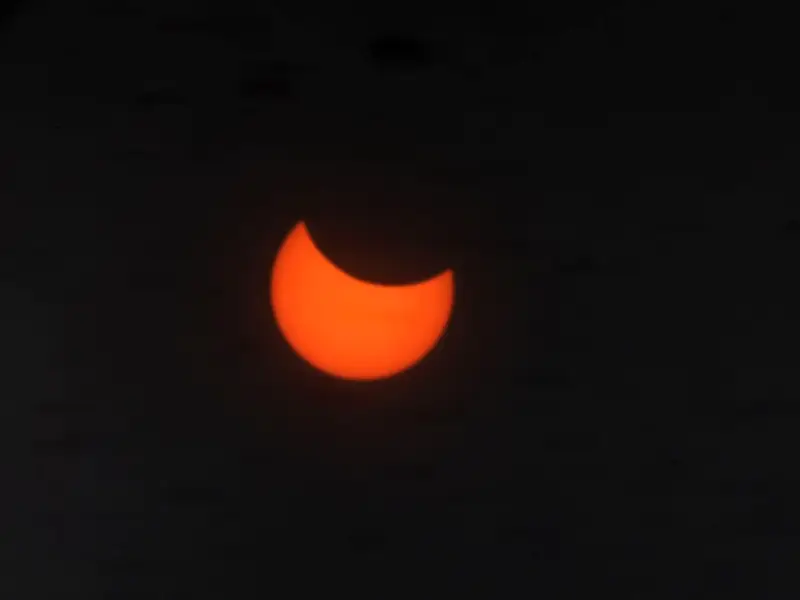
The UK's best solar eclipse in 27 years will occur on Wednesday, August 12, when more than 90% of the Sun will be obscured by the Moon. While this is a partial eclipse, experts warn that looking directly at it can damage your eyes, and sunglasses are not safe.
Eclipse timing and visibility
The Royal Museum of Greenwich says 'first contact' will be at 6.17pm, when the Moon first covers part of the Sun's disk. The maximum eclipse, when about 90% of the Sun is covered, will be at 7.12pm from London. The eclipse ends at 8.06pm from London.
People in Spain, northern Portugal and Iceland will see a total eclipse, while the UK will see a partial one. The sky will not become dark, but it will feel like a cloudy day or dusk.
Safe viewing methods
Imo Bell, a planetarium astronomer at the observatory, said: "It's not a total eclipse, but over 90% is really exciting. We're not going to get one this good for a really long time. So it's important not to miss it, and to be prepared. You can't just go out and expect to have a look because it's really dangerous for your eyes."
Solar eclipse glasses are recommended, as they block out harmful light. Alternatively, Ms Bell suggests using a colander: "Point the colander towards the Sun with your back facing it, and in the shadow of the colander you'll be able to see the eclipse in the holes."
Viewing tips and future eclipses
To see the eclipse clearly, find a high point with a clear view of the western horizon, avoiding buildings or hills. The next time the Moon obscures as much of the Sun will be in 2081, and the next total solar eclipse in the UK will be in 2090.