The National Drought Group has warned that more parts of southern, central, and eastern England are at risk of the same conditions as more than a dozen other areas across the country. Seven water companies, including some of the country's biggest providers such as Thames Water, Southern Water, and Southeast Water, have been forced to impose restrictions due to weeks without a single drop of rain in some areas.
Areas under 'prolonged dry weather' stage
The NDG, which convened on Monday following 12 consecutive days of temperatures above 30C, counts members from across the UK's environmental network amongst its ranks, including the Government and Met Office. They concluded that 13 areas are currently in the "prolonged dry weather" stage. These areas fall under the jurisdiction of several different water companies, including Affinity Water, SES Water and Wessex Water, and could see potentially millions more people placed under hosepipe bans.
Currently, temporary use bans have been extended for 23 million customers across the UK in a bid to protect the environment and reduce strain on vital networks, reports the Mirror. Whether it applies to you depends on your water provider. In some areas under a ban from one of the main firms, your water may be supplied by a different local provider where restrictions do not apply.
Zero rainfall records
The latest available data from the Environment Agency, a recent snapshot taken between July 2 and 15, shows an average of zero rainfall across its weather stations in central and southeastern England over 14 consecutive days. The alarming figures represent the longest unbroken period of no rainfall in southeast England since April 1997, when there was no rainfall for 15 days. In central England, the record was set back in 1996, more than 30 years ago, with another 14-day stretch without a single drop of recorded rainfall.
Helen Wakeham, Chair of the National Drought Group and Director of Water at the Environment Agency, said: “Dry weather depletes our water, while the hot conditions mean we use more of it. This is a difficult combination, and we are seeing the effects on our farmers, our wildlife, and the amount available for public and business use. All sectors are taking action, and we are grateful to the public for following the restrictions, where in place, to make sure there is enough water for everyone this summer. We want everyone to stay safe and hydrated during the hot weather but every drop we can save is a drop more for nature and agriculture.”
Outlook for rainfall
That prolonged absence of rainfall looks set to continue in the coming days, with high pressure expected to remain the dominant force for at least the next five days. Only coastal areas and southeast England, and possibly northern Scotland, could see some rainfall during this period, with mid-week showers possible before weather fronts attempt to push in from the northwest. Much of that rain, however, is likely to fall over Northern Ireland and Scotland.
Will Lang, Chief Meteorologist at the Met Office, said: “Much of England has experienced a notably warm and dry first half of summer, with July particularly dry and some locations recording little or no rainfall so far this month. The UK has already seen three heatwaves in 2026 and, while some rain is possible at times, the overall outlook remains for largely settled conditions.”
Water company restrictions
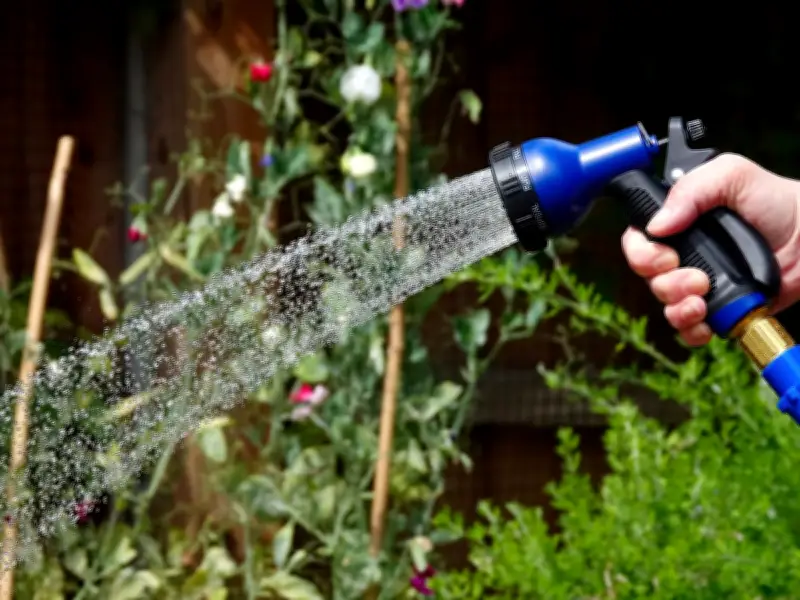
In the last two weeks, Affinity Water, Anglian Water, Cambridge Water, Southern Water, South East Water, Thames Water, and South West Water have announced Temporary Use Bans (TUB) across either all or part of their region. Hosepipes are restricted, but watering cans and buckets can still be used. If people with disabilities or health conditions live in an area covered by a TUB, they can contact their local water company about their situation.
A hosepipe can use 1,000 litres an hour, which is more than a family of four will use in a day. Restrictions on their use form an essential part of drought planning, and recent research found most people support a ban if there is a compelling reason. David Henderson, Water UK Chief Executive, said: “The last thing water companies want to do is restrict the amount of water people can use, but demand is at unprecedented levels following the warmest spring and June on record.”