
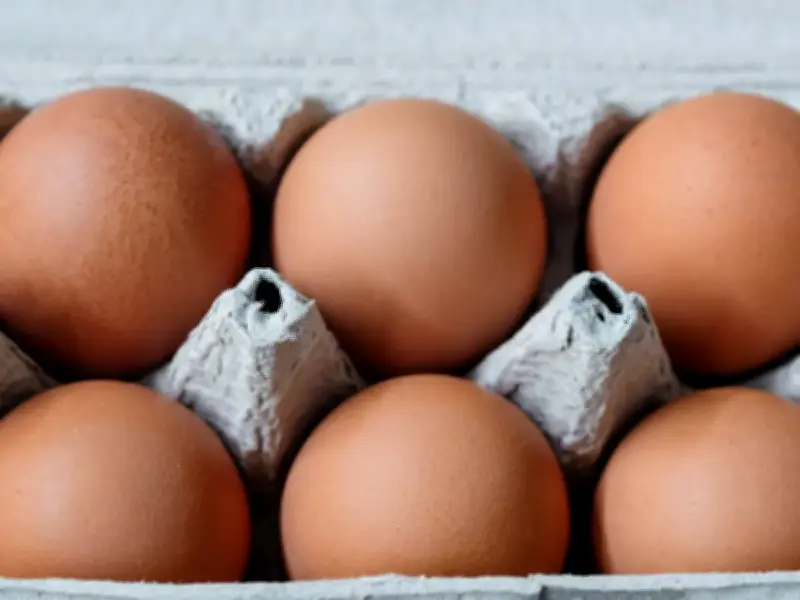
The Food Standards Agency (FSA) has issued a warning that eggs stamped with the code 3UA1012066 should not be eaten and must be disposed of immediately after salmonella was detected in some of them. The affected eggs originate from Yasensvit Ltd in Ukraine and pose a risk of serious food poisoning.
Recall and consumer advice
The FSA has stated that all affected eggs must be pulled from sale and not eaten. In a statement, the agency said: "All eggs with the code 3UA1012066 should be withdrawn from the market and recalled from consumers. These eggs should not be consumed."
Consumers are advised to check the code stamped on the egg and not to eat eggs with this code. The FSA said: "Consumers should check the code stamped on the egg; do not eat eggs stamped with 3UA1012066. Instead, dispose of them at home."
The eggs are not sold in large retailers like supermarkets. Most are used within the catering supply chain, but some may also be sold at small shops such as corner shops.
Action for businesses
Food businesses have been urged to check their egg supply chain and the codes on eggs they hold. The FSA added: "It is possible eggs with this code originating from Yasensvit Ltd, Kyiv, Ukraine, may have been repacked by other businesses in the UK and have different business details and packing centre codes detailed on the outer packaging."
Businesses are advised to immediately stop using or selling eggs with the stamp 3UA1012066, undertake product withdrawals, and where there have been retail sales, to undertake product recalls. The FSA also said: "If you have been supplied with these eggs, dispose of them safely. These eggs should not be diverted to further processing."
Salmonella symptoms and risks
Salmonella is a group of bacteria responsible for one of the most widespread forms of food poisoning in the UK. Most people contract the infection by eating contaminated food, which can include eggs, chicken, pork and dairy products. Fruit and vegetables can also harbour the bacteria if they have come into contact with livestock, manure or untreated water.
According to the UK Health Security Agency, symptoms typically include diarrhoea, stomach cramps and occasionally vomiting and fever. These usually develop between 12 and 72 hours after infection, with illness typically lasting four to seven days. Those experiencing symptoms should stay away from work, school or nursery until they have been symptom-free for at least 48 hours to help prevent spreading the illness to others.
For most people, symptoms can resolve on their own, but some face a higher risk of serious illness. These include older people, pregnant women, young children and anyone with a weakened immune system, including people with cancer, kidney or liver failure, uncontrolled diabetes, or those undergoing steroid treatment or chemotherapy.
Egg safety guidance
The UK Health Security Agency recommends eating British Lion-marked eggs and, when dining out, ensuring eggs are fully cooked through. It said: "This means avoiding dishes such as soft boiled or poached eggs, fresh mayonnaise, mousses, soufflés and hollandaise sauce, unless you know the eggs used meet these assurance standards."
Eggs do not cause salmonella simply because they are eggs, but they can carry the bacteria. The bacteria can be present on the shell or inside an egg, so a clean-looking shell does not guarantee it is free from contamination. For eggs that are not subject to a recall, thorough cooking helps kill salmonella bacteria, and washing hands after handling raw eggs and cleaning utensils and work surfaces helps prevent bacteria spreading to other food.
However, this is not a reason to use the eggs covered by this alert. If an egg is stamped 3UA1012066, follow the FSA's advice: do not eat it, even if you intend to cook it thoroughly. Dispose of it at home.




