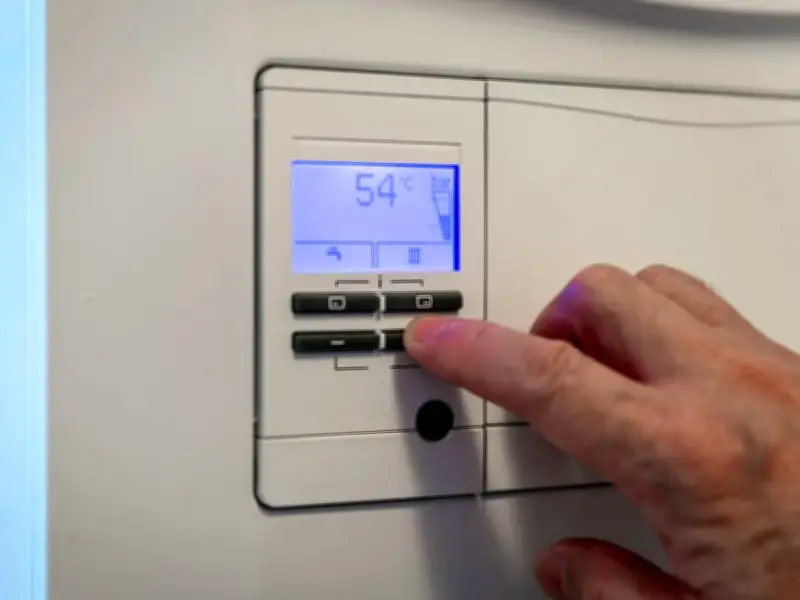
As autumn progresses, many households are wondering when to switch on their heating. Energy Saving Trust specialists have debunked the common advice of leaving heating on low all day, warning this will cause electricity costs to skyrocket.
They suggested: "Generally, it's useful to have your heating come on around half an hour before you get up in the morning. Then turn it off again around half an hour before you go to bed."
When should you turn the heating on?
Experts said you should turn your heating on when indoor temperatures fall below 18C, or when outdoor temperatures consistently fall below 15C. This weekend across the North West, the Met Office has forecast bright and sunny weather, but temperatures remain at 13C, meaning it might be time to switch the heating on.
In its outlook for this weekend, the forecast said: "Mostly dry with sunny spells for many. Light winds and remaining cold for the time of year. Maximum temperature 12 °C." Looking ahead, the Met Office added: "A chilly start with patchy frost and fog on Sunday, but dry spells with sunshine follow. Cloudier and breezier by Monday, with rain possible through Tuesday and temperatures nearer average."
What time should you switch on the heating?
Homes constantly lose heat through windows or doors, so keeping radiators on low all the time won't keep rooms warm, but rather means your boiler runs for longer periods. It's usually more efficient to set the heating to come on about 30 minutes before you wake up, ensuring you start your day in a warm environment.
Waking up to a chilly house makes it harder to get out of bed, which could result in a less productive morning or even oversleeping. You should also programme the heating to come on an hour before you return home, ensuring it's warm upon your arrival, and then switch it off 30 minutes before heading to bed.
What's the ideal temperature for your property?
It's wise to prevent any area of your house from dropping beneath 16C, as this forces your body to work overtime to maintain warmth and may result in additional health concerns. Homes should be warmed to at least 18C for efficiency, though it's typically advised to maintain your house at around 21C to remain comfortable and healthy.
The specialist said: "The main thing to get right is your room thermostat. Generally, you'll want to set this somewhere between 18C and 21C, and this will make sure the heating doesn't come on until you need it to. It also makes sure you're not overheating your home over the winter." In fact, turning your thermostat down from 22 to 21 degrees could save you £90 a year in Great Britain (GB) and £100 in Northern Ireland (NI).
Should you allow your property to become too cold, it will require additional energy to warm it back up, so maintain it between 18C and 21C to remain snug this autumn.