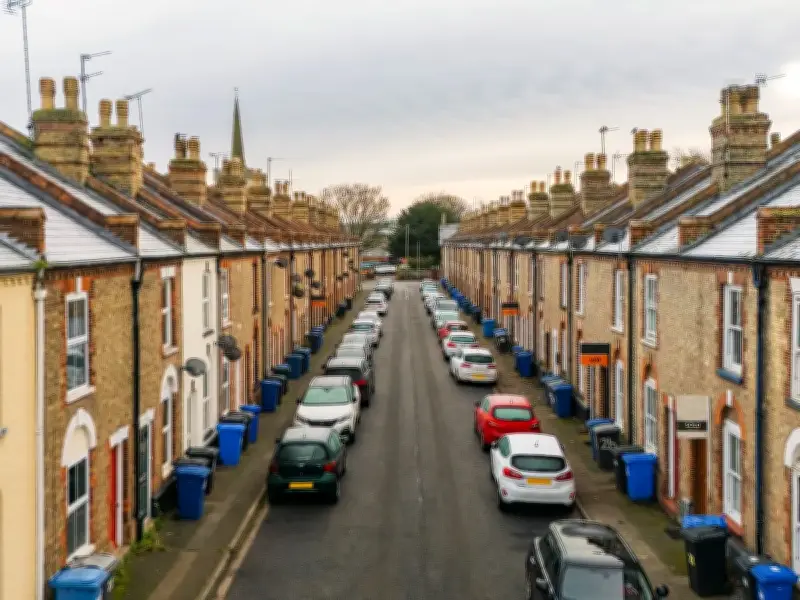
The Government has removed the need for a separate planning application for cross-pavement electric vehicle (EV) charging, benefiting eight million households living in terraced housing or flats. However, motorists may still face a postcode lottery, as approval timelines could vary depending on where they live.
Planning red tape scrapped
The move follows a Department for Transport (DfT) consultation on permitted development rights for EV charging, which concluded in January. The amendment establishes a new permitted development right for cross-pavement charging, with local authorities retaining oversight through existing highways permissions and safety regulations.
Daniel Briggs, CEO at frontline worker car discount company Motorfinity, said: “Scrapping planning red tape is an overdue win for fair access to EV charging, making it easier for those wanting to make the switch from petrol to EV. That said, the bottleneck hasn't entirely vanished.
“The decision has shifted parking planning permission approval to local highway authorities, which could create a postcode lottery of enforcement. There’s a need for a national standard for what counts as a safe way to run a cable across a pavement, without which approval could be quick in one area and very slow in the next.”
Safety concerns remain
Briggs added: “Getting permissions is only half the issue - what happens on the pavement is just as important. Running a charging cable across or under a public walkway is not something to take lightly. Badly placed cables can create trip hazards - this can't be an afterthought.”
However, the expert said the move could boost EV ownership. He explained: “Eight million households without driveways will have access to the cheaper overnight smart tariffs that they have missed out on for years. This will also cost them a fraction of daytime charging rates. It is a big deal for the cost of EV ownership and will boost the second-hand EV market too.”
Innovative cross-pavement technology will enable cables to be laid underneath pavements, directly linking homes to parked vehicles. This will allow more families to benefit from lower domestic electricity tariffs, which could be as low as 2p per mile, regardless of whether they have their own driveway.
Government funding and local trials
Earlier this year the government set out a new £63 million initiative aimed at supercharging the UK's EV revolution, part of its Plan for Change. It announced a £25 million scheme dedicated to local authorities that will broaden the availability of cost-effective at-home charging solutions.
However, most councils do not yet have policies in place for cross-pavement charging, with many operating trials. For example, North Northamptonshire Council warns: “The Council does not currently have an adopted policy which enables residents to charge an electric vehicle (EV) from home when parked on the street. Highway regulations do not permit the trailing of a cable across the pavement which may put other highway users, including pedestrians, at risk.”
The council will be undertaking a trial of cross-pavement channels in due course. These are shallow gullies cut into the footway with a channel lining installed with a lid, allowing an EV charging cable to run across the pavement through the channel, reducing trip hazard risks. The council is currently working to increase charging points closer to homes by expanding its network of public charging points, installing more than 1,500 in its car parks and on streets over the next three to five years.
It aims that by the end of 2029 at least 80% of homes without access to off-street parking will be within 250m (radius) of a public EV chargepoint. The project is funded by £2.895 million from the government's Local Electric Vehicle Infrastructure (LEVI) fund and private investment from Connected Kerb.
Regional schemes
Dozens of other local authorities are also taking part in government-funded pilot schemes. These include Liverpool City Region, which has secured £9.6m through the LEVI programme. It said: “The aim is to make charging an electric vehicle as easy and accessible as possible, supporting more people to switch to EVs. Across the Liverpool City Region, this funding will support the rollout of new on-street and publicly owned car park charge points, helping make charging more convenient, reliable and affordable. Installation is expected to begin from late 2026.”
In the North East, more than 1,000 homes are set for help through a £1.2m grant fund to help people without driveways access cheaper home charging rates. North East Mayor Kim McGuinness secured the money from the Government’s electric vehicle pavement channels grant. The Mayor’s grant funding will be available through all local councils across the North East mayoral area for residents who do not have a drive, garage or off-street parking, meaning they can charge their vehicles at low-cost domestic electricity rates, instead of paying higher public charging prices.