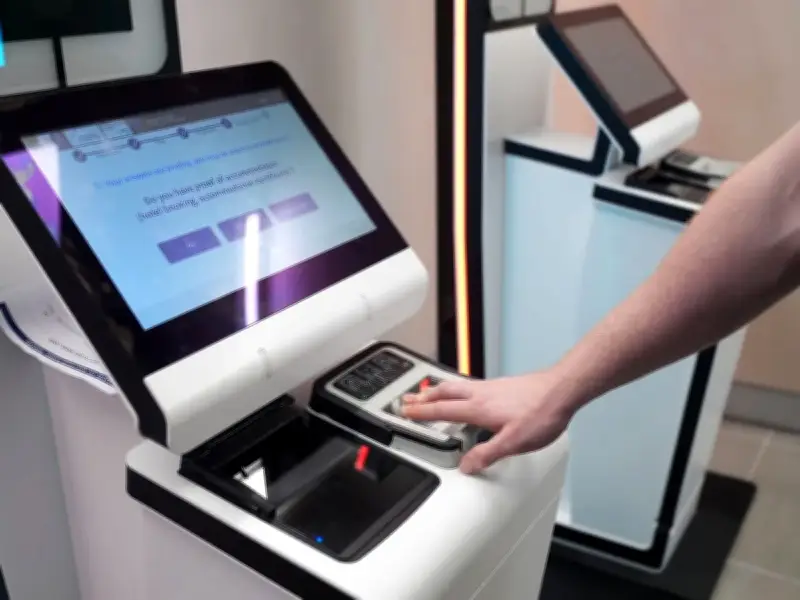
At least nine Schengen countries have paused full implementation of the EU's Entry/Exit System (EES), according to reports, after the biometric border checks caused long queues at European airports this summer.
Which countries are pausing EES?
Portugal, Italy, France, Belgium, the Netherlands, Germany, Malta, Greece and Switzerland have been granted permission to postpone full implementation of the EES, The Sunday Times has reported. There appears to be no deadline by which these countries must adopt the scheme.
The EES launched in the Schengen Area in April this year. It requires third-country nationals, including Brits, to provide biometric data - fingerprints and a photograph - when arriving at the EU border. This creates a digital record valid for three years, designed to replace passport stamping.

Why has the rollout been delayed?
While the system has been rolled out smoothly in some destinations, others have seen delays and long queues at the EU border. The Sunday Times reports that the nine countries have told the European Commission, which oversees the EES, that they will not enforce the new controls in full until the technology and systems are working correctly.
Following years of postponements, the system was rolled out from October 2025, with full implementation originally anticipated by the following April. Faced with the prospect of significant border queues due to software failures, officials granted countries a 150-day grace period during which they could drop the checks to avoid travel chaos. That rule ended on September 6, and the EU previously insisted there would be no extension.
Travel chaos and criticism
The scheme has sparked widespread reports of enormous queues at European airports this summer, including in Mallorca, Faro, the Canary Islands and Milan. It has faced fierce criticism from Ryanair and others.
The European Union describes the EES as an automated IT system designed to register non-EU nationals travelling on short stays each time they cross the external borders of participating European countries. One of its main purposes is to track whether non-EU citizens have spent more than their permitted 90 days in the bloc in a rolling 180-day period.
Social media has been awash with debate about the scheme. One traveller on Reddit said: "They made a mess of it. Seems many basic things like it is hit and miss on the document scanning but also things like people walk up with hats and headphones and the machine doesn't tell them to remove them, and organisational things like if the machine errors the traveller has to back out and has no where to go."
Another person said: "The general lack of functionality of so many IT systems across the EU is kind of astonishing."