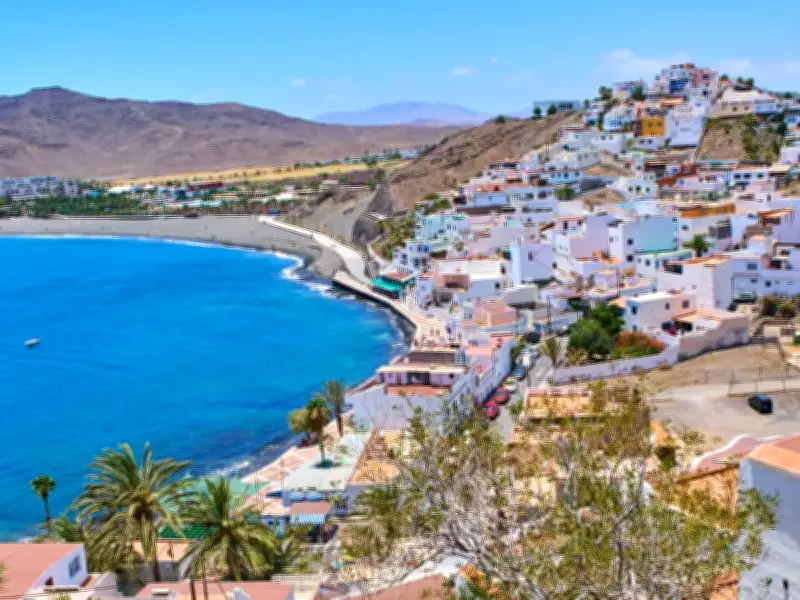
A 3.2-magnitude earthquake was recorded off the coast of Fuerteventura, a popular holiday destination for British tourists. The tremor struck at 5.06am local time on Friday and was detected by Spain's National Geographic Institute (IGN), which said the epicentre was located around five kilometres below the seabed.
Seismic monitoring continues
Seismologists at the European-Mediterranean Seismological Centre (EMSC) are also examining the event and assessing the available data. The average magnitude of earthquakes recorded in the region is 1.9. The tremor, IGN said, was weak but could have been noticed by people in the area, particularly those indoors.
According to the IGN, the archipelago recorded 48 earthquakes within 30 days, which equates to an average of 1.6 per day. Ten earthquakes were recorded last week, which is a typical figure for the archipelago.
Revised measurements
The IGN initially calculated the earthquake at magnitude 3.0 and a depth of four kilometres before subsequently revising the measurements to magnitude 3.2 and five kilometres deep as additional seismic data were analysed. No injuries or damage have been reported so far.
Authorities in the Canary Islands are continuing to closely monitor seismic activity and ground deformation across the archipelago, with experts stressing that clusters of earthquakes do not necessarily signal an increased volcanic threat.
Focus on Tenerife
Scientists are paying particular attention to conditions in another area of the Canary Islands archipelago, Tenerife. Amid concerns over increased tremors around Mount Teide, Tenerife Island Council is organising emergency exercises designed to test the island's preparedness for a potential volcanic eruption. The drills, which simulate a range of emergency scenarios, are due to take place in Guía de Isora and La Laguna.
Researchers have also identified a substantial magma reservoir beneath Pico Viejo, one of Mount Teide's secondary volcanic structures. However, scientists have cautioned against linking all recent seismic events to volcanic activity. The Spanish National Geographic Institute (IGN) previously concluded that a series of earthquakes recorded north of Punta del Hidalgo on Tenerife's northern coastline were tectonic in origin rather than volcanic. At least two of those offshore tremors were felt by residents on land.