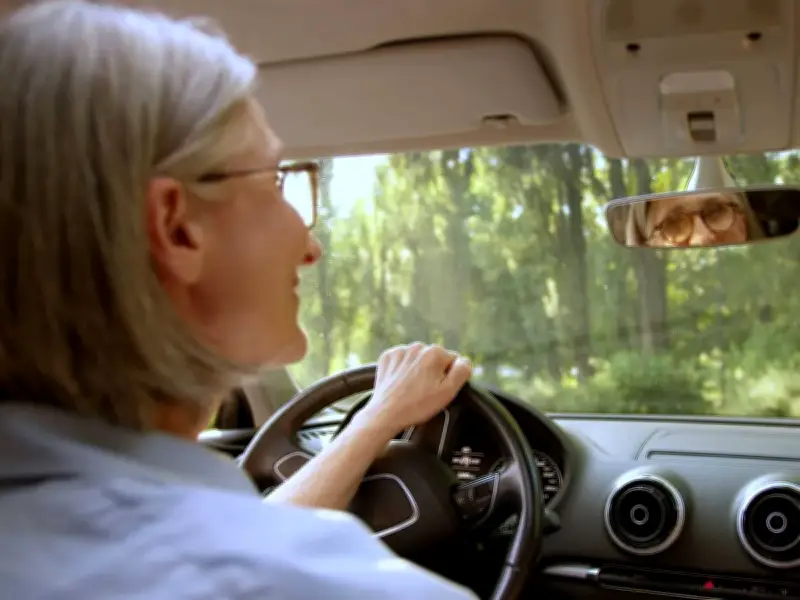
The DVLA has reminded older drivers that they must renew their licence every three years once they hit 70, or risk losing their right to drive. The rule applies to all motorists, including those born before 1956, whose numbers on the road have been rising.
Reaching 70 does not mean hanging up the car keys for good, but the standard driving entitlement does expire. Drivers must renew it, confirming they still meet the required vision standards, if they wish to continue driving.
Free renewal process
The DVLA confirms the process is completely free and can be done online, with a replacement licence typically arriving within a week. The rule has been in place since 1976, when the Government overhauled the licensing system so that standard driving licences would remain valid until the age of 70, rather than requiring everyone to renew every three years.
Beyond that age, three-yearly renewals were kept in place given that advancing years can bring health and fitness changes that may impact a person's ability to drive safely. The Department for Transport states that the renewal process serves as a regular prompt for older motorists to reflect on their health, including their eyesight, and to declare any medical conditions that could have a bearing on their driving.
What happens when you turn 70?
The DVLA will ordinarily dispatch a D46P renewal form roughly 90 days before the driver's 70th birthday. Alternatively, motorists aged 70 or over, or within 90 days of their 70th birthday, can complete the renewal process online.
The online application asks drivers to confirm they satisfy the minimum eyesight standards and aren't barred from driving for any other reason. They can also refresh their licence photograph while renewing. A separate procedure exists for Northern Ireland.
What older drivers must do
The crucial point is that turning 70 doesn't trigger an automatic driving prohibition. However, motorists must ensure they:
- Renew their licence at 70 and every three years afterwards.
- Meet the legal eyesight standards.
- Tell the DVLA about medical conditions which could affect their ability to drive.
- Continue to meet those standards between renewals — drivers have an ongoing legal responsibility to be medically fit to drive.
- Wear glasses or contact lenses when required.
- Check that their licence remains valid rather than assuming it automatically continues.
The legal eyesight standard includes being capable of reading a number plate from 20 metres and possessing the necessary level of visual acuity and field of vision. Drivers who neglect to renew cannot simply presume they're entitled to keep driving indefinitely.
There are situations in which someone may continue driving while a renewal application is being handled, though stringent conditions apply, including having held a valid licence and satisfying the other criteria outlined by the DVLA.
Why eyesight has become a big issue
The three-year renewal system faces renewed examination due to worries about ageing motorists and declining eyesight. The Government initiated a consultation in January 2026 on whether drivers aged 70 and above should face a compulsory eyesight test when renewing their licence.
Currently, older motorists essentially self-certify that they meet the eyesight benchmark. The consultation highlighted that eyesight deterioration is a natural consequence of ageing and conditions including glaucoma and macular degeneration become more widespread in later life.
The Government is yet to make eyesight tests compulsory for drivers. A Department for Transport evidence review, published in 2025, concluded there was relatively limited concrete UK evidence directly connecting visual impairment with the risk of collisions or casualties.
Nevertheless, it established that cataracts were clearly linked to considerably higher rates of motor vehicle collisions. The statistics in this area are striking.
A roadside vision screening exercise carried out in 2024, involving 3,010 drivers and riders, revealed that 1.7% failed the number-plate test. The failure rate was considerably greater amongst the oldest road users, with 10.2% of drivers aged 81 to 90 falling short. In total, 1.4% of those pulled over had their driving licence revoked, including 38 immediate revocations.
The same Government review references a study of police data conducted by the College of Optometrists, which found that uncorrected defective eyesight was recorded as a contributing factor in 77% of a substantial sample of collision reports involving people aged over 60. However, this figure warrants careful interpretation. It is drawn from a specific sample of police collision reports and does not indicate that 77% of all crashes involving older motorists are caused by poor vision.
Older drivers and road deaths
Official statistics reveal why the Government is scrutinising older motorists more closely, though they don't confirm that poor eyesight was to blame for those deaths or injuries. In 2024, 115 older car drivers lost their lives and 1,109 sustained serious injuries in reported crashes. Overall, there were 4,669 casualties among older car drivers.
Older drivers represented roughly 24% of all car-driver fatalities in 2024, despite forming a considerably smaller share of all drivers. Crashes involving at least one older car driver led to 239 deaths and 3,061 serious injuries throughout the year.
The statistics also demonstrate that the danger isn't solely about causing accidents. Older motorists face greater vulnerability to serious injury or death when crashes happen due to the impact of frailty.
The Department for Transport states that KSI - killed or seriously injured - casualty rates per billion miles are elevated for male and female drivers aged 76 and above compared to nearly every other age bracket, except for drivers aged 29 and younger.
There were approximately 6.3 million full driving licence holders aged 70 and over in Great Britain in 2025, representing a 60% increase from 3.9 million in 2012. Roughly 2 million over-70s renew their licences annually.