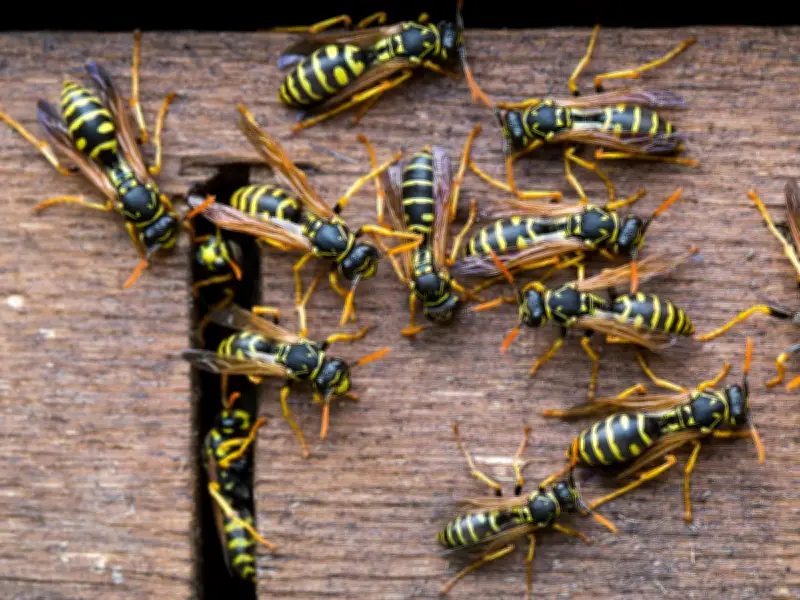
Record-breaking temperatures have led to swarms of drunk wasps, fuelled by fermented fruit, which are expected to be more aggressive than usual as summer draws to a close. The heat has accelerated the fermentation of fruit, making it alcoholic, and wasps are consuming it in greater quantities than normal.
Experts Warn of Angrier Insects
Natalie Bungay of the British Pest Control Association has urged the public to be wary of the inebriated insects and avoid disturbing their nests. She said: “Wasps are nature’s pest controllers and can be useful in the garden, but they have been known to build their nests in all kinds of strange places from hollow trees and sheds to toilet cisterns and musical instruments.”
“It’s really important that anyone who comes across a wasp nest weighs up whether the nest needs to be removed and, if it does, seeks help from a BPCA member who will have the appropriate expertise, products and equipment to remove it safely.”

Why Wasps Get Drunk
The phenomenon is linked to late summer when colonies change their behaviour. When the queen stops producing eggs, worker wasps have less work in the nest and start searching for sugary foods, including fermenting fruit. Heat speeds up the fermentation process.
Experts are warning that swift action is needed if stung, as it can trigger anaphylaxis, a potentially fatal allergic reaction.
Pest Controllers Report Worst Season
Andy McMillan, director of Guardian Pest Control in Warrington, Cheshire, said his firm has faced the worst season of wasps he can remember, with a huge increase in callouts. He said: “The dry weather has played a huge role in there being more drunk wasps swarming around the UK, it is worse than any summer in recent memory.”
“When the nest changes and there aren't any young, then wasps seek out sugary foods and that could be anything from soft drinks and fruit trees.” He noted that wasps are more aggressive than usual at this time of year and will sting more until the nest dies.
Mr McMillan added: “Our company usually finds wasps in homes on roofs, in sheds and sneaking through air bricks. The most important thing is to be cautious as people don't realise what severe reactions you can get from stings.” Brits are being urged to dispose of rubbish properly, especially food with a high sugar content, to avoid encounters with the stinging insects.