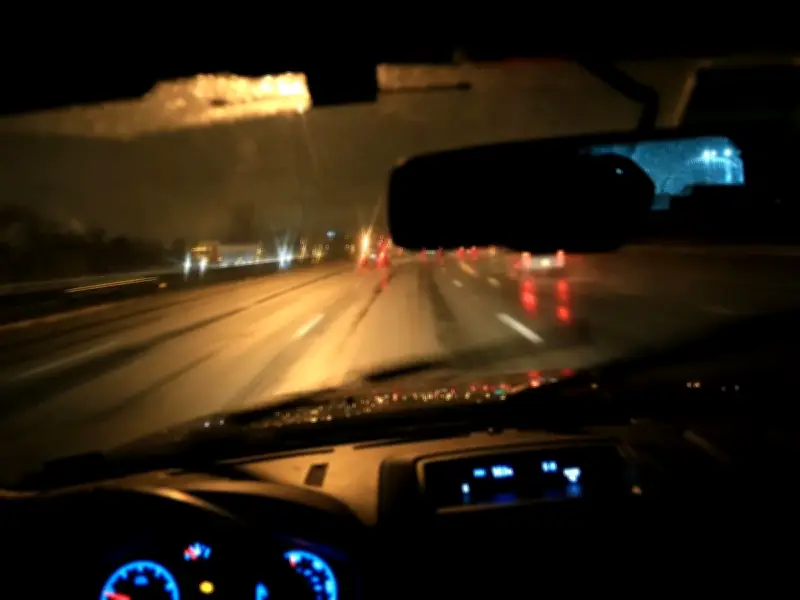
Drivers are being urged to prepare for darker journeys as the clocks go back on Sunday, October 25, marking the end of British Summer Time and the return to Greenwich Mean Time. The change means evening commutes and school runs will become noticeably darker, and familiar roads may look very different.
With reduced daylight, hazards such as potholes, pedestrians, cyclists, standing water and debris become harder to spot on poorly lit roads. James Harding, a motoring expert with 16 years of experience at Blackcircles.com, warned: "Unlit roads can be more dangerous, especially to cars with less powerful headlights. Reduced visibility often means that sharp bends, debris and standing water can appear much later than they usually would. You may also not notice loose gravel, mud, potholes or broken edges until you are close."
Pre-journey checks and tyre safety
Harding's advice begins before setting off. He explained: "Before you set off, you must also check that your tyres have the correct pressure and adequate tread. Having good grip is especially important when you are unable to see road surfaces."
Tyre condition becomes particularly important with autumn rain, as the Highway Code states that stopping distances in wet conditions are at least double those required on dry roads. Drivers should also keep a safe gap behind the vehicle ahead and ensure they can stop within the distance they can see clearly.
It is also advisable to resist sudden movements when a hazard appears late. If a pothole or damaged road edge suddenly comes into view, slowing down in good time is preferable to making a sharp last-second swerve.
Headlight use and vulnerable road users
The Highway Code says drivers must use headlights when visibility is seriously reduced, generally when they cannot see for more than 100 metres. It also warns that lights must not be used in a way that dazzles or causes discomfort to other road users, including pedestrians and cyclists.
Cyclists and pedestrians deserve particular attention once darkness arrives earlier. RAC guidance highlights children, cyclists and animals as road users drivers should watch for at this time of year, while the Highway Code says motorists should take extra care around vulnerable road users.
Drivers should also pay attention to their own visibility through the windscreen. RAC advice warns that condensation inside the glass and dirt on the outside can impair vision and increase glare from headlights, making it important to clear the windows properly before setting off.
Post-journey checks and safe approach
Harding said: "If you've recently driven down a particularly rough, dark road and notice vibrations, a steering pull, or loss of tyre pressure, it is important to check your tyres promptly."
With autumn moving towards winter, the safest approach is to slow down when visibility deteriorates, leave extra room and make sure the vehicle itself is ready for darker conditions.