Dog owners across Scotland have been warned that their pets could behave differently during this evening's (August 12) solar eclipse as the sky suddenly darkens. The Moon will block around 90 to 96 per cent of the Sun across parts of the UK and Ireland, creating the most significant eclipse visible from the UK since 1999. The rare event isn't expected to be seen on this scale in UK skies again until 2081.
Eclipse timings and coverage
The partial eclipse is expected to begin shortly after 6pm, reaching its peak at around 7.10pm before ending shortly after 8pm, although timings and coverage will vary across the country. In Edinburgh and Glasgow, the eclipse will begin at around 6.08pm. Inverness is expected to see 90 per cent coverage, with the eclipse reaching its peak at around 7.03pm, while Aberdeen will see 89 per cent coverage at the same time.
Fort William, where around 91 per cent of the Sun will be covered, and Dundee, with 90 per cent coverage, will reach their peak at around 7.04pm. Meanwhile Edinburgh is expected to see 90 per cent coverage at approximately 7.05pm, followed by Glasgow at around 7.06pm with 91 per cent coverage. The exact times for viewing the eclipse in Scotland can be found on the global eclipse map from Timeanddate.com.
How dogs may react
While the eclipse itself is not considered dangerous to dogs, the sudden changes in light and temperature could temporarily disrupt the environmental cues they use to understand their daily routine. Darren Beale, CEO of fresh dog food brand Years, said: “Dogs will not understand that an eclipse is taking place. Instead, they may interpret the sudden drop in light and temperature as an early sunset.”
“Some dogs might become quieter, head towards their bed or start expecting their evening meal or walk earlier than usual. More sensitive dogs could appear unsettled, follow their owner around, pace or become unusually alert.” He continued: “However, most dogs are unlikely to become seriously distressed. Because the eclipse takes place during the early evening, when many dogs are already beginning to settle down, its effect may be less noticeable than an eclipse happening in the middle of the day.”
As the sky starts to darken, owners may notice some changes in their dogs’ behaviour. These signs could include heading to bed earlier than usual, waiting near their food bowl or the door and following family members around the house, as well as becoming a lot quieter and sleepier than usual. Some dogs may also pace, whine, bark at unusual activity outside or seek reassurance from their owners.
Advice for owners
Darren added: “The eclipse itself may not be the biggest source of anxiety. Unusual crowds, noise and excitement outside could be more unsettling, particularly for nervous dogs or those sensitive to changes in their surroundings. The best thing owners can do is keep the evening as normal as possible. Feed and walk your dog at its usual time, behave calmly and make sure it has access to a quiet, familiar place.”
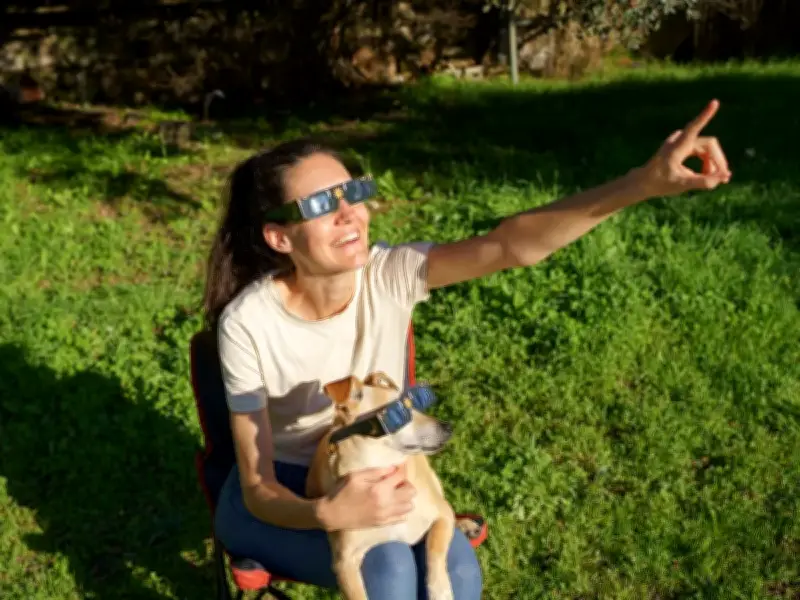
One of the main things is that owners do not need to purchase any protective eyewear for their dog for tonight’s eclipse. The expert states that dogs do not generally have a reason to stare directly at the sun, but owners shouldn’t encourage their pets to look towards it or direct their attention towards the sky for a photograph. He explained: “Trying to put eclipse glasses on a dog could cause more stress than the eclipse itself. Keep your pet comfortable, avoid encouraging it to look upwards and supervise it if you are attending a busy viewing event.”
Darren recommended: “If your dog is already nervous around crowds or unfamiliar noise, it may be happier staying safely indoors while the eclipse takes place.” Additionally, the expert recommended that owners stick to their pet’s usual routine as much as possible. This means keeping meals, walks and bedtime at their normal times and making sure dogs have access to their usual beds or a familiar space.
If the changing light appears to unsettle your pet, closing the curtains could help. Nervous dogs should also be kept away from busy eclipse-viewing events where crowds and unfamiliar noises could cause additional stress. Owners can also use familiar activities, such as food puzzles or gentle indoor play, to help keep their pets occupied. Most importantly, the expert advises owners to remain calm and avoid making the unusual event feel alarming to their pet.
If a dog shows severe or persistent signs of distress, owners should contact their vet for advice.