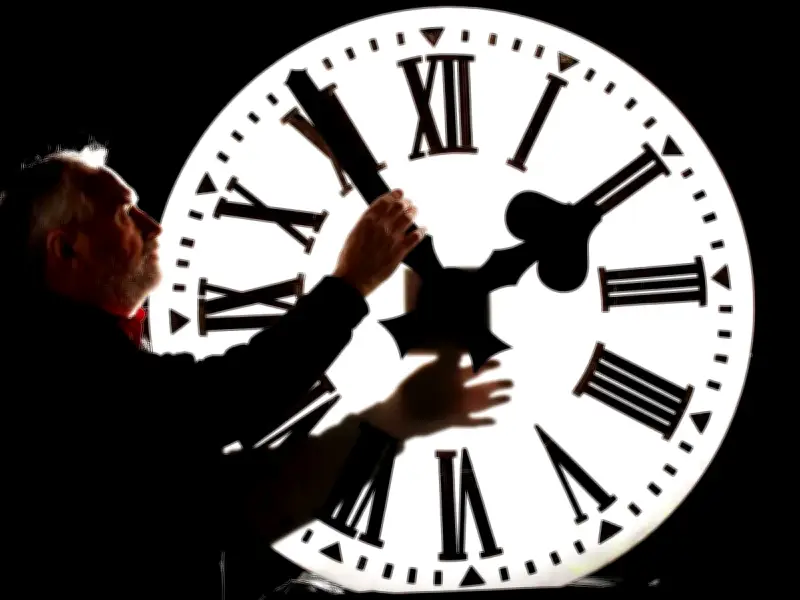
The clocks go back on Sunday 25 October 2026 at 2am, marking the end of British Summer Time (BST) and giving an extra hour in bed. The change means sunsets will fall to before 5pm in much of the UK, with darker evenings arriving almost a week before the end of the month.
Earlier sunset times across the UK
The exact time of sunset depends on location. In Cardiff it is currently around 6.30pm, while the further north you go the earlier it gets. By October 24, the day before the change, sunset will be at 6pm in Cardiff, 5.46pm in Newcastle, 5.50pm in Edinburgh and 6.09pm in Cornwall.
On October 25, this will be more than an hour earlier at 4.59pm in Cardiff, 4.44pm in Newcastle, 4.48pm in Edinburgh and 5.07pm in Cornwall.
Why the clocks change
The clocks always change on the last Sunday in October, when they "fall back" to Greenwich Mean Time (GMT). The Royal Museums Greenwich (RMG) explained: "On the last Sunday of October in the UK, the clocks go back by one hour."
The reason for the change is set in history. The RMG said: "A campaign at the beginning of the 20th century successfully argued in favour of changing the clocks during the summer months to avoid wasting time in the morning." The first idea of daylight saving time goes back to Benjamin Franklin in 1784, but it took until 1916 for the Summer Time Act to be passed, ordaining that for a certain period during the year legal time should be one hour in advance of GMT. Double summer time (GMT + 2 hours) was used during the Second World War.
Arguments for and against
There are arguments still today over whether the practice should continue. Arguments in favour of changing the clocks, according to RMG, include reducing energy consumption for environmental reasons, having longer evenings to support leisure and tourism, encouraging people to exercise more outdoors and reducing road accidents.
Arguments against include the inconvenience of changing the clocks twice a year, safety concerns about darker mornings, and concerns from some farmers about the effect of changing routines for livestock. Some argue that changing the clocks is now redundant given that many people spend most of their time in well-lit homes, shops and offices, where the amount of daylight makes little difference. Similarly, the economic and environmental advantages can vary: for some warmer regions, it is thought that longer evenings may actually increase energy consumption as people use air-conditioning units for more hours.
RMG added: "It's an ongoing debate that strongly depends on people's geographical location, occupation and lifestyle."