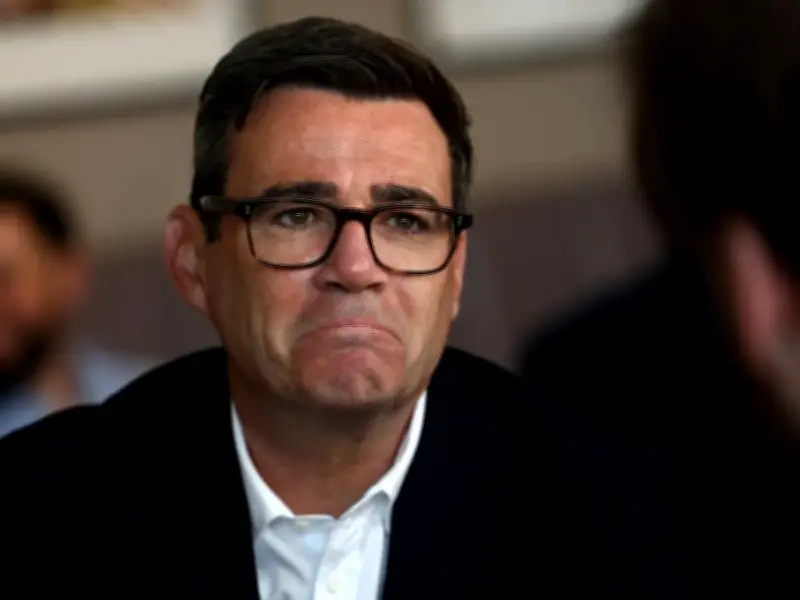
Prime Minister Andy Burnham is facing calls to delay the planned switch-off of terrestrial television, a move that could affect millions of households across the UK. Campaign groups representing rural communities and vulnerable people, including the elderly, have urged the government to halt the proposals.
Government Proposes End to Aerial TV
A Green Paper published last month outlined plans to replace aerial-based Digital Terrestrial Television (DTT) with internet services, with the earliest transition date set for 2034. This would mean the end of Freeview, which currently reaches 13.6 million homes and is the main television platform for 40 per cent of households with a set.
Up to 1.5 million households are expected to still rely on DTT by 2035. Culture Secretary Lisa Nandy said the move was necessary as 'the media landscape moves further and further online'.
Campaigners Demand Delay Until 2044
Broadcast 2040+ is among the groups pushing for the changeover to be delayed until at least 2044. The group has written to Jenny Riddell-Carpenter, a minister in the Department for Environment, Food and Rural Affairs and former chair of Labour's Rural Research Group.
Broadcasters argue that running dual transmission systems is increasingly expensive, and shutting down Freeview would save millions in distribution costs, freeing up money for programming. However, campaigners claim the switch-off would unfairly target the elderly, vulnerable, and rural residents, who may need to sign up for broadband and buy new televisions.
In its letter, Broadcast 2040+ said: "We believe that free, universal access to public service content is best delivered through the terrestrial TV network, which remains the most reliable and equitable platform for reaching the widest possible audience. However, the future of this network is uncertain. Media Minister Stephanie Peacock MP is currently leading a year-long review into the future of TV distribution in the UK, and the Government has yet to commit to maintaining terrestrial TV beyond 2034."
The letter also warned that a full switch-off could exclude an estimated 5.5 million premises predicted not to have a broadband connection by 2040.
Rural Broadband Gaps and Public Concerns
Government data shows only 70 per cent of rural residences have access to gigabit-capable broadband, compared to 92 per cent in towns and cities. In the most rural areas, this drops to 60 per cent. Ofcom reported that 26,000 properties in England still lack adequate broadband connection.
Dennis Reed, director of Silver Voices, warned that switching off Freeview could become 'Burnham's winter fuel moment'. He said: "Andy Burnham would be bonkers to proceed with this premature plan. Most affected would be low income families and pensioners who will not be able to afford the [broadband] contracts, and those in isolated and rural communities who cannot receive fast broadband at all."
Murray, Minister for Creative Industries, Media and Arts, said a consultation is under way, with responses due by August 31. He said: "Parliament has secured the future of Freeview, also known as digital terrestrial television (DTT), until at least 2034, and no decision has been made about what happens beyond this. On 23 June, the Government published a Green Paper, Watch this Space: A new strategic direction for UK media which consults on both 2034 and 2044 as possible timeframes to switch off DTT."
A government spokesperson said: "There is a strong case for a long-term transition to IPTV [internet protocol television], but no decisions have been made. The purpose of the media green paper is to gather views from across the sector and the public before any final decisions are taken. We are committed to ensuring that no one is left behind as TV viewing increasingly moves online."
A Change.org petition has gathered more than 150,000 signatures, and the Countryside Alliance warned that many rural residents rely on television as a vital lifeline. The group said: "For many people living in rural communities, television is more than just entertainment: it is a vital lifeline for news, information, and connection - particularly for older residents or those who may feel isolated."
The consultation remains open until August 31, and the government has said no final decisions have been made on the future of DTT.