The chair of the National Preparedness Commission has warned Brits they must take rising global threats seriously and start making plans for an emergency. Lord Toby Harris told Metro the government has had a ‘degree of caution for a number of years about not worrying people’, but must start to clearly explain the potential consequences of the risks we face.
Public information campaign on domestic resilience
Earlier this week, it was revealed that a new public information campaign could soon be launched to give advice on improving ‘domestic resilience’. A government official told the Financial Times: ‘It will be common sense, not scaremongering.’
The news came after weeks of threats from Moscow over the extent of the UK’s support for Ukraine, with Russia’s London-based embassy saying: ‘The deeper its involvement in the conflict… the higher the price it will pay.’

Escalating threats from Russia and beyond
After Vladimir Putin’s spokesman said the UK was adding ‘fuel to the fire’, Prime Minister Andy Burnham hit back by asking: ‘Who started the fire? That’s the question, isn’t it?’
And in a further escalation, a spokeswoman for the Russian Foreign Ministry said today that ‘any British military facilities and equipment in Ukraine and beyond’ could be targeted if Kyiv attacks Russia with UK-supplied weapons.
Lord Harris said the public ‘ought to be taking that seriously’, adding: ‘We’ve seen the deterioration in terms of international relations. We’re probably closer to widespread war in Europe than we have been for over 60 years.’
Beyond Russia, he pointed to other major threats such as the extreme heat experienced in parts of England and Wales this summer which put heavy pressure on emergency services.
Advice on preparing for emergencies
The Labour peer continued: ‘There is increasing sabre-rattling by the Chinese about taking action against Taiwan. That would have immediate implications in terms of the supply of the semiconductors which most key IT processes rely on, and potentially would block the Straits of Taiwan, which would have as big an economic effect as the blockage of the Strait of Hormuz. In fact, probably bigger.’
He said advice in the UK is currently relegated to an ‘obscure part of the Gov.uk website’ titled Prepare, in contrast to countries such as Sweden which distributes handbooks to every household. There ‘probably needs to be a ramping up of its intensity and scale’, he added, though the government is ‘on the right direction of travel’.
Lord Harris said: ‘The message in quite a number of other countries is: How would you and your household survive for three or four days without electricity or without water, and so on? And that’s quite a big ask for people. But that only really happens once you’ve got a level of public awareness that, at the moment, I don’t think we yet have in this country.’
The Prepare site currently lists five steps for people to take ahead of an emergency, which could form the basis of a future public campaign. They are:
- Be informed by signing up for alerts and warning, learning basic first aid and checking information for your local area like flood risk
- Make a plan by working out the best escape route from your home, writing down important phone numbers, and picking a meeting point
- Prepare your home by completing a home fire safety check and working out how to turn off gas, electricity and water if needed
- Talk to others, for example by setting up a Whatsapp group with your neighbours which could become a useful source of information
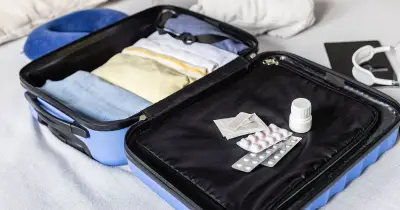
- Get emergency supplies that could last a few days and put them in a single place that’s easy to find if the lights aren’t working – a suggested kit list is available on the website here.
A government spokesperson said: ‘Safeguarding national security is the first priority of any government. We are committed to raising awareness of the simple steps households can take to make themselves more resilient, and we are driving forward the Home Defence Programme to build our country’s preparedness for various global and domestic threats.’