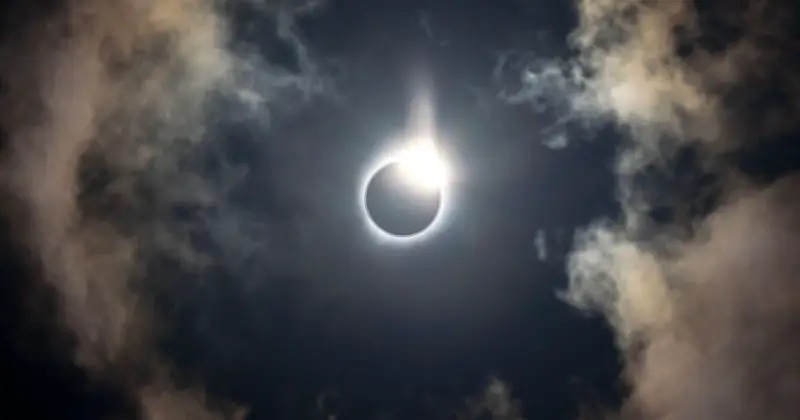
Brits planning to watch Wednesday's rare solar eclipse are being urged to check their protective glasses carefully, with experts warning that looking directly at the sun without proper protection can cause permanent damage to eyesight. A partial solar eclipse will be visible across the UK on Wednesday, August 12, offering millions the chance to witness the astronomical event.
Greatest Coverage in South West
The South West is expected to see the greatest proportion of the sun covered by the moon, making the event particularly spectacular in parts of Cornwall and Devon. Royal Museums Greenwich says the eclipse will provide the greatest coverage seen from the UK and Ireland since the famous 1999 solar eclipse, when a total eclipse was visible across parts of Cornwall and Devon.
Risks of Direct Viewing
During an eclipse, the sun can appear much dimmer than normal, which may make people feel more comfortable looking directly at it. However, the reduced brightness does not make it safe. Intense sunlight can still reach the retina and cause serious damage. Retinal damage can occur without immediate pain, meaning someone may continue looking at the sun without realising their eyesight is being harmed.
Following the 1999 eclipse, the Royal College of Ophthalmologists reported around 70 cases of people experiencing vision problems after watching the event. Around 40% of those affected had looked at the sun for less than a minute.
Proper Protection Required
Ordinary sunglasses are not a safe alternative to specialist eclipse glasses. Even very dark sunglasses do not provide the protection required to look directly at the sun. They can reduce glare and make it feel more comfortable to stare at the sun, while still allowing harmful solar radiation to reach the retina.
Anyone planning to watch the eclipse directly should use genuine eclipse glasses or a handheld solar viewer fitted with a specialist solar filter. The equipment should meet the international safety standard ISO 12312-2:2015(E). People buying eclipse glasses online are urged to be particularly careful, as not every product advertised as an eclipse viewer will necessarily provide adequate protection. If there is any doubt about whether a product meets the required safety standard, it should not be used.
Check for Damage
Eclipse glasses should also be checked before use. Anyone whose glasses have scratched, torn, damaged, or otherwise compromised lenses should replace them rather than taking a risk.
Alternative Viewing Methods
There is another way to enjoy the eclipse without specialist glasses. Indirect viewing methods, such as a simple pinhole projector, allow people to watch the eclipse without looking directly at the sun. A pinhole viewer can easily be made at home by allowing sunlight to pass through a small hole and project an image of the sun onto a sheet of paper or another surface. The gaps between tree leaves can also act as natural pinhole projectors, creating multiple images of the partially eclipsed sun. A household colander can produce a similar effect, with the holes projecting small images of the eclipsed sun onto the ground.
Binoculars and Telescopes
Anyone using binoculars or a telescope must take particular care. Ordinary binoculars and telescopes should never be used to look at the sun, as the magnifying equipment can concentrate sunlight and cause severe eye injury. Only equipment specifically designed for solar viewing or fitted with an appropriate solar filter should be used.
Cloudy Weather Not Safe
Cloudy weather does not make looking at the sun safe either. Even if clouds cover the sun, people should continue to use appropriate protection and should never assume that cloud cover provides enough protection for their eyes.
Visibility Across UK
The eclipse will be visible throughout the UK, although the amount of the sun covered by the moon will vary depending on location. People in the South West are expected to see the greatest coverage. In London, the eclipse is expected to begin at around 6.17pm, reach maximum coverage at approximately 7.12pm, and end at around 8.06pm. Times will vary across the country. The sun will also be relatively low in the western sky, meaning viewers will need a clear view towards the west to see the eclipse at its best.
For those who cannot find safe viewing equipment, the Royal Observatory Greenwich is providing a live stream of the eclipse, offering a way to watch the event without looking directly at the sun.