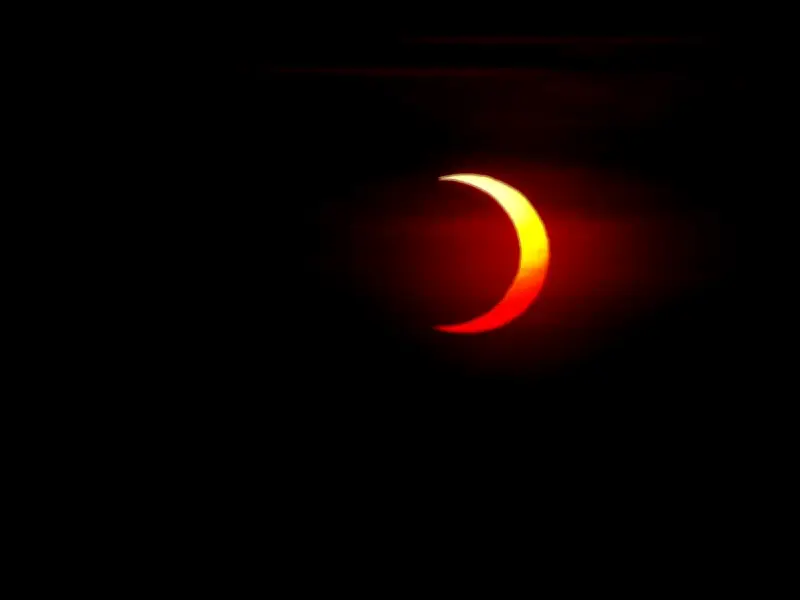
Residents across Wales are set to witness the best view of a solar eclipse in 27 years on Wednesday, August 12, when the moon obscures more than 90% of the sun. The remarkable astronomical spectacle will be the most striking eclipse visible from the UK since August 1999, when a total solar blackout took place over southwest England.
Where to see the eclipse in Wales
Cornwall and the Isles of Scilly will once again enjoy the most impressive vantage point during this month's partial eclipse, with up to 96% of the sun blocked by the moon. Wales, however, won't be far behind. On the Gower Peninsula in Swansea, the eclipse will reach a maximum of 93.8%, while in Pencaer, Pembrokeshire, it will peak at 94%.
Further north, the spectacle will be equally breathtaking, with 93.3% of the sun obscured in Gwynedd and 93.6% in Anglesey. Comparable levels will be experienced throughout North Wales, with slight reductions further east. A 93% eclipse, for instance, is anticipated in Wrexham, reports North Wales Live.
Timing and viewing tips
In the northern parts of the region, including Anglesey, the eclipse will commence at 6.13pm, while in southern areas, including Wrexham, it begins a minute later at 6.14pm. The eclipse will reach its peak at approximately 7.10pm-7.11pm, concluding just after 8pm, ahead of sunset. As an additional treat, the height of the annual Perseid meteor shower is due to occur just a few hours later.
Unobstructed westerly views are ideal, from hilltops to coastal lookouts and open countryside – weather permitting. Just off the coast of Tenby, keen sky watchers can get exclusive access to Caldey Island for the event on Wednesday with an after hours boat taking visitors to and from the island and access to the lighthouse viewing area for £40 per person.
Top three Welsh viewing spots
According to space.com, a leading authority on celestial matters, three Wales locations stand out as perfect for watching the solar eclipse. The website recommends Gwynedd's Llŷn Peninsula, Rhossili Bay and Strumble Head as amongst the top 10 UK viewing spots, not solely for its geographical advantages, but also because its skies are considerably darker than most.
Rhossili Bay, Swansea
The best time to see the partial solar eclipse at Rhossili Bay in the Gower Peninsula will be at 7.13pm where there will be 93% visibility. Light pollution is kept at a minimum along the beach keeping the skies dark at night however there is a 73% chance of cloud cover next Wednesday.
Space.com says: "Rhossili Bay's enormous west-facing beach and elevated clifftops make it ideal for watching a low eclipse unfold above the sea. Located on the Gower Peninsula, the area is a Dark Sky Community that retains relatively dark skies despite its popularity during the day. As darkness falls later that evening, the open coastal landscape provides excellent visibility for Perseid meteors."
Strumble Head, Pembrokeshire
Strumble Head in Pencaer, Pembrokeshire will have the best visibility in Wales at 94% at 7.13pm. The West Wales location offers one of the clearest west-facing views of the horizon, perfect to watch the celestial event.
Space.com says: "Strumble Head offers one of the clearest west-facing horizons in Wales, with the eclipsed sun appearing above the Irish Sea beside its iconic lighthouse." The remote Pembrokeshire coastline experiences very little artificial light, helping preserve dark skies after sunset. Once the eclipse ends, this rugged headland becomes an excellent place to watch the Perseids, with broad ocean views and little interference from nearby towns.
Llŷn Peninsula, Gwynedd
Llŷn Peninsula is one of the darkest regions in Wales offering great views of the sky at night, allowing eager-eclipse watchers to get a good look next week. The max eclipse visibility will be at 7.11pm with 93.3%.
Space.com says: "The remote Llŷn Peninsula projects deep into the Irish Sea, offering expansive views toward the west-northwest horizon, where the eclipsed sun will appear before sunset. It is also one of the darkest regions in Wales, lying close to the protected skies of Ynys Enlli (Bardsey Island) Dark Sky Sanctuary. With minimal light pollution and wide rural vistas, the peninsula becomes a superb location for watching Perseid meteors later that same night."
Future eclipses and historical context
If you're hoping to witness the next total solar eclipse visible from Wales, you'll need considerable patience as it won't take place until 2090. The last one occurred in June 1927, though overcast skies and torrential rain made it a complete disappointment.
During the partial eclipse of 1999 in Wales, one particularly striking effect was the sudden hushing of birdsong. Even the notoriously noisy gulls along the coastline fell eerily silent. Wales fared considerably better during the previous eclipse of May 15, 1836. According to Amgueddfa Cymru: National Museum of Wales, it left a lasting impression on those who witnessed it. The museum, currently exhibiting a stunning seven-metre sculpture of the Sun in Cardiff, referenced the following poetic account from Y Seren Ogleddol.