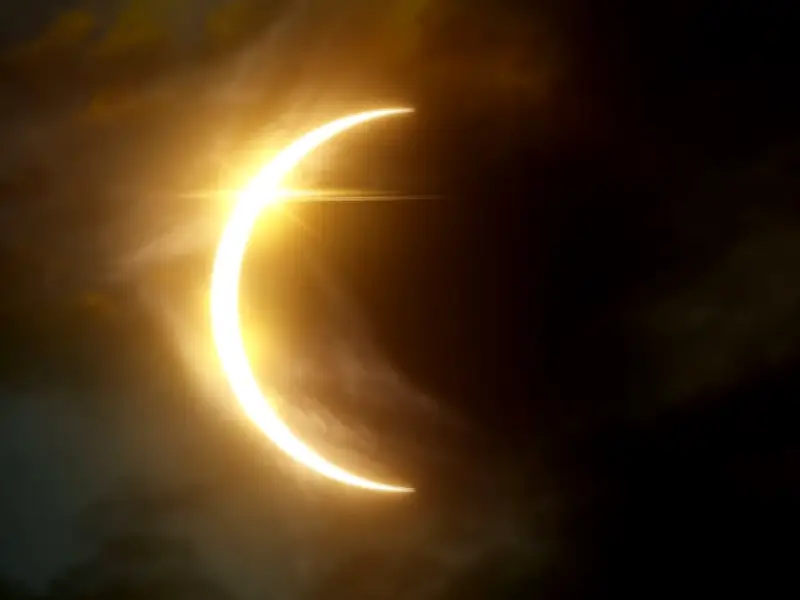
On Wednesday, 12 August 2026, the UK will experience its most substantial solar eclipse in half a century. Over 90 per cent of the Sun will be covered by the Moon between 6.17pm and 8.06pm, with millions across Europe and the UK expected to observe the alignment of the Sun, Moon and Earth.
This will be the greatest obstruction above UK skies since the total eclipse in 1999. The next occasion the Moon conceals this much of the Sun will be in 2081, and the next total solar eclipse in the UK will occur in 2090.
Where to see the eclipse
A partial eclipse will be visible from much of Europe, parts of Africa, North America, and the Atlantic, Arctic Ocean and Pacific oceans. A total eclipse will be experienced across northern Spain, eastern Greenland, western Iceland, northern Russia, the Atlantic Ocean and the north-east corner of Portugal.
In the UK, viewers in London will see roughly 90 per cent of the Sun covered, according to the Royal Observatory Greenwich. The south-west will see the greatest coverage, with Cornwall expected to experience around 95 per cent and Pembrokeshire in south-west Wales around 94 per cent. Northern Ireland, parts of the West Midlands, the South West, the remainder of Wales and areas of western Scotland are forecast to see between 92 and 94 per cent coverage.
Viewing times in Manchester
In Manchester, the eclipse coverage is expected to be 91 per cent. The major timestamps are:
- Eclipse starts: 6.13pm
- Eclipse reaches maximum: 7.10pm
- Eclipse ends: 8.03pm
Safety precautions
Solar radiation can severely damage your retinas. Even though the Sun may look less bright than normal during an eclipse, it is not safe to view it with the naked eye. Harmful radiation can still reach your eyes and cause damage, often without any immediate discomfort or warning signs. Regular sunglasses are not dark enough to block harmful solar radiation.
The UKHSA recommends two safe ways to view a solar eclipse: using specialist eclipse viewers or using indirect viewing methods. Genuine eclipse glasses must have specially designed filters that meet the international safety standard ISO 12312-2:2015(E) and are available from reputable retailers, including Royal Museums Greenwich. Eclipse glasses should never be used if the lenses are scratched, torn or damaged.
Another safe method is making a small hole in a piece of card, which is then used to project an image of the Sun onto a wall or a second piece of paper, enabling you to observe the eclipse safely without looking directly at the Sun.
After the eclipse
The Perseid meteor shower is anticipated following the eclipse. It will reach its peak on Wednesday and continue overnight into Thursday. The shower is produced as Earth ploughs through a stream of dust left behind by Comet Swift-Tuttle. The Perseids, active this year between July 17 and August 24, are widely regarded as one of the year's best meteor showers because they produce large numbers of bright, fast-moving streaks of light. They can produce between 50 to 100 visible meteors every hour during their peak if conditions are favourable, according to NASA.
The optimal time to witness the event is between midnight and 5.30am on Thursday, though some meteors will be visible as soon as the Sun sets today, with no special equipment required.