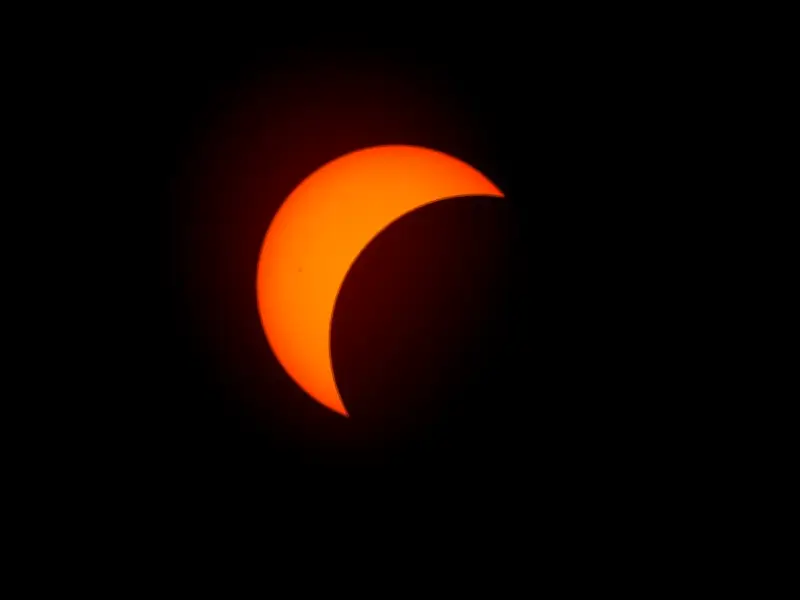
Sky watchers in the UK are preparing for a spectacular partial solar eclipse this week. As the Moon passes between the Sun and Earth on Wednesday, August 12, up to 96 per cent of the Sun will be covered, dimming the sky as sunlight is blocked.
The eclipse will be visible across the whole of the UK. While those in the South West are likely to see the best view, around 90 per cent of the Sun will still be covered from Greater Manchester.
Timings and Best Viewing Spots
In Manchester, the spectacle begins at 6.13pm and ends at 8.03pm, with the maximum eclipse at 7.10pm. The best place to see it is anywhere with a clear view of the western horizon. It is vital that no one looks directly at the Sun during the event.
An eclipse can only be safely viewed through a polarised solar lens or indirectly through a pinhole viewer.
Events in and Around Manchester
Heaton Park Astronomy Group will hold a free viewing event in Heaton Park with solar filtered telescopes, binoculars, and special eclipse glasses. Members will be near the Stables and Hall to explain what is happening and help attendees view the eclipse safely.
"Weather permitting, this will be the best solar eclipse since 2015 and there won't be another one this good until 2090!" the group said on its website.
Just outside Greater Manchester in Cheshire, Jodrell Bank is also hosting a viewing event. The observatory will be open late until 8pm. If skies are clear, it will offer guided solar observing sessions, an immersive Space Dome film celebrating the Sun, and cyanotype crafting. Film viewings take place at 4.45pm and 5.30pm.
Safety Advice
People are urged not to look directly at the Sun or view the eclipse through telescopes and binoculars unless they have a special solar filter. The UK Health Security Agency (UKHSA) has warned that sunglasses "do not provide adequate protection for viewing a solar eclipse" and should never be used to look directly at the Sun.
"They reduce glare, making it feel more comfortable to look at the Sun for longer, while still allowing harmful solar radiation to reach the retina," the UKHSA wrote in a blog post.
RAS President Professor Jim Wild said: "I would encourage everyone to enjoy the spectacle safely. Never look directly at the Sun without appropriate solar viewing equipment. Certified eclipse glasses, specially designed solar filters for telescopes and binoculars, or indirect methods such as pinhole projectors are all safe ways to observe the event."
With the right precautions, this eclipse promises to be an inspiring experience for seasoned astronomers and first-time skywatchers alike.