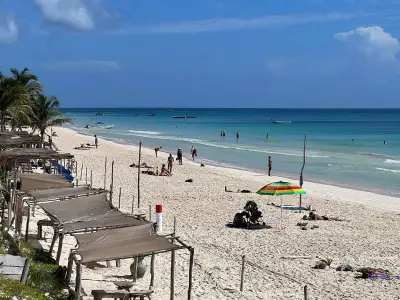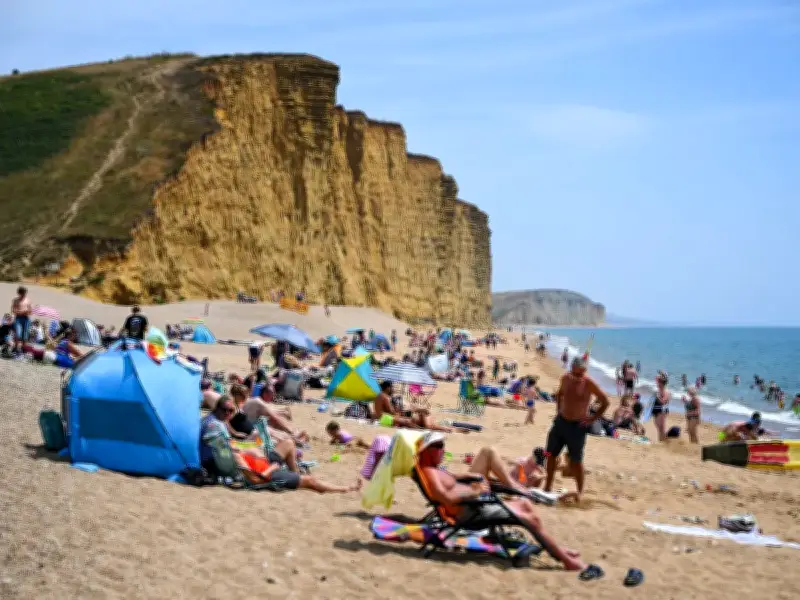
Amber heat health alerts have been issued across most of England, with temperatures set to reach the mid-30s Celsius again this week. The alerts cover the East Midlands, East of England, Yorkshire and the Humber, London, North West, South East, South West, and West Midlands. A yellow alert is in place for the North East from Tuesday, August 11, at 9am until Friday, August 14, at 9pm.
Heat to peak on Thursday
The Met Office expects temperatures to rise into the mid-30s later in the week, following a cooler Monday, with the heat peaking on Thursday. This comes as the UK experiences its fifth heatwave of the summer, and more regions are expected to be declared in drought.
An 18-year-old died after getting into difficulties in the sea at Camber Sands beach, East Sussex, on Sunday, bringing the total number of open-water fatalities this summer to over 40, according to the Press Association.
Drought and wildfires
The National Drought Group, which includes government officials, water companies, and agricultural leaders, is set to meet again on Monday, with more areas likely to be declared in drought. Half of England and all of Wales are already in drought, with 23 million customers facing hosepipe bans. Farmers warn of a "brutal harvest" and insufficient feed for livestock.
Wildfires have struck regions including the Pennines, Scotland's Cairngorms, Llanwonno in the Rhondda Valleys, South Wales, and Suffolk's Dunwich Heath, with firefighters battling hundreds of blazes.
Climate change impact
The dry conditions have combined with successive heatwaves, including record-breaking temperatures in May and June that led to over 2,800 excess deaths. The Met Office said it did not expect to issue amber or red warnings for dangerous heat, as conditions would be dry rather than humid, unlike the rare red alert in late June.
Met Office spokesman Grahame Madge said: "The heat really comes back in for a time, and will peak on Thursday. We're expecting values to be in the mid 30Cs, and possibly highest in the East."
Rainfall deficit
While some rain is possible over the weekend, including in the south, forecasters say it won't be enough to "make a dent" in the deficit. England and Wales had their driest July since records began in 1836, with 19 counties seeing no rain at all. Southern England had its warmest July on record, and it was the joint warmest for Wales.