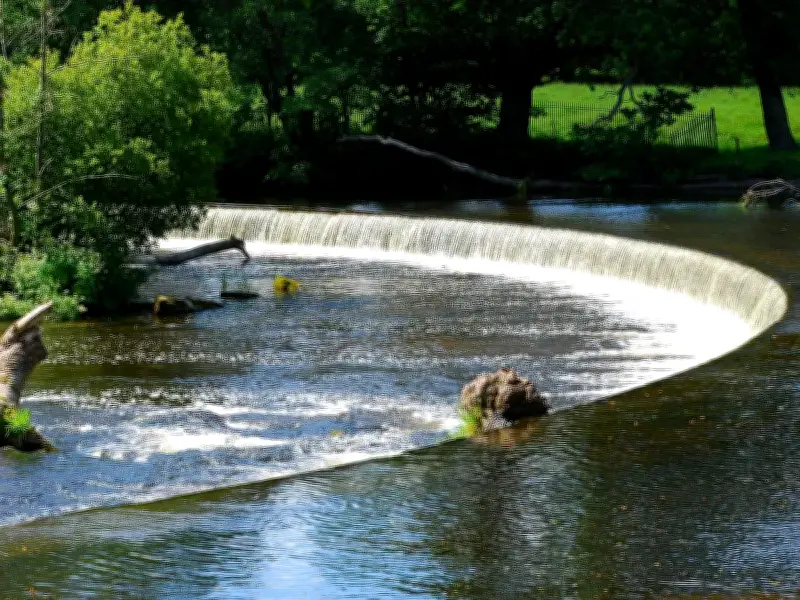
Llangollen, a picturesque town in North Wales, offers a unique experience: a walk along a canal that ends with a swim at a UNESCO World Heritage Site. The Horseshoe Falls, a 140-metre curved weir, is part of the Pontcysyllte Aqueduct and Canal World Heritage Site, the only place in Wales where such a swim is possible.
The Horseshoe Falls and Its History
The Horseshoe Falls are not natural waterfalls but a weir built to channel water from the River Dee into the Llangollen Canal. Designed by Thomas Telford and William Jessop, construction began in 1804. The falls and canal are now a World Heritage Site due to the innovative engineering that allowed the canal to be built without locks in difficult terrain.
The protected section includes the first 11 miles (18 km) of the canal, from the Horseshoe Falls near Llangollen to Gledrid. This stretch is part of the wider Dee Valley, which UNESCO recognises for its 'Outstanding Universal Value'.
The Walk and the Swim
One of the simplest routes to the falls is the Canal Towpath Out-and-Back walk, starting at Llangollen Wharf and following the flat, well-paved towpath northwest to the weir. Along the way, walkers pass historical sites like Valle Crucis Abbey, founded in 1201, and the 15th-century Llantysilio Parish Church.
For those wanting a shorter option, the AllTrails app offers an easy 1.3km circular route. Alternatively, visitors can arrive in style on the heritage steam train from Llangollen Railway to Berwyn Station, then walk the final 10 minutes along the riverside path.
Above the falls, there is a section where experienced outdoor swimmers can take a dip, provided they are cautious. The water is typically clear and cold, even in summer, and swimmers should stay clear of the weir edge, watch for fast currents and changing water levels, and be mindful of kayakers and other river users.
A Refreshing Dip with a View
Swimmers can enjoy a gentle swim while watching rafters and canoeists navigate the curved basin. The falls maintain the canal's water supply, with around 12 million gallons flowing daily towards Hurleston Reservoir.
After the swim, the walk continues into Llangollen town, crossing the Grade I-listed Llangollen Bridge and passing landmarks such as the 13th-century Corn Mill, Llangollen Museum, and Plas Newydd, former home of the Ladies of Llangollen. The route ends at St Collen's Church, known for its 15th-century carved oak roof and the graves of the Ladies.