The Foreign Office has warned UK families to build extra time into their journeys as new digital border checks for British passport holders come into force across the Schengen area. The EU Entry/Exit System (EES) replaces manual passport stamping with a digital border record and applies to short-stay travel to countries including France, Spain, Greece, Italy, Finland, Switzerland, Norway and Iceland. Ireland and Cyprus are not covered.
What the EES involves
Travellers may have their passport scanned, a facial photo taken and, for adults and children aged 12 and over, fingerprints scanned. Children under 12 are not fingerprinted, but babies and children still have a photo taken and a digital record created. The first registration is the one most likely to take longer. The record is then valid for three years, or until the passport expires, whichever comes first.
British travellers do not need to register in advance and there is no fee, but the checks happen at the border and can add time when airports, ports and train terminals are busy.
Key points for families
- Who is affected: UK passport holders travelling for a short stay to the Schengen area.
- What is checked: passport details, a facial photo and fingerprints for travellers aged 12 and over.
- Younger children: under-12s are not fingerprinted, but all travellers, including babies, can be photographed.
- Where it happens: at the border, either before leaving the UK at Dover, Eurotunnel Folkestone and Eurostar St Pancras, or on arrival in the destination country for most flights and other ferry routes.
- How long it lasts: the digital record is valid for three years, or until the passport expires.
- What to do before travel: check operator guidance, leave extra time and avoid tight onward connections where possible.
Advice from travel specialists
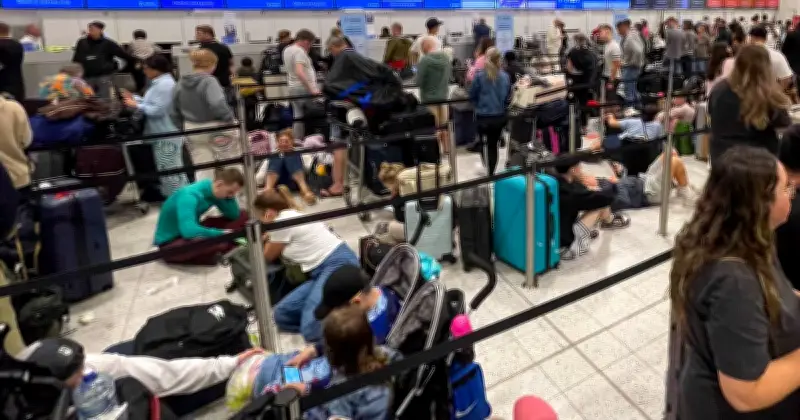
The warning is especially relevant for school holiday trips, when family queues can already move more slowly because of pushchairs, luggage, toilet stops and children who may be tired or overwhelmed. Lapland Famille, which helps UK families plan trips to Finland, advises parents to treat the checks as part of the journey.
A spokesperson for Lapland Famille said: “The practical challenge for families is not just the scan itself, it is keeping children calm while everyone waits and moves through an unfamiliar process. Parents should build in a bigger time buffer than they normally would, keep snacks, water and comfort items close to hand, and explain the photo or fingerprint check in simple terms before they reach the desk. If you have a transfer, a coach pick-up or a long drive after landing, avoid the tightest option. A little extra breathing room can make the difference between a smooth start to the holiday and a stressful one.”
Implementation timeline
The system was gradually introduced from October 2025 and was set to be fully implemented at EU airports and ports from April 10, 2026. Ministers have previously told travellers to follow transport operator guidance and allow extra time at the border.