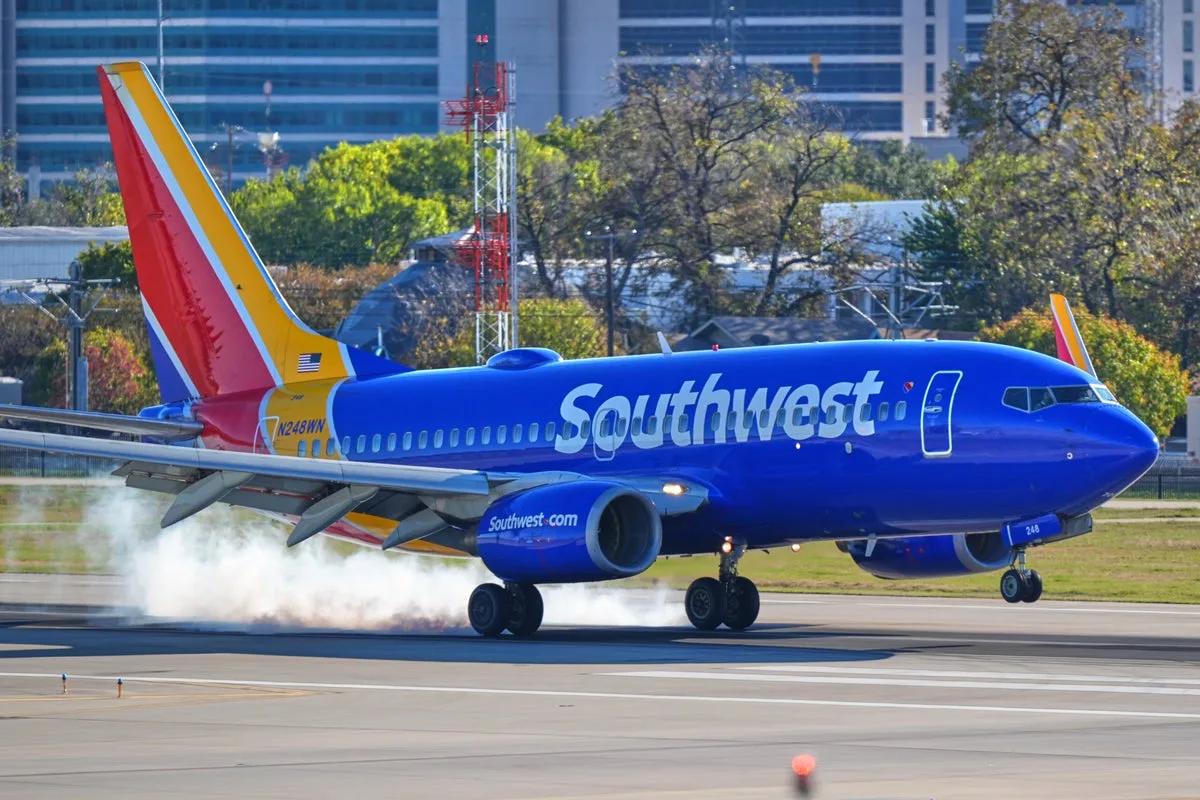
Southwest Airlines passengers made their final scramble for seats on Monday as the carrier ended its open-seating system, a distinguishing feature for over 50 years. From Tuesday, customers will have assigned seats and can pay more for preferred positions near the front or extra legroom. The Dallas-based airline began selling tickets under the new policy in July.
Under the old system, passengers checked in exactly 24 hours before departure to secure a spot in the boarding queue. Early check-ins earned the prized ‘A’ group, guaranteeing window or aisle seats, while those in ‘B’ or ‘C’ groups faced a higher chance of middle seats. Originally designed to speed up boarding and reduce ground time, the system helped Southwest remain profitable every year until the pandemic.
An eight-group boarding structure replaces the free-for-all. Instead of numbered metal columns, passengers will use two alternating lanes. Gate areas will be converted in phases from Monday night, taking about two months. Existing columns will have numbers removed or covered in the interim.
Southwest now sells tickets with varied seating choices: standard seats assigned at check-in, or paid preferred and extra-legroom seats booked in advance. Priority boarding is available for a fee from 24 hours before departure. Boarding groups depend on seat location, fare class, loyalty status, and credit card benefits. Those with basic fares will likely be in groups 6-8.
The switch to assigned seating also revises the policy for customers needing extra room. From Tuesday, travellers who cannot fit within a single seat’s armrests must buy an additional seat in advance, unlike the previous policy where a free extra seat could be requested at the gate. Refunds are still possible but not guaranteed. In May 2025, Southwest also ended its ‘bags fly free’ policy, introducing baggage fees.
These changes mark one of the airline’s biggest transformations, bringing it in line with other US carriers. The shift responds to investor pressure for higher profitability. CEO Robert Jordan said last year that the airline has ‘tremendous opportunity’ to meet changing customer needs and return to expected profit levels.