Dublin has long inspired generations of writers, from James Joyce to Sally Rooney, and for those seeking to soak up its literary legacy, The Merrion stands out as the Irish capital's finest five-star hotel. Spread across four immaculately restored townhouses, the property occupies a special place in Georgian Dublin, on the fringe of the city centre.
It sits right around the corner from Baggotonia, the historic literary haunt where greats like Patrick Kavanagh, Mary Lavin and Brendan Behan lived, walked, and knocked back a few pints. The hotel is a short stroll from the best bookshops in town: Books Upstairs on D’Olier Street, Hodges Figgis on Dawson Street and Connolly Books in Temple Bar, to name a few favourites.
Literary travel trend
Oscar Wilde, Jack B. Yeats and Samuel Beckett all passed through these streets, and it is hard to imagine a more thrilling destination for anyone interested in literary travel. It’s having a moment. In its 2026 travel trends report, Skyscanner found that 55% of travellers had booked a trip or would consider one inspired by a book.

Holiday rental platform Vrbo coined the term ‘readaways’ (or book-inspired group travel) in its latest trend report, and the general consensus is that reading is finally cool again. Ask Metro Use AI to go deeper into the stories you care about – powered by Metro and trusted publications. We have Dua Lipa and her Service95 Book Club to thank for that.
The backstory and first impressions
The Merrion’s story begins in the 1760s, when four Georgian townhouses were built on Merrion Street Upper, directly across from what would later become Ireland’s Government Buildings. Over time, the houses were combined and meticulously converted into The Merrion, which opened its doors in 1997. Today, it’s one of the Leading Hotels of the World. Arthur Wellesley, who would go on to become the Duke of Wellington and Prime Minister of the United Kingdom, was born in what is now the Main House. A plaque remembers him on the façade.
Set on a wide street bookended by the National Gallery of Ireland and the imposing Edwardian edifice of the Irish parliament, this hotel screams quiet luxury in the most wonderfully unassuming manner. Doormen in morning suits and top hats greet you with a smile, before ushering you in to an elegant space that feels more art gallery than hotel. It is, I am told, home to the largest private art collection in the country. A self-guided audio tour is free for guests.
The rooms and service
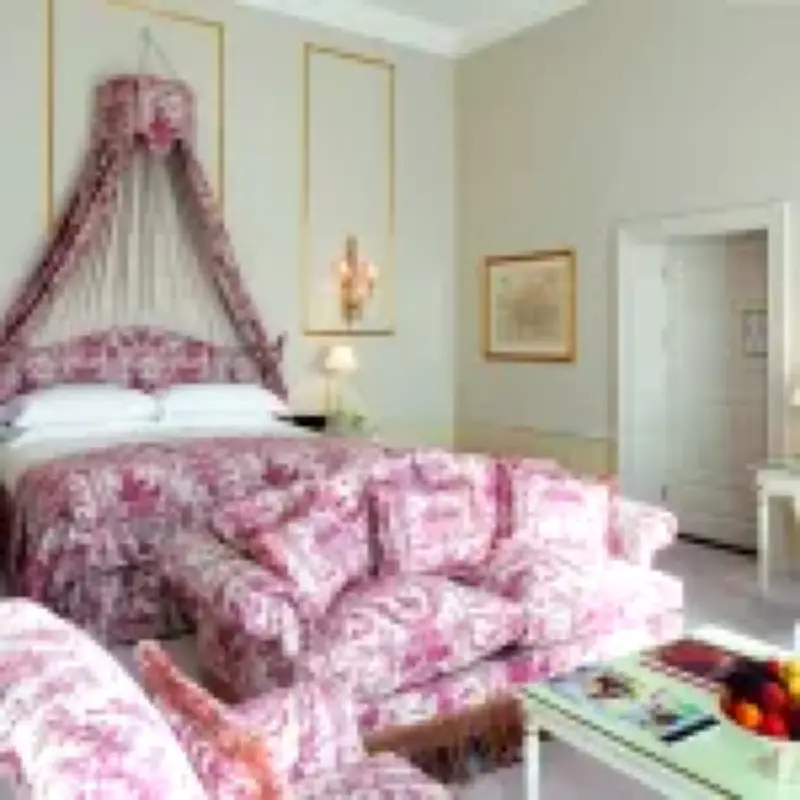
There are 123 rooms and 19 suites, all decorated in muted tones with floral flourishes. The furniture is period, the beds famously comfortable and raised on plinths. The bedspreads are a linen and cotton mix, the mattresses premium King Koil. The bathrooms are bright and spacious, with Carrara marble, deep tubs, and walk-in showers. A few touches stand out: a complimentary carafe of Redbreast 12 Year Old single pot still Irish whiskey, charging cables neatly tied with velcro straps and a Merrion-branded bookmark slipped inside the (Irish-authored!) book I’d left on the bed.
The crown jewels are the Lord Antrim and Lord Monck Suites, which have separate living and dining areas, fireplaces, and enough space to cartwheel about if the notion strikes. Special mention must be given to the staff who provide the very best of Irish hospitality. You are cared for but never fussed over, and because many have worked here for several decades, it genuinely feels like a family. One of the doormen has been on duty for over 50 years.
Spa, food and special touches
The hotel has a spa and health club with a 20m swimming pool, treatment rooms for facials and massage, and a 24/7 gym. The sauna and steam room are on the small side, but it’s still a great place to unwind. As well as its links to literature and politics, The Merrion has a place in Irish culinary history. It is home to Patrick Gilbaud’s, one of the first restaurants in Ireland to be awarded two Michelin stars (in 1996).

Afternoon tea is served in the drawing rooms with exceptional attention to detail: elaborate desserts arrive in the shape of famous Irish paintings. The main event is the Garden Room, an all-day restaurant in a glass-lined, garden-facing space that looks out at a bronze statue of James Joyce that doubles as a sun dial. Downstairs, the Cellar Bar – set in the hotel’s original wine vaults – offers a more casual setting for guests and non-residents. It’s just been named Ireland’s five-star hotel bar of the year.
The concierge can recommend literary walking tours of the area, or you could try a self-guided tour with an itinerary from Visit Dublin, bringing you to landmarks of fact and fiction in the spiritual company of Oscar Wilde, Samuel Beckett, Maeve Binchy, Sally Rooney and more. Bikes are free to borrow, and takeaway picnics can be ordered through room service.
If I’d had more time, I would have loved to spin down the Grand Canal for a pint at Searsons, a core part of the city’s bohemian literary scene and a favourite haunt of Patrick Kavanagh and Brendan Behan. Their legendary rows eventually got too much for management, leading owner William Searson to ban them both. I recommend an autumn visit. This year, The Dublin Book Festival brings events to locations across the city from November 4 to 8, with gatherings of Irish and international writers, and plenty of conversations to inspire.
Rooms at The Merrion start from around £645 per night. Direct return flights to Dublin from London start from £38 in September with Ryanair, with a flight time of less than one hour. From Dublin Airport, the hotel is 25 minutes by taxi or 45 minutes by bus.