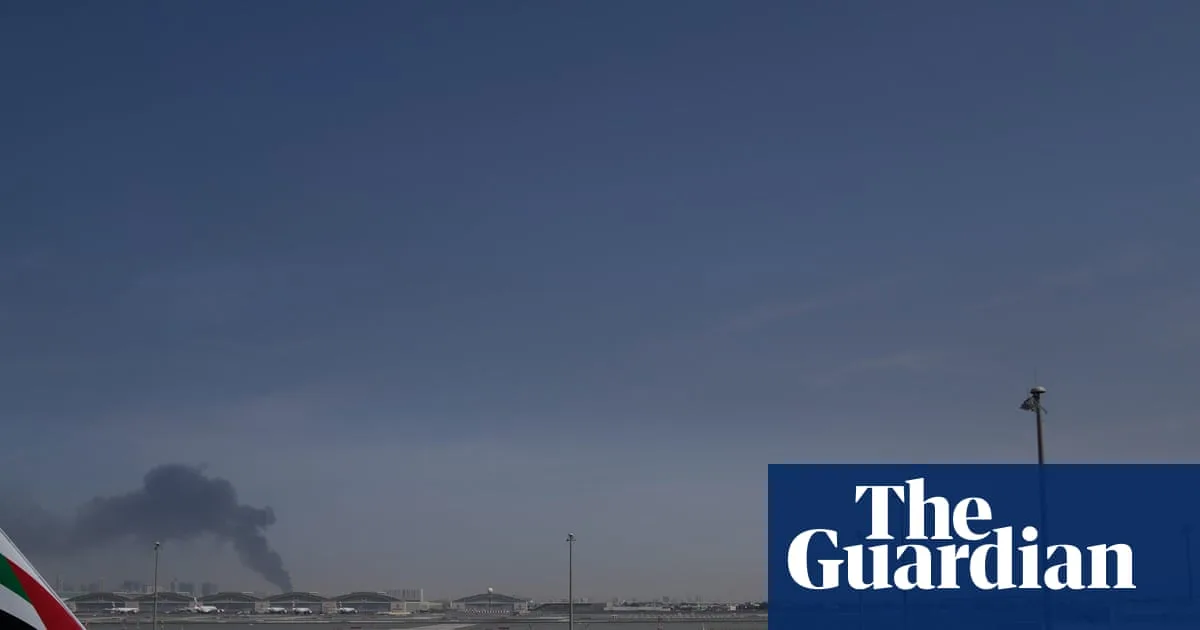
Iran War Plunges Global Air Travel into Deep Crisis
The ongoing war in Iran has precipitated the most severe disruption to global air travel since the COVID-19 pandemic, forcing widespread airport closures and mass flight cancellations. Conflict involving Iran, the US, and Israel has escalated across the Middle East, leading to extensive airspace shutdowns. This has caused major operational chaos for airlines, leaving thousands of British holidaymakers stranded in foreign destinations with uncertain return prospects.
Foreign Office Issues Critical Travel Advisories
The UK Foreign, Commonwealth & Development Office has updated its travel guidance in response to the escalating regional tensions. It now advises against all but essential travel to the United Arab Emirates, Qatar, and Bahrain. For British nationals currently in the UAE, the instruction is to remain indoors in secure locations due to the risk of missile attacks and to strictly follow local authority directives.
Travel to other popular holiday destinations is also under scrutiny:
- Cyprus: Following a suspected Iranian drone strike on the RAF base at Akrotiri, the Foreign Office warns that regional escalation poses significant security risks and travel disruption. British nationals are advised to follow instructions from local or Sovereign Base Area authorities.
- Turkey: The Foreign Office advises against all travel within 10 kilometres of the Syrian border due to ongoing fighting and a heightened terrorism risk.
- Egypt: Officials cite a "heightened risk of regional tension" which could lead to unexpected travel disruption and other impacts.
Importantly, travelling against Foreign Office advice can invalidate standard travel insurance policies, leaving individuals financially exposed.
Major Airlines Ground Flights Amid Airspace Closures
The closure of key airspaces across the Gulf region has brought aviation to a near standstill. Flights to and from the United Arab Emirates (including Dubai and Abu Dhabi), Qatar, Saudi Arabia, Lebanon, Kuwait, and Oman are almost entirely cancelled, with airspace largely reserved for military and cargo operations.
Major carriers have implemented sweeping cancellations:
- Emirates, which typically operates 146 weekly flights to the UK, is running a severely reduced service, planning just a handful of flights to Heathrow, Gatwick, and Manchester, some using its high-capacity A380 aircraft.
- Etihad Airways has scheduled only one flight from Abu Dhabi to Heathrow.
- Qatar Airways has suspended all operations due to the closure of Qatari airspace.
- British Airways has cancelled its Tuesday flights to Heathrow from Abu Dhabi, Amman, Bahrain, Doha, and Dubai, offering date changes for affected passengers.
- Virgin Atlantic has axed its Dubai to Heathrow service.
Passengers are urged to contact their airlines directly for the latest information, as flights to Cyprus, Egypt, and Turkey, while largely proceeding, may face short-notice delays or cancellations.
Connecting Flights and Cruise Ship Operations Paralyzed
The disruption extends beyond direct flights. Major hubs like Abu Dhabi, which connect passengers to destinations in Thailand, Vietnam, India, Australia, and New Zealand, are severely impacted. Travellers with connecting flights through affected regions should verify their itineraries with their airlines.
The crisis has also immobilised the cruise industry in the region. At least six cruise ships, including vessels from TUI Cruises like the Mein Schiff 4 and Mein Schiff 5, are stranded in ports such as Abu Dhabi and Doha. The MSC Euribia remains docked in Dubai under strict security, with all embarkations suspended. Companies have been forced to cancel upcoming departures due to the lack of operational repatriation flights.
Passenger Rights and Repatriation Efforts
For those stranded, the Foreign Office advises British nationals in the Gulf to stay indoors and follow local authority guidance. Limited evacuation repatriation flights are being organised, but capacity is minimal, and individuals should not make plans based on these unless contacted directly by British consular staff.
Regarding passenger rights:
- Do not cancel your flight ticket voluntarily. Wait for the airline to cancel, as self-cancellation may forfeit rights to a refund or rebooking under UK air passenger regulations.
- Check your travel insurance policy carefully. While many policies cover extended emergency medical expenses if stranded, most exclude cancellation or curtailment costs arising directly from acts of war.
Disruption Expected to Last for Weeks
Aviation experts warn that the travel chaos could persist for an extended period. US President Donald Trump indicated the joint US-Israel military operation in Iran could last four to five weeks or longer. Aviation consultant John Strickland noted that even if conflict ends sooner, clearing the backlog of stranded passengers will likely take weeks, given the high volumes of normal traffic and the capacity constraints of operating aircraft like the A380 and Boeing 777 on these routes.
The situation remains fluid, with airlines and governments urging extreme caution and continuous monitoring of official advice for anyone travelling to, from, or through the Middle East.