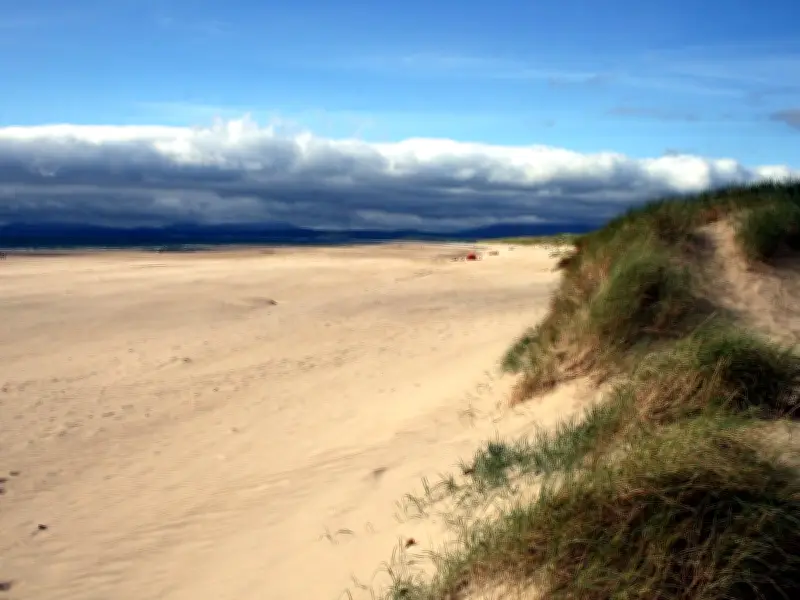
Harlech, an ancient town in North Wales, is emerging as a standout day-trip destination for summer 2026, offering traditional shops, cafés, and a stunning sandy beach. Located just a two-hour and 20-minute drive from Liverpool, this underrated coastal gem features one of Wales' most photogenic castles and a four-mile stretch of golden sand set against a backdrop of the Snowdonia mountains.
Harlech Beach: Unspoilt Sands and Wildlife
Harlech Beach is renowned for its flat sands and impressive dunes, which have earned the area designation as a National Nature Reserve and Site of Special Scientific Interest. The beach offers a summer spectacle for wildlife enthusiasts: leatherback turtles migrate to this coastline to feed on jellyfish. Popular among families and dog walkers, the beach rarely becomes overcrowded, making it ideal for a leisurely day by the sea with magnificent castle views. There are no shops, arcades, or ice cream vendors along the shoreline, so visitors must bring their own essentials. A shop and café selling beach necessities is a short walk away near the railway crossing. Dining options near the beach and castle include Caffi Castell Harlech, The Plas Restaurant, and Caffi Llew Glas.
Safety and Swimming
Harlech Beach has no lifeguard service and features powerful offshore currents, so paddling is recommended for those seeking a refreshing swim rather than swimming in deeper waters.
Harlech Castle: A World Heritage Site
Constructed between 1282 and 1289, Castell Harlech is a well-preserved medieval stronghold perched on a rocky outcrop, offering sweeping views of the Morfa Harlech dunes and beach. It is part of a UNESCO World Heritage Site alongside King Edward I's other fortresses at Conwy, Beaumaris, and Harlech, celebrated for its outstanding late 13th- and early 14th-century military architecture. The castle was built by King Edward I's master architect during the Welsh campaign at a cost of £8,190.
Historical Sieges and Legendary Battles
The castle's 'walls within walls' design maximised natural defences, withstanding sieges during some of Wales' most legendary conflicts. It remained secure during Madog ap Llywelyn's rebellion (1294–1295) but fell to Owain Glyndŵr in 1404. Glyndŵr, a Welsh leader who led a 15-year rebellion against English rule, used Harlech as his home and military base until English forces retook it in 1409. During the Wars of the Roses, Harlech held out for the Lancastrians for seven years, surrendering to Yorkists in 1468—a siege immortalised in the song Men of Harlech, now a rugby anthem. According to Cadw, the castle's final siege occurred during the English Civil War, when Colonel William Owen defended it for the Crown from spring 1644 until its surrender in 1647, marking the last royalist stronghold to capitulate.
Visiting Harlech Castle Today
Managed by Cadw, the castle is accessible via a distinctive 'floating bridge' linking the terrace to the gatehouse. Family tickets cost £34.90 during peak season, with an on-site car charging park. Cadw is participating in the UK Government's Great British Summer Savings campaign, offering reduced VAT savings for visits between June 25 and September 1, 2026. An exhibition and gift shop are within the castle walls. Cadw holiday accommodation is available nearby, and alternative cottages, glamping, or hotels can be booked via Booking.com or Holiday Cottages.