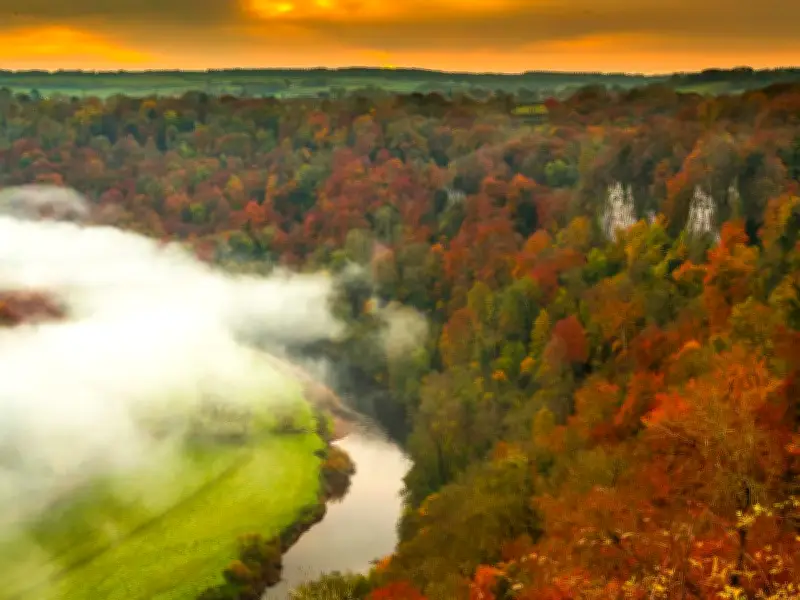
The Forest of Dean, a historic royal forest in Gloucestershire about an hour's drive from Cardiff, is especially beautiful in autumn, with stunning leaf displays, a lakeside café, and family-friendly cycling trails.
Managed by Forestry England, this ancient forest is home to more than 20 million trees and has evolved over centuries. In medieval times, it was a royal hunting forest before becoming a source of timber for Tudor navy warships. By the Victorian era, it was a major industrial site with coal mining and tramways. In 1938, the Forest of Dean was designated the first National Forest Park. Today it remains a working forest producing sustainable timber while attracting tourists.
Mallards Pike: A Family-Friendly Gateway
Mallards Pike is one of the most accessible sites, with a large paid car park by the lake, toilets, and a small café serving locally sourced produce, sandwiches, soups, homemade cakes, and ice cream. The site includes a Go Ape zip wire activity, running trails from 2km to 10km, and Gruffalo orienteering for children.
A gentle 0.5-mile lakeside stroll on an easily surfaced path is suitable for wheelchairs and pushchairs. For cyclists, Mallards Pike sits on the traffic-free Colliers Trail, a nine-mile circular route best ridden clockwise, with shorter loops available. Bikes and e-bikes can be hired nearby, including from Pedalabikeaway in Coleford and Wye-Bikes.
Walking and Seasonal Highlights
A 10.8km circular loop from Mallards Pike to Soudley Ponds combines several waymarked routes, passing ancient oak and Douglas fir, with hazel, holly, and silver birch in the understory. The trail, found on the AllTrails app, returns to the lake for post-hike refreshments.
From mid-winter, snowdrops blanket the forest floor, followed by wood anemone, celandine, primroses, crocuses, and violets. In spring, the area is known for daffodils (best in March-April), wild garlic, and vivid bluebells. Foxgloves bloom in June. Autumn is considered the best time for 'leaf peeping', with yellow birch, orange beech, larch, and Scots pine reflected in the lake.
Wildlife and Practical Tips
The forest is home to wild boar, fallow and roe deer, badgers, rabbits, and various mice and voles. Birds include buzzards, peregrine falcons, woodpeckers, and rare hawfinches. Visitors are advised to bring binoculars.
For navigation, the AllTrails, OS Maps, and Komoot apps are useful, and OS Explorer OL14 covers the area. Forestry England also offers a downloadable trail map. The article's author noted that the forest is a family favourite but also suits solo hikes or visits with friends.