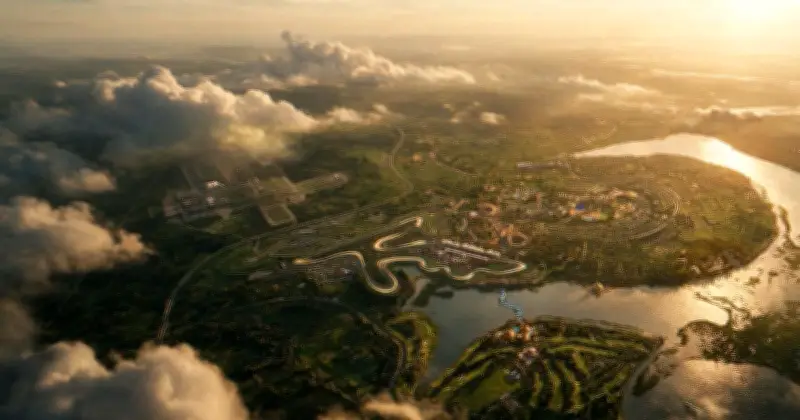
Formula One's return to Africa will feature a circuit currently named RISE Motordrome, part of a wider development complex in Bugesera, Rwanda, with capacity for up to 400,000 spectators over a race weekend. The sport has not raced on the continent since 1993, when Alain Prost won the most recent South African Grand Prix.
Ten-Year Deal and New Track Details
The Government of Rwanda struck a 10-year deal with F1 chiefs to host an annual race at a circuit south of capital city Kigali, which has not yet been built. The track is expected to host F1 races from the early 2030s.
Design work has been ongoing since June this year, when Hermann Tilke's company was appointed as lead consultant. Tilke's firm, responsible for several current F1 circuits, has been working with WurzDesign, the company of former F1 driver Alexander Wurz, on the layout and structure of the circuit.
Part of a Larger Development
Both circuit design companies have been collaborating with major construction firm Dar on the project, which extends beyond just an F1 circuit. Kigali's new international airport and an 'airport city' are also being built with the aim of "bringing together motorsport, sport, entertainment, hospitality and tourism", according to Dar planning partner Daniel Horner.
The circuit, known currently as RISE Motordrome, is a key part of that development, with Rwanda president Paul Kagame keen to bring a major international sporting event to his country. The plan features a lakeside setting adjacent to the new airport, with room for around 100,000 spectators per day, creating potential race weekend attendances of 400,000 if the event sells out.
Design and Driver Support
Designers say the track layout has been created to complement "the natural landscape of Rwanda", using the land to create natural elevation changes. Tilke said he hopes it will "create a challenging and exciting circuit that flows naturally through Rwanda's breathtaking landscape, embracing the terrain rather than imposing itself on it".
WurzDesign has been consulting on the masterplan since 2023, before it was integrated into the wider construction project of the airport and surrounding area. Wurz, a former F1 driver and current Grand Prix Drivers' Association director, said: "It's a one-of-a-kind circuit, shaped by the beautiful hilly landscape beside Lake Kidogo. Drivers and riders will enjoy the corner speeds, flow and sensational elevation changes of 190 metres per lap, more than any other circuit on the Formula 1 calendar."
He added: "It is a drivers' track, six kilometres long and a carefully designed mix of fast flowing and technical sections ready to challenge engineers and drivers and provide great overtaking opportunities and on track fights."
Challenges and Support
The Rwanda project faces hurdles, including significant international criticism of F1's decision to award an event to a one-party state with a poor human rights record and no real sporting pedigree. The sport's return to Africa is widely perceived as a positive move and has earned the support of drivers, most notably Lewis Hamilton.
Hamilton's only uncertainty will be whether he is still able to compete in F1 by the time the first Rwanda race takes place, as he will be at least 45 years old by then.