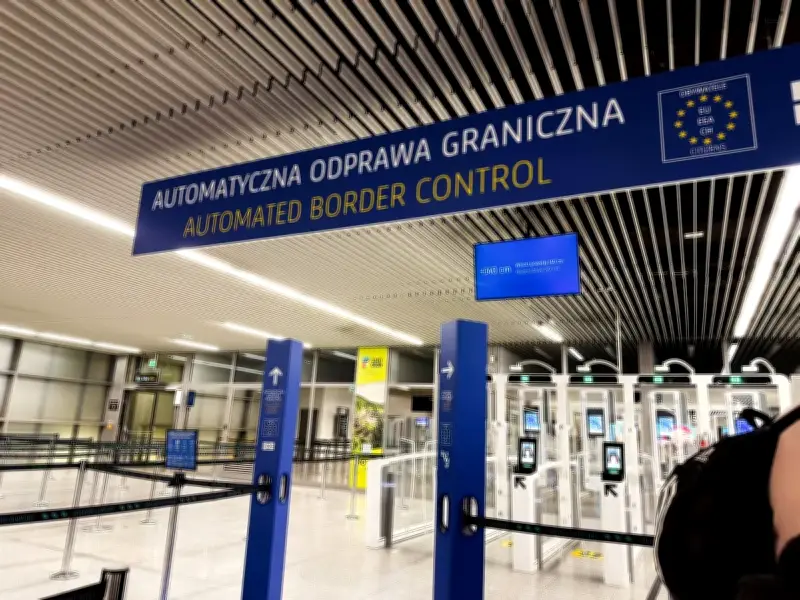
Travel expert and broadcaster Hayley Sparkes has warned that the new EU Entry/Exit System (EES) could mean travellers need to arrive at the airport much earlier than usual. Speaking to TravelTime Travel Insurance, she advised allowing at least an extra hour, especially in busy airports, during peak summer, or when travelling with children, elderly relatives, or anyone needing special assistance.
Biometric checks cause longer queues
The EES requires biometric checks for many non-EU travellers and has already caused big queues at some major European airports. Hayley explained that eligible British travellers are having biometric information registered and checked, which can add processing time, particularly for first-time users.
She said: "The new Entry/Exit System means eligible British travellers are having biometric information registered and checked, so there can be additional processing, particularly if you're using the system for the first time. My best advice is that it isn’t worth the risk of cutting it fine, as it could mean you miss your flight."

Who is responsible if you miss your flight?
Hayley noted that airlines or airports won't necessarily be liable if a lengthy passport or security queue causes a missed flight. She advised passengers to speak to the airline before purchasing another ticket and to document evidence, including photographs of queues, receipts, boarding passes, and messages from the airport.
She said: "There isn't a simple black and white answer that the ‘airport will pay’; it depends on several factors. Don't automatically assume the airline will put you on another flight for free or that your travel insurance provider will cover it. Everything will depend upon the wording in your contracts and individual circumstances."
Common mistakes and insurance pitfalls
Hayley highlighted that the biggest mistake is to panic and stay silent. She advised speaking to airport staff if you're close to your flight time, and to have passports and boarding passes ready. She also recommended taking screenshots of boarding passes in case Wi-Fi or data roaming fails.
On insurance, Hayley stressed that many travellers buy cover as an afterthought. She said: "Ideally, you want to purchase your travel insurance at the same time you book your holiday. Your travel insurance policy must begin when you book the holiday so that cancellation cover can start straight away." She also reminded travellers to declare pre-existing medical conditions, check if activities like skiing or watersports need additional cover, and ensure the policy covers the whole trip, including stopovers.