British Families Stranded in Dubai as Iran Conflict Closes Airspace
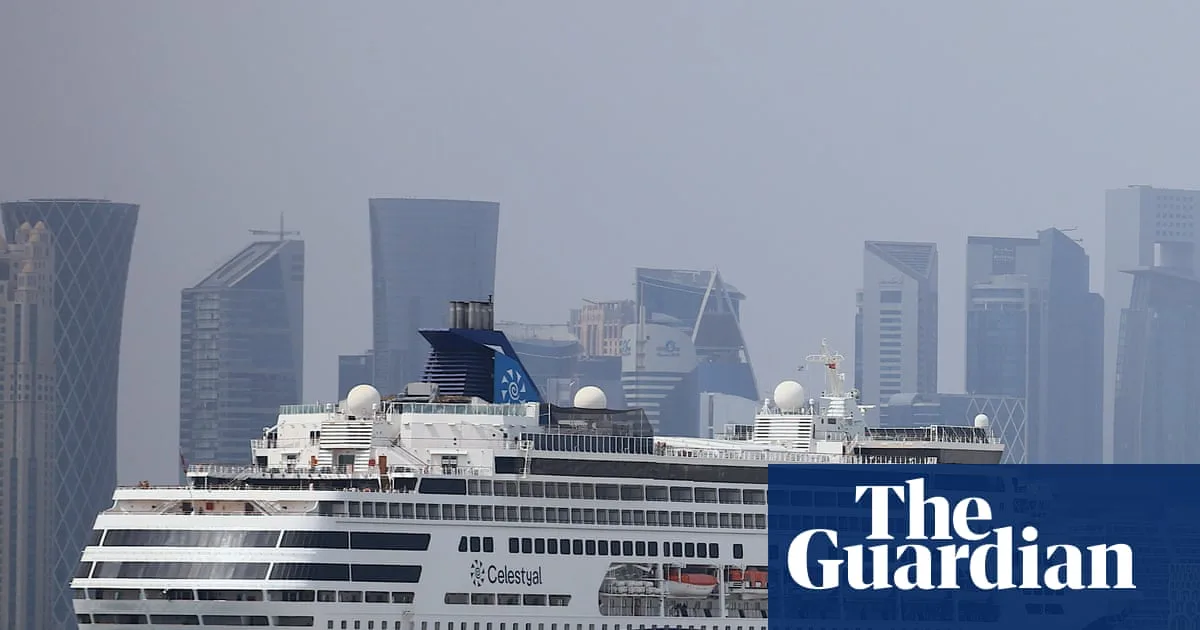
A British mother and her two children are among thousands of holidaymakers and residents stranded in Dubai after escalating conflict involving Iran grounded flights and closed airspace across the Gulf region. Major airlines have suspended services, leaving travellers facing uncertainty about when they will be able to return to the United Kingdom.
Flight Chaos Across Middle Eastern Airports
More than 3,400 flights were cancelled on Sunday alone across seven major Middle Eastern airports according to flight tracking data from Flightradar24. Dubai International Airport has been particularly affected, with passengers reporting chaotic scenes following reports of drone strikes and missile activity in the region.
Vicky Lynch, a mother from Stockton who was holidaying in Dubai with her two children, described witnessing missiles exploding in the sky from her villa. "It was so surreal, the villa was shaking. You don't expect to go on holiday and have a war break out," she told Chronicle Live. "You see it on the news but you don't expect to live it."
Lynch explained that the missile strikes seemed to come in waves with clusters occurring approximately every hour. "The scariest part was when we were about to go to bed last night," she said. "We eventually got to bed about 1am then the emergency alarms started going off on all our phones. We have been trying to work out where we are going to take shelter in the villa."
Tourists Scramble for Safety and Information
Lynch planned to shelter in the villa's laundry room and stay away from windows, hoping they would be able to fly back to the UK on Wednesday. However, it remains uncertain whether Dubai International Airport will have reopened by then and whether commercial flights will have resumed operations.
The disruption extends far beyond Lynch's family. Dubai, Doha, and Abu Dhabi typically handle around 90,000 transit passengers per day between them according to aviation analytics firm Cirium, meaning the knock-on impact for global travel is enormous. UK officials are urging British nationals in the region to stay indoors where possible and follow the latest safety advice.
Former Rangers and Liverpool manager Graeme Souness reported being stuck at Abu Dhabi International Airport, sharing on Instagram that he heard "loud bangs" overhead which he believed were anti-missile systems intercepting incoming projectiles. "Chaos continues," Souness said. "The flight's been cancelled, still hearing explosives, so we give up. We're just going to check into a hotel for a couple of nights and see where we are."
Insurance Complications for Stranded Travellers
Passengers expecting refunds or compensation may face disappointment according to travel insurance experts. Tim Riley, Managing Director of travel insurer True Traveller and Chairman of the UK Travel Insurance Association, explained that standard travel insurance policies typically exclude coverage for war, hostile acts, military action, invasions, or similar large-scale conflict events.
"This exclusion is standard across the global insurance market because war presents systemic, unpredictable risks that cannot be priced into conventional travel insurance products," Riley told the Mirror. Travel insurers cannot override government airspace restrictions, meaning airspace closures and the inability to leave the country generally are not covered.
However, Riley noted that airlines have a legal obligation to re-route passengers to their final destination once services resume, whether on their own aircraft or with alternative carriers. "It is important that travellers do not accept a refund if their flight is cancelled," he advised. "Accepting a refund effectively ends the airline's duty of care, leaving the traveller responsible for arranging and paying for new flights themselves - which are likely to be significantly more expensive."
Other stranded travellers include Richard and Hannah, who were on their way to Oman but became stuck in Bahrain, and Emma Belcher and her husband Vic, whose connecting flight from the Maldives via Dubai was cancelled. "There is absolutely no information about when they might open airspace so we don't know how long we'll be here," Belcher told the BBC.
The current disruption represents the most significant challenge to global air transport since the COVID-19 pandemic, with flight tracking data showing civilian aircraft avoiding Iranian and Iraqi airspace entirely. As the conflict continues to develop, thousands of British travellers remain in limbo across the Middle East, uncertain when they will be able to return home safely.