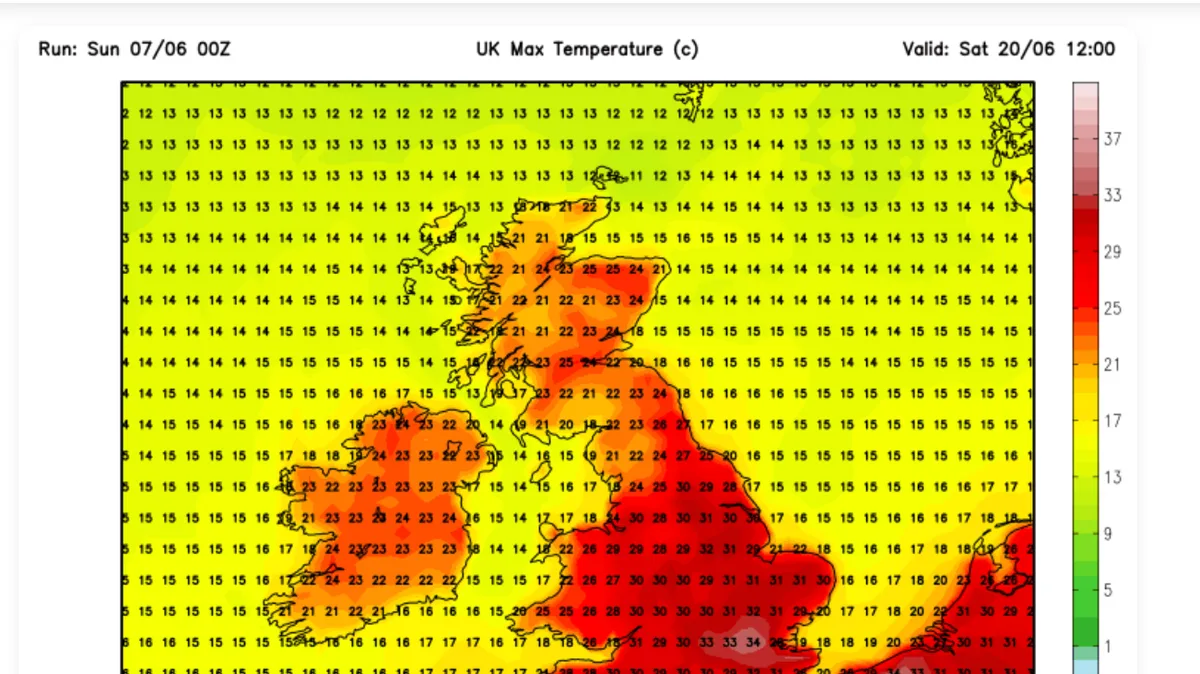
Britain is bracing for a return to scorching weather, with new weather maps indicating temperatures could soar into the mid-30s Celsius later this month. The latest forecast from Netweather shows a widespread heatwave expected on June 20, with at least 17 parts of England predicted to exceed 30C and some regions potentially reaching 34C.
Southern and eastern England are set to be hit hardest, with vast stretches marked in deep red on the maps as temperatures climb well above the June average. Southern England could see highs between 31C and 34C, while the Midlands, including Birmingham, Leicester, Nottingham and Lincolnshire, are forecast to swelter in 30C to 31C.
Northern England is expected to be slightly cooler but still pleasantly warm, with temperatures in the high 20s, reaching 28C to 30C across Yorkshire and neighbouring counties. Wales is forecast to see temperatures between 25C and 28C, while Scotland and Northern Ireland are likely to remain cooler, with highs in the low to mid-20s.
The Met Office, in its summer outlook published on June 1, noted an increased likelihood of warmer-than-average conditions continuing through June, July and August, with an elevated chance of heatwaves and heat-related impacts. Weather specialists at MeteoGroup, which supplies data for BBC Weather, also highlighted the prospect of multiple intense hot spells, with a few notable high temperature spikes expected.
The Met Office added that warmer summers are becoming progressively more likely due to climate trends, with hotter-than-average conditions now roughly twice as probable as during the 1991-2020 reference period.