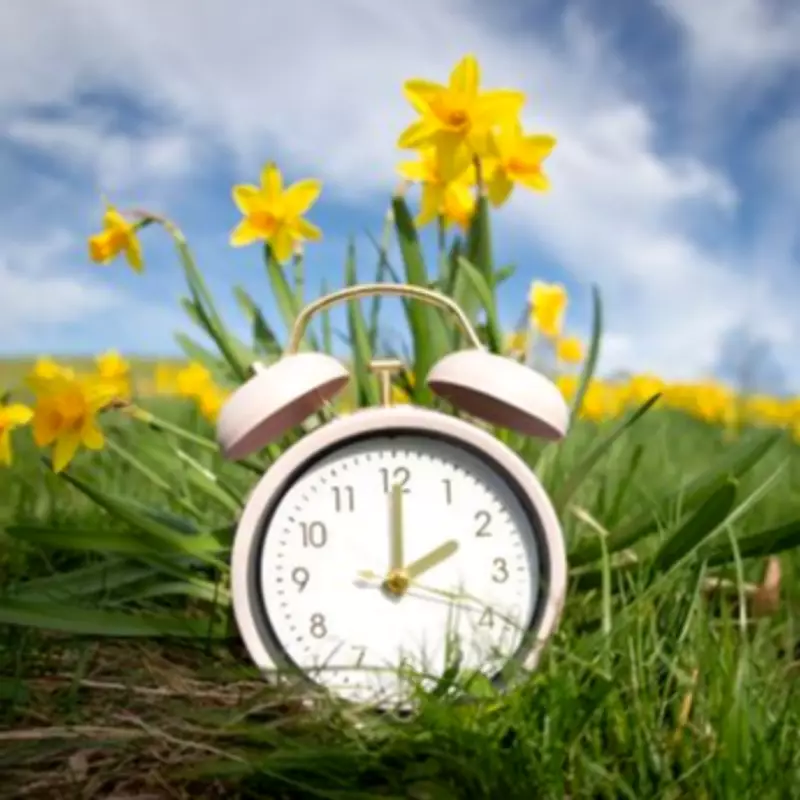
UK Daylight Saving Time 2026: The Exact Date for the Clock Change
As winter gradually recedes and evenings in the United Kingdom grow progressively lighter, the nation prepares for the annual ritual of adjusting its clocks. Daylight saving time is set to commence, heralding the official arrival of British Summer Time (BST).
When Do the Clocks Go Forward in 2026?
In the UK, clocks will advance by one hour at 1am on the last Sunday of March. For the year 2026, this pivotal moment falls on March 29. This date represents a shift from the previous year, occurring one day earlier than in 2025, and will be one day later than the scheduled change in 2027.
This adjustment signifies the commencement of British Summer Time, a period that extends until the clocks revert back by one hour at 2am on the last Sunday of October. In 2026, the return to Greenwich Mean Time (GMT) is scheduled for October 25. It is noteworthy that this date follows October 26 from the preceding year and precedes October 31 in the subsequent year.

The Historical Origins of Daylight Saving Time
The practice of altering clocks to maximise daylight hours has its roots in a campaign initiated during the early 20th century. William Willett, an ardent advocate for British Summer Time and the great-great-grandfather of Coldplay vocalist Chris Martin, published a influential pamphlet in 1907 entitled 'The Waste of Daylight'.
Willett proposed adjusting clocks forward in the spring and backward in the autumn to better utilise natural light. His initial scheme was notably intricate, advocating for an 80-minute advancement through four incremental adjustments of 20 minutes each. Although Willett passed away in 1915, his vision was realised the following year when Parliament enacted the Summer Time Act of 1916, formally establishing the tradition of moving clocks forward by one hour during the summer months.
Global Context and Implementation
The selection of a weekend morning for the time change was strategically chosen to minimise disruption to educational institutions and commercial enterprises. Presently, approximately 70 countries worldwide observe some variation of daylight saving time, though specific regulations and dates can differ significantly between regions.
Historically, the concept gained substantial momentum during the First World War. In April 1916, the German army implemented clock changes as a measure to conserve fuel resources. Numerous European nations, including the United Kingdom, subsequently adopted similar practices, though not all countries participated.
Practical Implications and Reminders
The forward shift of clocks inevitably results in the loss of one hour of sleep for many individuals. A popular mnemonic to recall the direction of seasonal changes is the phrase: 'spring forward, fall back.' This succinctly encapsulates the process of advancing clocks in spring and retracting them in autumn.
In contemporary society, most internet-connected devices such as smartphones and computers are programmed to update automatically. However, certain analogue timepieces and older electronic devices may necessitate manual adjustment to reflect the new time accurately.
As the UK transitions into British Summer Time, citizens can anticipate longer, brighter evenings, though the immediate cost is a slightly shorter night's rest. This biannual adjustment continues to be a fixture of British life, blending historical tradition with practical considerations for modern living.